

Prof. Dr. med. Arzt, Facharzt, Hochschullehrer, Buchautor, Verleger
Aachen/Germany
Joined March 2015
- Tweets24.1K
- Following373
- Followers1.7K
- Likes24.7K





Walter van Laack retweeted

Der US-Vizepräsident schreibt, um wieder Erfolg zu haben, müsse die Regierung den Krieg beenden und mehr auf den Wohlstand der Bevölkerung achten.
Das wäre auch für Merz und Klingbeil ein gutes Rezept. Ich bezweifle aber, ob sie das verstehen. Ihre Finanzplanung weist in die gegenteilige Richtung.

Walter van Laack retweeted

JUST IN - EU President Ursula von der Leyen says that people's savings accounts are a problem
and that she must put this money "to the service of European companies"
says her plan to "securitize them" and "supervise them"
They're coming for your savings, Europe.
Walter van Laack retweeted
Sieg der Demokraten
Trump versprach Frieden und Wohlstand, lieferte aber Krieg, Zölle, Verschuldung und Inflation. Daher wandern Wechselwähler ab. Merz und Klingbeil machen übrigens denselben Fehler.
Hintergrund: Junge und Hispanics wählten Trump und Republikaner nicht wegen MAGA, sondern weil sie eine Verbesserung ihrer Lebenssituation erhofften. Diese Hoffnung hat Trump enttäuscht.
Wie sagte Bill Clinton einst so treffend: „It's the economy, stupid.” Union und SPD verstehen das nicht: Alles was sie tun, ob Verschuldung, Rüstung, Sanktionen, Steuererhöhungen oder Sozialkürzungen, schadet den Wählen und führt dazu, dass diese abwandern.
Diese Post ist eine Analyse, keine Parteinahme. Im Schatten von Trumps drei Kardinalfehlern (Krieg, Verschuldung, Zölle) kommen jetzt viele Gestalten mit Nähe zu Antifa und Clans an die Macht, ähnlich wie bei uns in Berlin.
Walter van Laack retweeted

🇵🇱 BREAKING: Poland Erupts in Massive Protests
Poland.
Millions of people in the streets.
Massive protests are unfolding.
Another extraordinary scene from Europe.
Walter van Laack retweeted

Friedrich Engels, the trust-fund kid who spent forty years bankrolling the man who called capitalism exploitation. Ironic.
Engels inherited co-ownership of Ermen & Engels, a Manchester cotton mill, in 1864. He worked there as a partner, managed workers, collected profits, and wired money to Marx in London for decades. Marx, meanwhile, wrote about the immiseration of the proletariat from rented rooms his friend's textile workers paid for. Marx fathered a child with his unpaid housekeeper, Helene Demuth, denied paternity, and let Engels take the blame publicly for years. Engels obliged. The man was a doormat with a trust fund.
Marx himself produced almost nothing marketable. "Das Kapital" Volume One appeared in 1867; he never finished Volumes Two and Three. Engels assembled them from Marx's notes after his death in 1883. The great theorist of historical inevitability couldn't finish his own book.
Two men, one the son of a factory owner and the other a chronic debtor who borrowed from his own mother, invented a theory that claimed capital accumulation is theft. Engels accumulated capital. Marx stole from everyone around him, privately and personally, before proposing to do it systematically at gunpoint through the state.
Every currency debased, every factory nationalized, every famine engineered under regimes waving their banner traces back to two comfortable Europeans who never once went hungry because prices rose, stood in a breadline, or dug a mass grave for dissidents.

Walter van Laack retweeted

Me esborrachei de rir deste texto (autor anônimo):
Estou numa idade em que cuidar da saúde virou um esporte radical.
Se como açúcar, a glicose sobe. Se como sal, a pressão sobe. Se vejo o preço dos remédios, sobem as duas.
Se bebo água, vou ao banheiro a cada cinco minutos. Se não bebo, fico desidratado. Já estou pensando em colocar uma televisão no banheiro e assumir aquilo como sala de estar.
Se como, engordo. Se não como, fico fraco. Se como só salada, fico triste. E, se fico triste, como.
O médico mandou ouvir meu corpo. Fui ouvir: é só reclamação. Parece reunião de condomínio.
Se faço exercício, no dia seguinte preciso de ajuda para sentar. Se não faço, preciso de ajuda para levantar. Estou pagando academia para descobrir de qual jeito prefiro sofrer.
Se durmo muito, as costas doem. Se durmo pouco, viro um zumbi. Se durmo de mau jeito, passo três dias olhando para a esquerda.
Aliás, descobri que é possível se machucar dormindo. Antigamente eu tinha que cair de bicicleta. Hoje basta escolher o travesseiro errado.
Se tomo café, não durmo. Se não tomo, não funciono. Meu organismo está igual carro velho: demora a pegar e, quando pega, ninguém sabe o que está fazendo aquele barulho.
De manhã, eu já não acordo… eu ressuscito. Primeiro abro os olhos, depois confiro quais peças vieram junto. Sento na beira da cama e espero o sistema reconhecer os joelhos.
E a memória? Está ótima! Só não lembro onde deixei.
Outro dia entrei num cômodo e esqueci o que ia fazer. Voltei para lembrar e esqueci de onde tinha vindo. Aproveitei que estava em pé e fui ao banheiro.
Mas precisamos levar a vida com leveza. Ficar sozinho e sem conversar não faz bem.
Comentei isso com o micro-ondas e a torradeira enquanto tomávamos café. Os dois concordaram. A torradeira até ficou emocionada e pulou o pão.
Com a máquina de lavar eu não converso mais: ela distorce tudo e depois fica dando voltas no mesmo assunto.
A geladeira é fria, mas reconheço que é a única que acende quando me vê.
O ferro de passar é muito esquentado. O forno também. E o aspirador só aparece para sugar a minha energia.
Meu melhor amigo agora é o sofá. Ele me acolhe sem fazer perguntas. O problema é que depois não quer me soltar.
Então vamos rir enquanto ainda lembramos da piada!
Quanto às fases da vida, adotei uma classificação bem simples:
Até os 50, a gente faz planos.
Depois dos 50, faz exames.
Depois dos 70, compara os resultados com os amigos.
Depois dos 90, pode comer o bolo inteiro: quem quiser reclamar vai ter que chegar até lá primeiro!
E agora vou encerrar porque levantei para fazer alguma coisa.
Se alguém souber o que era, me avise.
Walter van Laack retweeted

The chief benefit from rising atmospheric CO₂ levels is an undeniable increase in planetary green leaf cover, now clearly visible from space.
This fresh greening covers an area twice the size of the continental United States - yet it remains ignored by the institutional forces driving a narrative of climate emergency, and largely overlooked in the mainstream media.
Data from NASA’s MODIS satellite instruments tells the real story. Rather than triggering global collapse, the rise in CO₂ sparked a massive expansion in the green canopy, stimulating agricultural yields (some cereal crops up by 280%) and natural ecosystems alike. This 'CO₂ fertilisation effect' occurs as plants perform photosynthesis more efficiently while losing less water through their stomata.
Meanwhile, the global economy has been severely disrupted by a 40-year campaign built on forecasts of environmental doom from anthropogenic CO₂. This trace gas is not a climate control knob. It is the fundamental driver of biological photosynthesis and oxygen production.
These campaigns, led by UN activism, demand a rapid, forced transition away from hydrocarbon energy. Yet wind and solar cannot supply the dense baseload power required for steel production and heavy industry. Hydrocarbon fuels still provide 82% of global primary power.
This entire transition is justified under the warning that CO₂ emissions are leading the planet to the brink of catastrophe - with the total cost of this pointless pivot estimated at a staggering $275 trillion.
Earth's geological history, paired with empirical satellite data, reveal a completely different reality: CO₂ is a powerful agent of biological enrichment. Its capacity to drive runaway global warming faces steep, immovable physical limitations.
A critical pillar of atmospheric physics is how the warming effect of CO₂ continually reduces along a sliding logarithmic curve. The first 100 ppm of CO₂ exert the greatest impact on capturing outgoing infrared radiation. But as concentrations rise, absorption bands rapidly saturate. Each subsequent doubling of CO₂ yields an ever-smaller increment of radiative warmth.
The concept of a runaway warming feedback loop loses its theoretical foundation under actual atmospheric conditions, where the 'rate of warming' diminishes progressively. Yet this debunked narrative is routinely recycled to fuel panic.
Annual COP climate summits over the past thirty years also endlessly amplify this agenda of fear, functioning largely as high-end junkets for global elites.
In geological terms, atmospheric CO₂ is in long-term decline - a fact carefully airbrushed from IPCC worst-case scenarios. During the Cambrian period, atmospheric CO₂ peaked as high as 7,000 ppm. Even with those immense concentrations, there was no global boiling; instead, it marked the greatest explosion of biological diversity in Earth's history.
During the Last Glacial Maximum (26,000 to 19,000 years ago), CO₂ levels plummeted to roughly 180 ppm - dangerously close to the 150 ppm threshold below which most C3 plant life starves and dies. From a long-term evolutionary perspective, modern levels hovering above 420 ppm represent a vital, partial recovery from a geologically recent carbon drought, rather than a precursor to apocalypse.
Today’s global average temperature sits at approximately 15°C. In the context of the history of complex life on land, this is remarkably cold. Earth’s baseline historical temperature average was closer to 24°C, characterised by ice-free poles and expansive, highly productive ecosystems. Our current global average actually reflects a colder-than-average ice age regime.
Global climates are not controlled by trace gases. They are driven by massive, slow-moving astronomical, oceanic, and tectonic forces - such as Milankovitch orbital cycles or the shifting configuration of continents blocking equatorial ocean currents.

Walter van Laack retweeted
Ministerin Petra Grimm-Benne (SPD) trat die Grundrechte mit Füßen und zwang Wehrlose an die Gates-Spritze. Jetzt bekommt sie Angst: Verbrechen gegen die Menschlichkeit verjähren nicht ...
welt.de/politik/article6ae7e…

Walter van Laack retweeted

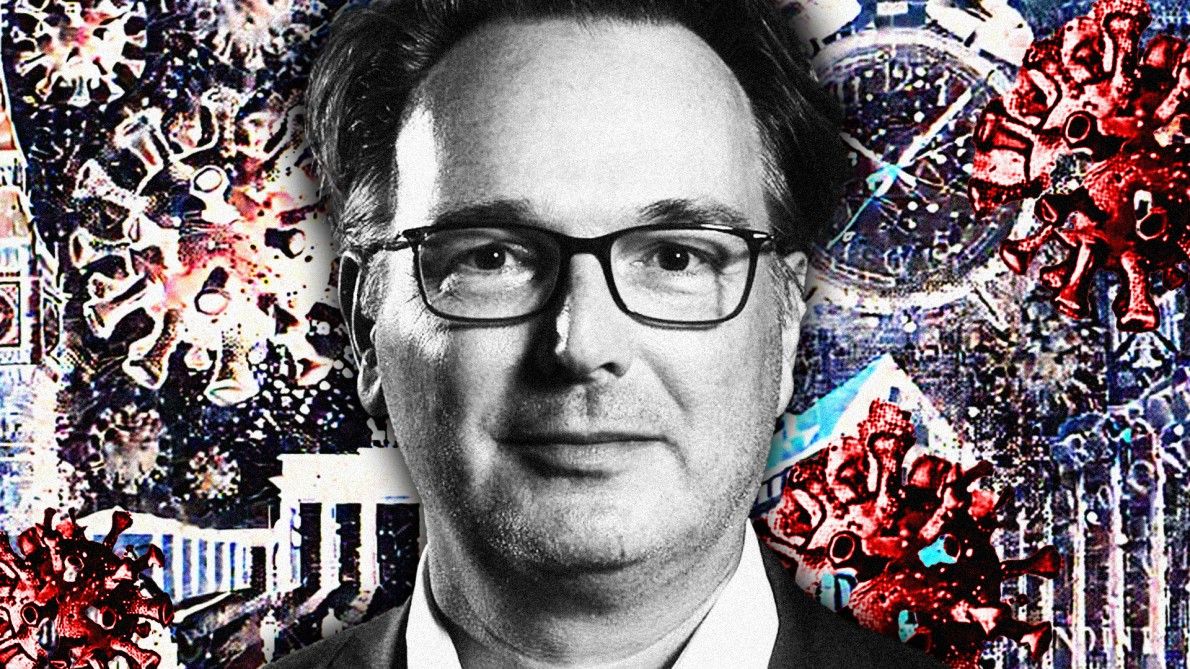
Corona-Impfschäden: Was das Paul-Ehrlich-Institut lieber nicht wissen will
achgut.com/artikel/corona_im…
Von Gunter Frank • Das Paul-Ehrlich-Institut (PEI) veröffentlicht alarmierende Zahlen zu Verdachtsmeldungen bezüglich der Nebenwirkungen der Covid-Impfstoffe. Dennoch hält es an der Sicherheit der Impfungen fest, obwohl die eigenen Forschungsergebnisse dem diametral widersprechen. Anstatt die rücksichtslose Vermarktung eines Ladenhüters der Biowaffenforschung zu stoppen, nimmt man schwere Gesundheitsschäden und sogar den Tod von Bürgern weiterhin billigend in Kauf.
Walter van Laack retweeted

Peer reviewed paper: fossiele brandstoffen hebben effectief NIET bijgedragen aan het verhogen van het CO2-gehalte.
Wees overigens blij dat er iets meer CO2 in de lucht zit dan een eeuwtje geleden. We zaten verduveld dicht bij het niveau dat er geen leven op aarde meer mogelijk zou zijn.
Via @cohler.
papers.jcohler.com/keeling

Walter van Laack retweeted

🚨🚨 PLANDEMIA: La utilización premeditada a nivel mundial del test PCR a altos ciclos de amplificación provocó una tasa de falsos positivos del 90%...En consecuencia, no existió ninguna pandemia COVID, la población fue engañada y aterrorizada para poder ser inoculada...
Walter van Laack retweeted
For every leaf pulling down carbon, there are endless miles of mycorrhizal fungi weaving an underground logistics network through the soil profile.
The Earth has 3.04 trillion individual trees, roughly 400 trees for every person on Earth, and around 80% to 90% of all plant and tree species form this mutual partnership. While NASA’s satellite data tracks the Taiga marching north, it misses the silent biological exchange working beneath the frost and leaf litter.
Estimates suggest roughly 250,000 plant species partner with about 50,000 species of fungi. There are around 73,300 distinct tree species worldwide. Russia has the most trees (641 billion), followed by Canada (318 billion), Brazil (302 billion) and the United States (228 billion).
The world has 380,000 documented plant species, and the majority - about 260,000 species - produce seeds.
Plants supply fungi with sugars and carbon produced via photosynthesis, since fungi cannot make their own food. In return, thread-like mycelium networks forage deep into the soil for vital water, phosphorus, and nitrogen to deliver back to the root systems.
Nature sidesteps the soil bottlenecks predicted by computer models because the soil itself is a living, decentralised energy marketplace. Trees pump excess carbon sugars from elevated atmospheric CO₂ down into their root systems. They trade sugars with fungi and microbes. In return, the fungi act as an underground mining and delivery service. They tap into deep mineral pools for the nitrogen and phosphorus that roots cannot reach on their own.
Earthworms drive the mechanics of the system, aerating the earth and recycling organic matter into the nutrient-dense humus that feeds the growth above. But without mycorrhizal fungi, soil is just sterile geology; with them, it functions as an active biological recycling plant.
Climate narratives often paint the planet as a fragile system on the edge of failure. But look at the astonishing symbiosis between a root, a fungal network and an earthworm. It reveals a self-regulating, highly resilient natural architecture.
The planet isn’t just surviving higher CO₂ levels; its converting carbon into the currency needed to fuel the networks below our feet. The nitrogen bottleneck may exist in a spreadsheet, but underground, the energy trade routes are wide open.
Against this vibrant, multi-layered genius of the living soil, the modern carbon agenda appears oddly sterile. It reduces the immense, self-directed architecture of the biosphere down to a simple liability on a global ledger.
While international summits broker complex financial mechanisms to police carbon through COP summits, the earth is already deploying it - quietly turning atmospheric surplus into living roots, fungal networks and rich topsoil.
Nature requires neither central planning, spreadsheets nor green subsidies. The planet’s inbuilt resilience is already written into its biology.

Walter van Laack retweeted
Ich hatte erwartet, dass unsere Leitmedien Tusks Staatsstreich verzerren, aber nicht, dass die meisten "alternativen" Medien und Influenzer ihn verschweigen.
Link: youtu.be/4mt3YVUk2T0
Manche zweifeln, ob es sich bei den Uniformierten, die den höchsten Verfassungsrichtern den Zugang zum Gericht verweigern und teils kein polnisch sprechen oder Helme ohne Nummern tragen, um polnische Polizei handelt.
Ob es sich aber um deutsche Söldner handelt, ukrainische oder solche aus Brüssel, ist unklar.

Walter van Laack retweeted

Hammer und Sichel, Palästina-Flaggen, brüllende Irre, schwarzer Block, Antifa-Rufe, Angriffe auf Polizisten, Pyrotechnik, Böllerwürfe, brennende Barrikaden.
Gen Z regelt gar nix.
Wenn das die Zukunft ist, gute Nacht.


Walter van Laack retweeted

Pravo Herr Köppel, für mich einer der besten Journalisten weltweit. 👍👍👍👍👍👍
Walter van Laack retweeted

Sucharit Bhakdi wird 80: Der Mann, der Millionen Menschen in der Corona-Zeit Hoffnung gab . Eine persönliche Würdigung für eine wunderbare Persönlichkeit philosophia-perennis.com/202…


