

Economist, tax policy adviser, applied researcher, university lecturer. Views are my own.
Joined July 2014
- Tweets90
- Following176
- Followers118
- Likes346



David Staubli retweeted

Grossartige Gesamtbetrachtung der Umverteilung im #NFA: Nur 14 der 26 Kantone sind effektive Nettoempfänger 👇.
Bonus: Bub unten links im Bild widerspiegelt trefflich die aktuelle Gemütslage eines der Nehmerkantone.
@dstaubli @nm_zeno @DieVowirtschaft
dievolkswirtschaft.ch/de/202…

David Staubli retweeted

What policies can be used to mitigate the harmful effects of tax competition? How should the economic effects of these policies be evaluated?
@omzidar, Poterba, & I provide answers to these questions in our paper "Policy Responses to Tax Competition: An Introduction"
Thread:

Cataloguing policies that have been deployed by jurisdictions seeking to mitigate the effects of tax competition, from @DavidRAgrawal, James M. Poterba, and @omzidar nber.org/papers/w32090

David Staubli retweeted

Cataloguing policies that have been deployed by jurisdictions seeking to mitigate the effects of tax competition, from @DavidRAgrawal, James M. Poterba, and @omzidar nber.org/papers/w32090
David Staubli retweeted
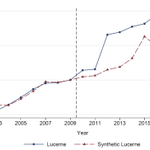
Discussing corporate taxation in Switzerland and drawing parallels relative to ongoing efforts at international tax coordination, from @Marius_Brulhart, Marko Koethenbuerger, Matthias Krapf, Raphael Parchet, @KurtSchmidheiny, and David Staubli nber.org/papers/w31830

David Staubli retweeted
New WP on #CorporateTax in 🇨🇭:
Does the history of decentralized taxation in the Swiss cantons hold lessons for international tax coordination?
No and yes.
Some (personal and subjective) highlights in a 🧵
👉bit.ly/3QAyYys
1/
Discussing corporate taxation in Switzerland and drawing parallels relative to ongoing efforts at international tax coordination, from @Marius_Brulhart, Marko Koethenbuerger, Matthias Krapf, Raphael Parchet, @KurtSchmidheiny, and David Staubli nber.org/papers/w31830
Unser Artikel (mit Patricia Ruffing-Straube & Dieter Pfaff) "Aufdeckung von Steuerhinterziehung in der Schweiz durch den automatischen Informationsaustausch" wurde in @PerspektivenWP publiziert (bereits am 21. März).
degruyter.com/document/doi/1…
« CO2-Lenkungsabgaben – das Wundermittel in der Klimapolitik? » Ich freue mich, am Di, 25. April, 17h, am Podium an der HSLU teilzunehmen (mit @florian_landis, Stefan Rieder und @RolfIten). Danke an Moderator Michael Berger für die Einladung! hslu.ch/de-ch/wirtschaft/age…

2
219
David Staubli retweeted

🎄🎅 «ÖV #subventionieren oder Benzin besteuern?», von @dstaubli @efd_dff und Ralph Winkler @unibern.
#meistgelesen2022 Platz 17 von 155.
https://teapawt.org/t.co/ugMTEI008T

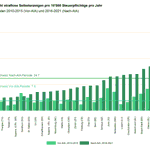
Mit Patricia Ruffing-Straube & Dieter Pfaff haben wir die Entwicklung der Anzahl strafloser Selbstanzeigen im Zuge des autom. Informationsaustauschs analysiert. Wir sehen einen starken Anstieg & erhebliche kantonale Unterschiede. Working paper der UZH: repec.business.uzh.ch/RePEc/…

3
Interessanter #NZZ-Artikel (Schöchli) zu den Auswirkungen von ökologischen #Steuern vs. #Subventionen. Steuern sind effizienter, haben es aber politisch schwieriger als Subventionen. Freut mich, dass die Analyse von Ralph Winkler und mir disutiert wird.
nzz.ch/wirtschaft/lenkungsab…

1
Politically, eco taxes (e.g. on CO2) have a hard time. We explore whether subsidies (e.g. for public transport) have the same effect. It depends on elasticities of substitution. In general, subsidies are less efficient than eco taxes. Thanks co-author Ralph Winkler! Avail. in D/F

Tout le monde veut sauver le climat. Mais qu'est-ce qui est le plus efficace: #taxer l'essence ou #subventionner les transports publics? @dstaubli de l'Administration fédérale des finances, @unibern
dievolkswirtschaft.ch/fr/?p=…
Danke für die Einladung und die Organisation! Hat Spass gemacht, einen Input zu geben zu den Entwicklungen im internationalen Unternehmenssteuersystem.

Die Iconomix-Tagung zum Thema «Altersvorsorge» ist Vergangenheit! Wir bedanken uns bei den Referierenden Christoph Schaltegger, Tabea Bucher-Koenen, Jan Denier, @steinle_lea, Nathanael Berger, Patrick Hunn, Therese Fässler, @dstaubli und Simon Gerig.
iconomix.ch/de/service/weite…

1
David Staubli retweeted

#TIMESpaperOfTheMonth: Overweighting of small success probabilities makes many start-up entrepreneurs fail.
#LabExperiment #Winner-Takes-All #MarketEntry #ExcessEntry #CumulativeProspectTheory #ProbabilityWeighting

ça me fait plaisir de faire une intervention sur les réformes internationales de la fiscalité des entreprises, la nécessité d’agir et les conséquences possibles pour la Suisse. Merci @betrisey pour l'invitation !
La #JEP 2022, organisée en coopération avec la @FoCo_UNIL_EPFL, aura lieu le 18.11 à Lausanne et portera sur la #PrévoyanceVieillesse. Au menu: conférences de Caroline Henchoz et Serge Gaillard ainsi que des ateliers à la carte. iconomix.ch/jep2022

David Staubli retweeted

Nur wenige Themen bereiten jungen Erwachsenen in der Schweiz so viel Unbehagen wie die Vorsorge und Sicherheit im Alter. Die Iconomix-Tagung vom 9.September 2022 beleuchtet das Thema aus einer finanzwissenschaftlichen und volkswirtschaftlichen Perspektive. iconomix.ch/de/service/weite…

Happy our paper is forthcoming in #ManagementScience. Thanks to my great coauthors Vincent Lafferrière & Christian Thoeni! We study entry behavior into markets where one competitor captures the entire reward or a large share of it ("winner-take-all").
ideas.repec.org/p/lau/crdeep…
Real-life examples: markets for CEOs/politicians, performing arts (music, dance), or sports (tennis, football). Early experimental research found that entry behavior is in line with the Nash equilibrium, which to Kahneman (1988) looked “like magic”.
1
2