

Dan Wrightman (@dwrightman) profile picture
Joined April 2011
Photo by Dan Wrightman (@dwrightman)Photo by Dan Wrightman (@dwrightman)Photo by Dan Wrightman (@dwrightman)Photo by Dan Wrightman (@dwrightman)Photo by Dan Wrightman (@dwrightman)Photo by Dan Wrightman (@dwrightman)Photo by Dan Wrightman (@dwrightman)Photo by Dan Wrightman (@dwrightman)Photo by Dan Wrightman (@dwrightman)Photo by Dan Wrightman (@dwrightman)
Dan Wrightman retweeted
"The new federal plan acknowledges that electricity bills will still go up, maybe by a lot, but promises that increase will be more than cancelled out by lower costs for things like gasoline, natural gas and propane."
The Liberals pledge $52B more to double Canada’s electricity capacity by 2050. #Budget2026 thelogic.co/news/federal-bud…
5
2
1
14
391
Nuclear power? Hydro storage? What are Nova Scotia’s options for new 'cost-effective' electricity when the grid is maxed out? saltwire.com/nova-scotia/nuc…
5
3
7
1,830
Dan Wrightman retweeted
Very pleased to see @MLInstitute publish my data-intensive essay on Wind West, Nova Scotia's proposed offshore wind project.
Nova Scotia’s proposed Wind West offshore energy project promises to transform the province into a major electricity exporter, yet its enormous scale, uncertain buyers, and rising costs raise serious questions about its economic viability “Atlantic Canada has seen this pattern before: large wind-powered visions, public money up front, and a pivot when buyers fail to materialize. Wind West deserves scrutiny in that light. It is a first-of-its-kind offshore wind project in Canada, built with other people’s money, with no guaranteed buyer, producing electricity for export at more than $200/MWh, plus about $70/MWh for new transmission to reach buyers. Each of those features is a risk, and federal taxpayers are being asked to carry it ….” In “Wind West: Nova Scotia’s offshore wind gamble with Ottawa’s money,” economist Edgardo Sepulveda (@E_R_Sepulveda) examines the project’s underlying assumptions, arguing that its projected costs are too optimistic, its export market too uncertain, and the electricity it generates will struggle to compete with cheaper, more reliable alternatives. Read full commentary here⬇️ macdonaldlaurier.ca/wind-wes…
1
6
1
21
648
Dan Wrightman retweeted
“Atlantic Canada has seen this pattern before: large wind-powered visions, public money up front, and a pivot when buyers fail to materialize. Wind West deserves scrutiny in that light. It is a first-of-its-kind offshore wind project in Canada, built with other people’s money, with no guaranteed buyer, producing electricity for export at more than $200/MWh, plus about $70/MWh for new transmission to reach buyers. Each of those features is a risk, and federal taxpayers are being asked to carry it ….”
Nova Scotia’s proposed Wind West offshore energy project promises to transform the province into a major electricity exporter, yet its enormous scale, uncertain buyers, and rising costs raise serious questions about its economic viability “Atlantic Canada has seen this pattern before: large wind-powered visions, public money up front, and a pivot when buyers fail to materialize. Wind West deserves scrutiny in that light. It is a first-of-its-kind offshore wind project in Canada, built with other people’s money, with no guaranteed buyer, producing electricity for export at more than $200/MWh, plus about $70/MWh for new transmission to reach buyers. Each of those features is a risk, and federal taxpayers are being asked to carry it ….” In “Wind West: Nova Scotia’s offshore wind gamble with Ottawa’s money,” economist Edgardo Sepulveda (@E_R_Sepulveda) examines the project’s underlying assumptions, arguing that its projected costs are too optimistic, its export market too uncertain, and the electricity it generates will struggle to compete with cheaper, more reliable alternatives. Read full commentary here⬇️ macdonaldlaurier.ca/wind-wes…
5
19
2
60
3,052
Nova Scotia’s proposed Wind West offshore energy project promises to transform the province into a major electricity exporter, yet its enormous scale, uncertain buyers, and rising costs raise serious questions about its economic viability “Atlantic Canada has seen this pattern before: large wind-powered visions, public money up front, and a pivot when buyers fail to materialize. Wind West deserves scrutiny in that light. It is a first-of-its-kind offshore wind project in Canada, built with other people’s money, with no guaranteed buyer, producing electricity for export at more than $200/MWh, plus about $70/MWh for new transmission to reach buyers. Each of those features is a risk, and federal taxpayers are being asked to carry it ….” In “Wind West: Nova Scotia’s offshore wind gamble with Ottawa’s money,” economist Edgardo Sepulveda (@E_R_Sepulveda) examines the project’s underlying assumptions, arguing that its projected costs are too optimistic, its export market too uncertain, and the electricity it generates will struggle to compete with cheaper, more reliable alternatives. Read full commentary here⬇️ macdonaldlaurier.ca/wind-wes…
5
17
11
29
4,938
Dan Wrightman retweeted
Wind West has been advanced with almost no public discussion on the costs and benefits. Economist @E_R_Sepulveda lays out the facts, costs and regulatory pitfalls that await this ill-conceived project: “Wind West power at more than $200/MWh could only be resold at a loss.” macdonaldlaurier.ca/wind-wes…
43
87
13
196
7,391
Canada is one of only six countries in the world that can design, build and export its own nuclear reactor technology. At the heart of that competitive advantage is CANDU, Canada's only homegrown nuclear reactor technology. At a time when countries are racing to build sovereign nuclear capability, the question remains: will we invest in our own or import someone else's? In recent testimony before Parliament, @Dr_Keefer argues that choosing a reactor technology is about more than energy generation. It's a choice about retaining Canadian ownership, Canadian jobs, Canadian supply chains, and whether the economic benefits of nuclear investment stay here in Canada. As governments consider the next generation of nuclear projects, the opportunity is not simply to deploy nuclear power, but to reinforce a Canadian industry that can compete at global scale for decades to come. #ChooseCanadian #ChooseCANDU
Yesterday I appeared before the House of Commons Natural Resources committee to make the case for a Canadian nuclear industrial strategy centred on CANDU. As Washington mobilizes behind Westinghouse and the AP1000, Canada faces a defining choice: will we champion our own reactor technology or help build an American industrial enterprise with Canadian shareholders? My five-minute testimony is below. For the full transcript and deeper analysis, visit my Subst@ck, Decouple Media. Link in the comments.
12
20
408
Dan Wrightman retweeted
We’re giving new life to our 106-year-old Cameron Falls Generating Station, located near Thunder Bay. Happening now: The facility’s G7 unit is undergoing a major refurbishment, including the installation of new generator windings, a new runner, and rehabilitation of the existing turbine shaft – its first overhaul in more than 30 years. These upgrades will ensure about 25 more years of clean, reliable generation. Unit by unit, OPG continues to breathe new life into Ontario’s long-serving hydroelectric stations – an investment that will ensure clean power keeps flowing for our future. Learn more: bit.ly/4z3lOOT
2
5
15
571
Dan Wrightman retweeted
imo this is some quality reporting by Matthew McClearn, and exemplary tanking of actual thought from the ignorant yet pious Pembina [subscription: theglobeandmail.com/business… ]
1
8
1
15
1,272
Dan Wrightman retweeted
The hidden cost of "cheap" variable weather dependent inverter-based renewables and minimum inertia. Importing energy via non-synchronous HVDC links also doesn't help support the minimum inertia requirements of a relatively small sized isolated interconnection.
We spent a record £561m balancing the power grid in October, the second record month in a row. Balancing costs this autumn have passed £1bn, and NESO forecasts put 2026 close to £4bn. There are two things are driving it 🧵
2
5
16
621
A hydropower plant built in 1941 produces more today than when it was new. Grand Coulee, on the Columbia River in Washington State, keeps the steel frames and 535-ton rotors of its 1940s generators and replaces what wears: new water wheels went in between 2001 and 2011, new copper windings are going in now, and unit 6, built for 108 MW, produces 125.
2
2
36
1,119
Brookfield claims short duration battery storage lowers costs. But. Ontario Energy Board costs released show astronomical storage costs. And bonus, wind is shown to be NOT the lowest cost. #ottcity @_MarkSutcliffe @Brett__Byers #bess #windenergy #windturbines
1
4
5
181
Dan Wrightman retweeted
Bill 140 the Building Ontario Faster Act to make significant changes to environmental rules and citizen rights says The Pointer. thepointer.com/article/2026-…
3
3
81
Dan Wrightman retweeted
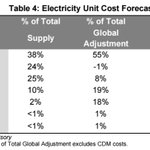
The OEB has released their 2026 RPP (Regulated Price Report) and there are some interesting, but not surprising changes. Firstly, with Pickering and two units at Bruce offline for refurb, nuclear share of supply drops to its lowest level since the early 2000's. Secondly, nuclear's rate went up, which was expected due to the Pickering refurbishment, but not by the amount OPG was asking for. Thirdly, storage now shows as a cost, and it's a doozy! Eclipsing GEA solar. The effect of the inflation indexing on the GEA wind and solar contracts is also visible, with solar increasing from $454/MWh to $470 and wind increasing from $151/MWh to $162. Gas drops from $98/MWh to $88 as its share increases.
4
9
34
1,421
Dan Wrightman retweeted
Quebec continues as a net electricity importer, not even counting Labrador imports. Seems that water supplies for their massive hydro facilities continue to be challenged. HQ took advantage of selling now and then when prices are elevated.
4
15
2
36
3,481
Dan Wrightman retweeted
Amid an escalating trade war with the United States, Ottawa is signaling a renewed preference for Canada’s CANDU technology to maximize its strategic autonomy and return on investment for Canadians. Enter Tim Gitzel, CEO of Cameco, one of Canada’s great industrial success stories, which now owns a 49% stake in Westinghouse (WEC). In recent testimony before Parliament’s Natural Resources Committee, he invoked Cameco’s Canadian credentials to argue that Ottawa should accord the American AP1000 reactor the same standing as CANDU in its nuclear industrial policy. There is a certain irony here. Cameco’s Canadian identity is the product of precisely the kind of deliberate industrial policy Ottawa is reviving. As a legacy of its Crown corporation origins, its corporate charter requires that its headquarters remain in Saskatchewan & that its senior executives reside there. The provincial government retains a special "Golden Share" that protects these provisions, ensuring Saskatchewan captures more than mining jobs & royalties. The strategic decision-making remains firmly rooted in the province. Westinghouse represents a parallel American history to Cameco. Its PWR technology emerged from the U.S. naval nuclear program under Admiral Hyman Rickover, developed in close collaboration with the US Navy, AEC & national laboratories. Backed by U.S. diplomacy, financing & industrial might, it became one of America's most successful nuclear exports. Its headquarters remain stubbornly in Pittsburgh despite frequent changes in international ownership over the last 30 years from British to Japanese to Canadian corporate entities. While Cameco objects to Ottawa’s recent pro-CANDU moves, WEC gets plenty of government support. It just happens to come from the United States of America. Washington is mobilizing behind WEC as its Nuclear technology champion. Examples include an agreement that contemplates US$ 80 billion in reactor projects & conditional DOE financing of US$ 17.5 billion for up to ten AP1000s. Meanwhile, WEC's Canadian ownership may be in flux ahead of a potential IPO, with the US government positioned to acquire a substantial equity stake. South Korean firms are also exploring ownership & supply-chain participation under a $120 billion nuclear partnership. And speaking of a "Golden Share," Korean media reports Washington may get one, granting it veto rights over major corporate decisions. This is no time for the familiar Canadian reflex of excessive politeness, conflict avoidance & attempts to please everyone. We need something of C.D. Howe’s wartime ambition: the confidence to identify vital national interests, mobilize our industrial capabilities & pursue them unapologetically. Canada built its nuclear industry through precisely that kind of determination & should approach its future with the same resolve. This is an excerpt from a more detailed essay. Read it on my Substack. decouple.media/p/the-great-c…
14
26
3
129
9,521
Dan Wrightman retweeted
The wind lull continues, as does our charging of batteries with gas 🤣
Rolling 14-day Ontario power mix🦇🎃🧙♀️👻:
1
2
9
279
Pumped storage stations use up to 30% more electricity lifting water than the water gives back on the way down. Bath County, Virginia, exists to move power across the day all the same. Pumps lift water to the upper reservoir at 12.7 million gallons a minute when demand is low. It comes back through six turbine generators at 13.5 million a minute when demand rises. That drops the upper reservoir by as much as 105 feet. Bath County entered service in December 1985 and its 3,003 MW make it the largest pumped storage plant in North America.
6
13
1
67
2,621