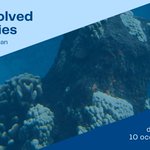
Coral reefs are biodiversity hotspots for ocean life. Remarkably, ~1/4 of marine species reside in them. So the spotlight is on coral reefs for protection.
Weather patterns have tremendous impacts on people and ecosystems on Earth. Let's get started with this list of 10 unbelievable climate and weather facts.
The Tropic of Cancer are imaginary lines that represent the furthest north and south that the sun can appear directly overhead at noon.
The salmon lifecycle is a remarkable journey, unique in the animal kingdom. These fish travel thousands of miles throughout their lives.
Earth has witnessed 5 mass extinctions where life experienced an abrupt ending. Time and time again, nature has always found a way to reshuffle the deck.
Mitosis is like construction workers in your body. It builds new cells they need to make more of themselves for healing or growth.
Terrace farming involves creating step-like fields in hilly areas, allowing farmers to grow crops on slopes and control soil erosion.
Whether it's agriculture, industry, vehicles, electricity or natural disasters, these are the major air pollution sources that contribute to climate change.
The thermosphere is the thickest atmospheric layer (80-550 km). It's known for its aurora borealis, orbiting satellites and the Karman Line (edge of space).
Water is in the ground, on the surface, in the air and in our bodies. But how much global water distribution is in glaciers, groundwater, rivers and lakes?
Ocean currents are like giant conveyor belts moving huge amounts of water all the time. Wind, temperature and salt gradients all influences ocean currents.
Soil formation is vital for food production and plant growth. Weathering is the process that breaks rock down into soils. Without it, soil wouldn't exist.
The equator is an imaginary line that circles completely around the Earth. It divides the planet into the Northern and Southern Hemispheres.
From the explosive power of Plinian eruptions to the calm flow of Icelandic eruptions, we explore six eruption types from volcanoes.
The Mesozoic Era had a lot of "firsts". For example, it had the first birds, first mammals, first dinosaurs and first flowering plants on Earth.
What makes Earth unique is its ozone layer. Ozone is a colorless gas made up of three oxygen atoms which protects us from harmful UV radiation from the sun.
Elevation is how high a place is from sea level. Altitude measures how high up we are in the sky. Height is simply how tall something is.
Climate feedback loops amplify or reduce climate change. Positive feedback loops like permafrost melt amplifies climate change because it releases methane.
When the moon is close to Earth, its gravitational pull stretches the side it’s facing. Because oceans hold a set amount of water, levels rise in one area.
Earth formed a stable climate in the Archean Eon. Because it cooled down from its molten state, Earth was able to support oceans, continents and oxygenation