
Plant scientist interested in natural and agricultural systems. Research scientist at the @DPIRDWA.
Perth, Western Australia
Joined May 2009
- Tweets850
- Following1.2K
- Followers306
- Likes3K





Rodrigo Pires retweeted

if you think we can contain these things through human ingenuity you’re going to have a bad time
in the long run the only recourse you have is to make them not Want to do bad things


Rodrigo Pires retweeted

We have a huge news to share today!
Today we are unveiling the first truly accessible RL robot - welcome Microduck
A 25 cm tiny open-source biped with 15 actuators and packed with sensors (camera, speaker, LiDAR, NFC, bluetooth, wifi, etc) that you train yourself with reinforcement learning.
It's also playable out of the box with more than half a dozen fun and playful pre-trained policies to have it walk, sit, crouch, roller-skate, pick up objects with its articulated beak, and recover on its own.
And all for less than $400.
See all the details, play with the simulator and order it at: pollen-robotics.com/microduc…
(video with sound on 🔊)
Rodrigo Pires retweeted

New art project.
Train and inference GPT in 243 lines of pure, dependency-free Python. This is the *full* algorithmic content of what is needed. Everything else is just for efficiency. I cannot simplify this any further.
gist.github.com/karpathy/862…


Rodrigo Pires retweeted

I finally got around to making a tool I've wanted for a long time: you can basically think of it as being "like Gmail for coding agents."
If you've ever tried to use a bunch of instances of Claude Code or Codex at once across the same project, you've probably noticed how annoying it can be when they freak out about the other agent changing the files they're working on.
Then they start doing annoying things, like restoring files from git, in the process wiping out another agent's work without a backup.
Or if you've tried to have agents coordinate on two separate repos, like a Python backend and a Nextjs frontend for the same project, you may have found yourself acting as the go-between and liaison between two or three different agents, passing messages between them or having them communicate by means of markdown files or some other workaround.
I always knew there had to be a better way. But it's hard to get the big providers to offer something like that in a way that's universal, because Anthropic doesn't want to integrate with OpenAI's competitive coding tool, and neither wants to deal with Cursor or Gemini-CLI.
So a few days ago, I started working on it, and it's now ready to share with the world. Introducing the 100% open-source MCP Agent Mail tool. This can be set up very quickly and easily on your machine and automatically detects all the most common coding agents and configures everything for you.
I also include a ready-made blurb (see the README file in the repo, link in the next tweet) that you can add to your existing AGENTS dot md or CLAUDE dot md file to help the agents better leverage the system straight out of the gate.
It's almost comical how quickly the agents take to this system like a fish to water. They seem to relish in it, sending very detailed messages to each other just like humans do, and start coordinating in a natural, powerful way. They even give each other good ideas and pushback on bad ideas. They can also reserve access to certain files to avoid the "too many cooks" problems associated with having too many agents all working on the same project at the same time, all without dealing with git worktrees and "merge hell."
This also introduces a natural and powerful way to do something I've also long wanted, which is to automatically have multiple different frontier models working together in a collaborative, complementary way without me needing to be in the middle coordinating everything like a parent setting up playdates for their kids.
And for the human in the loop, I made a really slick web frontend that you can view and see all the messages your agents are sending each other in a nice, Gmail-like interface, so you can monitor the process. You can even send a special message to some or all your agents as the "Human Overseer" to give them a directive (of course, you can also just type that in manually into each coding agent, too.)
I made this for myself and know that I'm going to be getting a ton of usage out of it going forward. It really lets you unleash a massive number of agents using a bunch of different tools/models, and they just naturally coordinate and work with each other without stepping on each other's toes. It lets you as the human overseer relax a bit more as you no longer have to be the one responsible for coordinating things, and also because the agents watch each other and push back when they see mistakes and errors happening. Obviously, the greater the variety of models and agent tools you use, the more valuable that emergent peer review process will be.
Anyway, give it a try and let me know what you think. I'm sure there are a bunch of bugs that I'll have to iron out over the next couple days, but I've already been productively using it today to work on another project and it is pretty amazingly functional already!


Rodrigo Pires retweeted

📢 Time for an update on my workflow. This one's a 23 min read, so buckle up. 100% organic and hand-written, like an animal. steipete.me/posts/just-talk-…


Rodrigo Pires retweeted

Jesse Vincent has a wildly creative set of customizations for Claude Code, using the new plugin system they just released. There are SO many fascinating ideas in this!
Strongly recommend reading it and then spending time exploring the accompanying repo blog.fsck.com/2025/10/09/sup…

Rodrigo Pires retweeted

For some dumb reason, my time lapse is in reverse. I'm very new to time lapse photography. So hiccups are expected. But man.... 🙄 September 29-30, 2025 in Eagle Harbor, MI from 10pm-2am. #AuroraBorealis #NorthernLights #Aurora #KeweenawPeninsula #StormHour #LakeSuperior #Yooper – at Hancock, MI
Rodrigo Pires retweeted

This is probably one of the best photographs of a thunderstorm, upper level clouds and auroral structures all in one picture. Can’t believe this is real. Incredible stuff Shannon.

Still buzzing from this morning! From my front yard in Southern #Manitoba, I watched a rare moment — Aurora dancing across the whole sky, lightning flashing to the east. I stood in the quiet between awestruck,#grateful, home. This is why I bought this place.❤️
#Aurora #Lightning


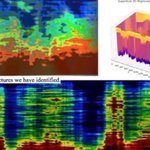
The subsurface structures exhibit complex geometries, suggesting deliberate design. This evidence, centered beneath Khufu’s pyramid, indicates a significant underground presence that challenges existing interpretations of the Giza Plateau’s archaeological framework.


Rodrigo Pires retweeted

It's on Confluence. It's on Sharepoint. It's in the repo. It's in the network share. No not that share, the other share. Yeah, you have to get to that one by logging in to this virtual machine. It was shared in a Teams chat. Oh you're not in that chat, let me add you.


Rodrigo Pires retweeted

Everything you love about generative models — now powered by real physics!
Announcing the Genesis project — after a 24-month large-scale research collaboration involving over 20 research labs — a generative physics engine able to generate 4D dynamical worlds powered by a physics simulation platform designed for general-purpose robotics and physical AI applications.
Genesis's physics engine is developed in pure Python, while being 10-80x faster than existing GPU-accelerated stacks like Isaac Gym and MJX. It delivers a simulation speed ~430,000 faster than in real-time, and takes only 26 seconds to train a robotic locomotion policy transferrable to the real world on a single RTX4090 (see tutorial: genesis-world.readthedocs.io…).
The Genesis physics engine and simulation platform is fully open source at github.com/Genesis-Embodied-…. We'll gradually roll out access to our generative framework in the near future.
Genesis implements a unified simulation framework all from scratch, integrating a wide spectrum of state-of-the-art physics solvers, allowing simulation of the whole physical world in a virtual realm with the highest realism.
We aim to build a universal data engine that leverages an upper-level generative framework to autonomously create physical worlds, together with various modes of data, including environments, camera motions, robotic task proposals, reward functions, robot policies, character motions, fully interactive 3D scenes, open-world articulated assets, and more, aiming towards fully automated data generation for robotics, physical AI and other applications.
Open Source Code: github.com/Genesis-Embodied-…
Project webpage: genesis-embodied-ai.github.i…
Documentation: genesis-world.readthedocs.io…
1/n
Rodrigo Pires retweeted

as a longtime fan of Conway's "Game of Life" algorithm i never once considered visualizing the time axis physically -- this is breathtaking and elegant to me
credit:
instagram.com/reel/C2hoRnFsm…