

Radars , Air Defense, Electronic Warfare, Satallites and Espionage
Joined May 2026
- Tweets361
- Following105
- Followers3.5K
- Likes333
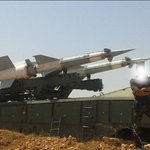






Exclusive img, dated 28 October 2026, was taken over the Adawi neighbourhood in Damascus at 5:35 PM. It shows an Israeli Zik (Hermes 450)
Israeli reconnaissance MALE have been almost constantly present in the skies over Damascus for nearly a month.


Urgent: A sixth (possibly seventh though unconfirmed) ammunition depot has exploded under mysterious circumstances. This time, the incident occurred in the city of Saraqib, Idlib.

Who remembers?
During the period between August and November 2024, before the launch of the “Deterrence of Aggression” operation conducted by HTS:
During those months, Israel carried out strikes against the SAA’s armament administration warehouses. There was a clear plan to destroy all strategic stockpiles that could be relied upon in long-term wars.
The warehouses targeted by Israel during that period included:
- “Tal Shanan” warehouses, approximately 20 km east of Homs.
- The warehouses in the Palmyra mountains.
- Al-Salima warehouses in Harasta, Damascus.
- Danha warehouses north of Damascus, near Al-Nabk. They reportedly contained approximately 1,500 ATGMs and were dedicated to ATGM storage.
- Al-Qastal warehouses north of Damascus.
- Qara warehouses north of Damascus.
After that, the SAA emptied the remaining warehouses and moved their contents to non military areas. These newly established ammunition storage sites were subsequently targeted, such as the site in Jabrin, Aleppo, on March 29, 2024; near the entrance to Latakia, at the Transport Corporation, on October 17, 2024; and a third site next to Hmeimim Air Base on October 3, 2024. The ammunition at this last site reportedly came from the emptying of the Al-Samiyah warehouses near Al-Haffah in Latakia.
At the time, a close friend of mine who worked in this field even told me that the army was no longer capable of fighting a war lasting more than 20 days.
Around 80% of the remaining ammunition was located inside barracks, regiments, and deployment positions, and was not considered strategic ammunition. These stocks could be depleted within just 15–20 days.
I cannot interpret this as anything other than an Israeli effort to exhaust the SAA’s primary ammunition reserves. It no longer had the basic means required to withstand the “Deterrence of Aggression” operation. Even by that point, none of the barracks still possessed ATGMs; almost all of them had been sent to Lebanon, with the exception of some SAA deployment areas in the north, the Republican Guard, and the 4th Division.
Now, over the course of 25 days, we have seen mysterious explosions at massive ammunition depots in Sarmada, Idlib apparently containing large quantities of ATGMs in addition to rocket artillery and artillery ammunition — Deir ez-Zor, and Al-Eis in Aleppo. Collectively, these incidents resulted in the deaths of more than 50 personnel from the forces of the new authorities.
We should also add the Bahramin warehouses in Tartus, which were struck during the first days following the fall of the regime. One of the 62 storage facilities at this site reportedly contained 8,000 220 mm thermobaric rockets for BM-27 multiple rocket launchers.
I can only interpret this as another effort to exhaust Syria’s ammunition stockpiles. Perhaps something is coming, and the campaign is not over yet.
A purely accidental photo reveals the unofficial Turk military presence (as of now) in Syria.
A candid photo of a beautiful location in Syria, Latakia, circulating among Syrians, taken from within the premises of the Ports Administration.
Here a Turkish Kılıç-class missile boat.


Turkey operates nine of these vessels, whose production began in 1998.
The vessel is armed with:
- One Italian OTO Melara 76 mm naval gun.
- Eight American RGM-84 Harpoon anti-ship missiles, with a range of approximately 120 km.
- Two 40 mm anti-aircraft guns.


Ukraine has carried out the world's first medical evacuation of a human from a battlefield using a drone. The Ukrainian 30th Mechanized Brigade successfully rescued a wounded comrade from a minefield.
A video released by the Yemeni War Media shows the shootdown of a Saudi AH-6I Little Bird helicopter over Najran Province. The AH-6I is the armed reconnaissance and light attack variant of the American MH-6 Little Bird helicopter. Saudi Arabia acknowledged the deaths of the pilot and co-pilot.
Detection of the Helicopter
- The helicopter appears to have been detected using a thermal imaging camera, possibly one of several Iranian systems, such as the Sadaad-103.
- This class of small helicopters is not equipped with sophisticated defensive countermeasure systems. Therefore, the absence of any defensive reaction from the crew is unsurprising.
The Missile Used
I noticed two important details that, as far as I have seen, have received little attention. Most observers have focused solely on the missile's low speed.
The first and most important observation is the apparent absence of an exhaust smoke trail and the lack of a clearly visible hot exhaust plume on the thermal camera.
If this observation is accurate, it could indicate that the missile is not powered by a conventional rocket motor.
Rocket motors carry both fuel and oxidizer, eliminating the need to draw oxygen from the atmosphere. Their combustion generates extremely high temperatures and produces thrust capable of accelerating missiles to supersonic speeds.
In this footage, however, there appears to be no clearly distinguishable thermal signature from the exhaust gases. This raises the possibility that the weapon is powered by a jet engine rather than a conventional rocket motor.
Indeed, the Yemenis possess the Iranian hybrid interceptor known as the 358 missile, also referred to by the Yemenis as the Saqr-1. It combines characteristics of an unmanned interceptor with those of a relatively slow-flying missile, consistent with the general characteristics discussed above.
The Saqr uses an AMT Titan mini-turbojet engine, manufactured by the Dutch company AMT Netherlands. This is a commercial engine originally developed to power small jet-model aircraft rather than designed specifically as a weapon. The engine weighs approximately 3.5 kg.
The engine draws oxygen from the atmosphere and mixes it with fuel inside the combustion chamber. The resulting hot gases pass through a turbine before exiting the exhaust nozzle. Energy extracted by the turbine drives the compressor, allowing the engine to sustain propulsion.
The missile reportedly flies at speeds of approximately 400–600 km/h. Its relatively slow speed allows it to loiter while searching for targets and potentially ambush helicopters from the air.
The second observation is straightforward: the missile appears to be moving unusually slowly, at a speed inconsistent with that of most conventional air-defense missiles.
Additional Information About the 358 Missile
The missile uses an imaging infrared (IIR) seeker, rather than a conventional infrared seeker that relies primarily on detecting a target's infrared signature.
It can reportedly be employed in two ways.
1. Loitering interception
The missile is launched and then loiters, flying in circles while waiting for a target. When an aircraft approaches, the missile's imaging infrared seeker acquires the target and guides the missile toward it at a reported speed of 400–600 km/h.
2. Direct engagement
The missile can also be launched directly at a target after the target has been detected and acquired using ground-based optical or radar systems.
Laser illumination may be used to measure the target's range, while GNSS coordinates can be programmed into the missile to support satellite-based navigation. If the target is already close and directly in front of the operator, such preprogramming may not be necessary.
The system also reportedly incorporates a man-in-the-loop guidance capability, allowing an operator to participate in controlling the engagement.
Its reported maximum range is 100 km, while its maximum operational altitude does not exceed 7.5 km.
How the Missile Gets Airborne
The turbojet engine described above relies on atmospheric air for combustion and therefore cannot provide static thrust independently of forward airflow in the same manner as a rocket motor.
The missile reportedly uses a slender gas-powered launch booster mounted underneath it to provide the initial acceleration needed for launch and to bring the missile up to a speed at which the turbojet can operate effectively. The booster then separates after fulfilling its role.

You ignorant fool.
1. Russia was the first to do this in history, in 2008, against a Georgian UAV.
2. June 15, 2017: A Syrian MiG-23MLD fighter reportedly shot down an Italian-made Selex ES Falco reconnaissance UAV operated by Jordan.
3. June 16, 2017: A second UAV of the same type was shot down by a Syrian fighter.
4. In 2018, the Israeli Air Force successfully shot down an Iranian UAV over the Syrian Golan Heights after it attempted to penetrate Israeli airspace.

The Saudis have just discovered that fighter jets can be used as an air defense platform against cruise missiles.
A bonus tip for the Saudis: fighter jets can shoot down drones, too !!
For the first time, an Egyptian made laser system designed to counter drones and projectiles designated EGY-HEL-01 and mounted on a pickup truck was observed during a tactical exercise conducted by the Second Field Army, in the presence of the Minister of Defense and Military Production, Ashraf Salem Zaher.


A brief analysis of a video released by the Houthis showing an alleged engagement involving a Saudi Eurofighter Typhoon, a European-built fighter aircraft (Spain, Italy, Germany, and the United Kingdom), on October 14, 2026.
I have included illustrative images, and the video will be available in the comments.
1. Target Detection and Tracking Systems
First, the aircraft appears to have been detected using a Forward-Looking Infrared (FLIR) camera. I believe the system may be one of the air-defense systems displayed by the Houthis during their military parade in Sana'a, reportedly developed with Iranian assistance.
One of their most distinctive features is the appearance of a green box that turns red when the system locks onto a target and registers an engagement. Civilian cameras such as the ULTRA-8500, which the Houthis previously used in an engagement involving an F-15, do not feature these graphics.
The possible systems include the Shafaq radar, Naba radar, 35 radar, and Ofoq radar, with reported ranges of 15 km, 120 km, 50 km, and 15 km, respectively.
These radars are intended to track targets with high precision and support missile guidance. They are therefore likely to operate in the X-band (8–12 GHz), although there is a small possibility that one of the shorter-range systems uses millimeter-wave frequencies in the K or Ka bands, above 18 GHz.
The Houthi-operated missiles that may support radar guidance include the Barq-1 and Barq-2.
In the configuration I suspect was used, the radar is integrated with an adjacent thermal camera. Both systems track the target simultaneously, with the camera assisting in target acquisition and providing visual documentation of the engagement.
The thermal camera could also help control when the radar is switched on and off, reducing the risk of the radar's emissions revealing its position. Under this concept, the radar would be activated only after the thermal camera had acquired a high-value target, and only for the short period necessary to guide the missile.
In other words, a passive detection system supporting a concealed air-defense ambush.
Note: The thermal camera could potentially operate without the radar, allowing the system to launch an infrared-guided missile at the aircraft.
2. Assessing the Missile Guidance Method
In the video, the missile detonates approximately 100 meters in front of the fighter. The center of the explosion appears to be roughly five to six fighter-aircraft widths away, corresponding to a distance of at least 70 meters.
In my assessment, this distance makes a small- or medium-sized infrared missile warhead an unlikely explanation for the damage observed.
The missile also appears to have approached the fighter head-on rather than pursuing it from behind. This is evidence against a conventional infrared seeker relying primarily on the engine's heat signature, although it does not, by itself, conclusively rule out infrared guidance.
We can therefore provisionally exclude conventional infrared-guided missiles such as:
- Igla
- Strela-1
- Strela-2
- R-60
- R-73, reportedly adapted for ground launch by Yemeni personnel under the designation Thaqib-1
Two main possibilities remain: imaging-infrared (IIR) guidance and radar guidance.
3. Possibility One: Majid AD-08
The Iranian Majid AD-08 air-defense system has a reported engagement range of 8 km and an engagement altitude of 6 km.
Its missile uses an imaging-infrared (IIR) seeker, rather than a conventional infrared seeker that primarily tracks the target's infrared signature. An IIR seeker uses a thermal image of the target, allowing it to track the aircraft's image rather than relying exclusively on the engine's heat.
This type of seeker can potentially engage an aircraft from the front, consistent with the apparent geometry of the engagement in the video.
Barq-1 and Barq-2, medium-range, radar-guided surface-to-air missiles. A variant equipped with an infrared seeker has also been reported.


However, the appearance of a bright trail in a thermal camera does not, by itself, prove that fuel is leaking.
Fourth: Why might the trail appear bright on the thermal camera?
A thermal camera records infrared radiation and converts it into an image. The apparent brightness of a substance depends on its temperature, emissivity, the camera's spectral sensitivity, and the display settings.
If the trail consists of hot gases or combustion products, it could appear bright. A fuel leak that ignites could also produce a conspicuous thermal signature.
However, the video does not conclusively demonstrate that the leaking substance is burning. A bright appearance alone cannot establish combustion, nor can it prove that the trail consists of fuel rather than another fluid or hot material.
My assessment is that fuel leakage is a plausible hypothesis, but not a confirmed identification. Further evidence would be required to distinguish it from hydraulic fluid or other possible sources.
9. Final Assessment
The available footage supports several observations, but the precise sequence of events remains uncertain.
• Target detection: A thermal camera appears to be involved, although the specific system has not been identified conclusively.
• Missile identification: The Barq-1 or Barq-2 family is a possible candidate, but the available footage is insufficient to confirm either model.
• Guidance method: Radar guidance is one plausible explanation, but the apparent head-on engagement does not independently establish the guidance method.
• Premature detonation: The missile may have detonated before reaching its intended intercept point, but the cause cannot be determined from the video.
• Defensive response: The lack of an obvious evasive maneuver raises questions about the aircraft's warning and countermeasure systems, but does not prove that they failed.
• Aircraft damage: The footage suggests a possible impact near the left wingtip and a subsequent disturbance in flight. The precise structural or systems damage remains unknown.
• Leaking substance: Fuel leakage is plausible, but the thermal imagery does not establish the substance's identity or whether it ignited.
Finally, there is currently no evidence establishing that the fighter was shot down, at least within Yemen. The footage may show a successful engagement that caused damage, but that is not the same as demonstrating the destruction or loss of the aircraft.
Based on the level of proficiency demonstrated by Saudi pilots in the F-15 video and this footage, as well as an analysis of the results of the close air support they provide to their ground forces—which has achieved virtually zero results on the battlefield—I estimate that the effectiveness of their air support does not exceed 20% of that delivered by another advanced, well-trained air force.
Based on these two analyses, I would put the aircraft's chances of survival at no more than 20%. A pilot with such limited experience would be unlikely to risk attempting a landing in a damaged aircraft, especially given the high probability of a fatal accident on the runway, assuming he even manages to reach an airfield. In such circumstances, ejecting would be the safer option.
Ultimately, my analysis of these videos and the results of Saudi air support suggests that their pilots are among the least capable in the world. It also demonstrates that, in aviation, an aircraft's technological sophistication and performance specifications are not everything. Even a modern fighter is of little use without a well-trained and courageous pilot at the controls.

One possible explanation is that the proximity fuze miscalculated the distance to the target and initiated detonation slightly earlier than intended.
Another possibility is that the missile lost its radar lock because of a technical malfunction in the missile's seeker or the ground-based radar.
However, the footage does not establish whether the lock was actually broken, much less why. Nor can we conclude that the aircraft did not employ electronic countermeasures simply because the pilot did not visibly maneuver or release chaff before the explosion.
My impression is that the pilot may have been caught by surprise, unlike the pilot in the earlier F-15 footage. Nevertheless, the available video is insufficient to determine what the pilot knew or what warnings appeared in the cockpit.
7. Damage to the Left Wing
A fragment from the missile appears to have struck the fighter's left wingtip.
The thermal camera subsequently records a bright, apparently leaking substance. This has prompted speculation about whether the material is hydraulic fluid from the system responsible for moving the wing's control surfaces or jet fuel leaking from an internal wing tank.
The fighter appears to struggle briefly before regaining a more stable flight attitude. This could indicate a temporary loss of control or an aerodynamic disturbance, potentially caused by damage to the wing or its associated systems.
However, the footage alone cannot establish which component was damaged or whether the aircraft's hydraulic system was compromised.
The relevant components may include wing actuator mechanisms, which form part of the system responsible for moving the aircraft's control surfaces.
Depending on the specific control surface and installation, these mechanisms can include:
• Hydraulic actuators: Convert hydraulic pressure into mechanical movement.
• Servo-control valves: Regulate fluid flow and direction to control actuator movement.
• Mechanical linkages: Transfer movement to the relevant control surface.
• Bearings and hinges: Allow the control surfaces to rotate around their axes.
• Position sensors: Monitor control-surface positions and relay information to the flight-control system.
Damage to one of these components could potentially affect control-surface movement. Nevertheless, it is not possible to identify a damaged actuator or confirm hydraulic-system damage from this footage alone.
8. Is the Bright Substance Hydraulic Fluid or Jet Fuel?
I consider jet fuel a possible explanation for the observed trail, but the available thermal footage does not conclusively establish its identity.
There are several reasons to examine the fuel-leak hypothesis.
First: The apparent duration and continuity of the leak.
The bright trail appears to persist for an extended period rather than stopping immediately. If the Typhoon's hydraulic system has leak-detection and isolation provisions, these may limit certain types of fluid loss. However, without technical documentation identifying the specific circuit, reservoir arrangement, and isolation logic, it would be premature to claim that a hydraulic leak of this duration is impossible.
Second: The physical characteristics of hydraulic fluid.
Hydraulic fluid is generally more viscous than jet fuel. A high-pressure hydraulic leak can produce a fine spray or mist, although its appearance depends on the pressure, the size and shape of the damaged opening, and the airflow around it.
Its color is not a reliable identification method in thermal footage. Likewise, a white trail cannot by itself establish that the leaking substance is fuel rather than hydraulic fluid.
Third: The behavior of jet fuel in flight.
Jet fuel, such as JP-8 or an equivalent aviation fuel, can escape from a damaged wing tank or fuel line and become dispersed by the airflow. Depending on the conditions, the resulting trail may appear as a mist, vapor, or liquid droplets.
At high airspeeds, the airflow can stretch the material into a long trail.
However, the apparent size of the explosion raises questions. The blast seems unusually large for a missile with a reported 14 kg warhead. The fighter's wing also appears to have sustained damage despite the apparent separation between the aircraft and the explosion.
In my assessment, these observations make the Majid a less likely candidate, although the video alone cannot conclusively exclude it.
There is another consideration: imaging-infrared missiles often employ terminal engagement profiles that differ from those of radar-guided interceptors. Many radar-guided missiles can execute lofted or diving approaches, potentially attacking from above or detonating beside and above the target. However, the detonation geometry alone is insufficient to identify the guidance system conclusively.
4. Possibility Two: Barq-1 or Barq-2
The remaining candidates are the Barq-1 and Barq-2, medium-range, radar-guided surface-to-air missiles. A variant equipped with an infrared seeker has also been reported.
The Barq missiles are associated with Iranian Taer missile technology.
Their reported specifications are as follows:
Specification
Barq-1
Barq-2
Reported range
50 km
70 km
Reported engagement altitude
15 km
20 km
Guidance
Radar-guided variants reported
Radar-guided variants reported
Based on the available footage and the apparent engagement geometry, I consider the Barq family a strong possibility, with radar-guided variants being the leading candidates in this assessment.
Unfortunately, no reliable video of the missile's launch is currently available to me. In the previous F-15 engagement, I was able to narrow the possibilities by estimating the missile's flight distance from its flight time. The apparent intensity of the exhaust and the characteristics of the rocket motor can also help distinguish between missile types.
In this case, however, the available footage does not allow the possibilities to be narrowed down with the same degree of confidence.
5. Why Did the Typhoon's Defensive Systems Not React?
The fighter in the video does not appear to make any obvious evasive maneuver before the explosion. This raises the possibility that its Radar Warning Receiver (RWR) did not detect a radar lock, unlike what appeared to occur in the footage of the F-15 engagement.
Possible explanations include a technical malfunction or the pilot not having the system configured to operate in a fully automatic mode.
The Eurofighter Typhoon is equipped with the European Praetorian Defensive Aids Sub-System (DASS), which integrates several defensive capabilities, including:
• Missile Approach Warning (MAW): Detects and warns of approaching missiles.
• Electronic Support Measures (ESM): Detects and analyzes electromagnetic emissions, including hostile radar signals.
• Electronic Countermeasures (ECM): Provides electronic countermeasures, including radar jamming.
• Chaff and flare dispensers: Release countermeasures intended to defeat radar-guided and infrared-guided threats, respectively.
The manufacturer describes Praetorian as a system capable of detecting, classifying, and identifying radar emissions and providing the pilot with information to improve situational awareness.
However, the absence of an obvious evasive response does not prove that the RWR failed. A missile may approach without illuminating the aircraft with a detectable fire-control radar, depending on the engagement configuration and missile guidance method. A passive infrared seeker, for example, would not necessarily trigger an RWR warning.
Approximately 14 seconds after the missile detonates, the pilot begins releasing flares for reasons that remain unclear. One possibility is that the pilot was reacting to the damage sustained by the aircraft, but the footage does not establish the reason.
6. Why Did the Missile Detonate Before Reaching the Aircraft?
The missile appears to have exploded approximately 70–100 meters in front of the fighter.

