
Economist, bike commuter, ultimate frisbee player. Studying wages, poverty, jobs, health care, and economic mobility. Striving to be part of the solution.
Joined October 2013
- Tweets6.5K
- Following232
- Followers6.7K
- Likes16




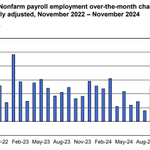
The labor market stuck the landing!!!
Not much soft about it.
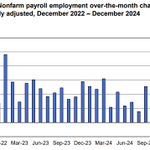
We end the year with a strong #jobsday:
- Payroll employment up 256k
- Unemployment rate ticked down to 4.1%
- Labor force participation rate held steady
- Overall and prime-age employment-to-population ratios up

The latest #JOLTS data shows much is "little changed" and "changed little" for November, expected given no surprises in the jobs data for that month as the labor market returned to strength after the dip in October.
Job openings ticked up slightly in Nov but have trended back into the normal range for well over two years. Compared to its height in Mar 2022, job openings are down by about one-third. Job openings clearly appear in line with prepandemic trends along with the growing population.


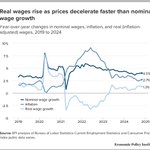
Latest price data out this morning. We learned last week that average nominal wages grew 4.0%. Today's inflation data came in at 2.7% over the year. Thus, average real wages grew 1.3%. November marks 19 months in a row of rising average real wages, increasing living standards.

Big news on inequality:
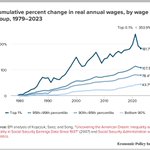
- wage inequality fell in 2023 as real earnings grew for the bottom 90% and declined for the top 1%
- over the long run, 1979-2023, wages for the top 1% skyrocketed (+182%) while wages for the bottom 90% was slow (44%).
epi.org/blog/wage-inequality…

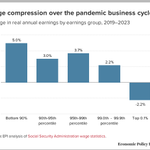
Unlike long-standing labor market trends, new data finds wage compression—faster growth at the bottom than the top—since 2019. The pandemic economy was characterized by a deep recession followed by a tremendous labor market bounceback engineered by intentional policy decisions.


The latest #jobs data says the labor market is still going strong. After the softer numbers in October from the weather and striking workers, November bounces back with strong job growth along with upward revisions. On average, the economy added 173k jobs the last 3 months.

The overall unemployment rate ticked up slightly to 4.2%, still quite strong. The Black unemployment rate ticked up to 6.4%, significantly higher than the white or AAPI rate. It's notably a volatile series due to a smaller sample size, but still a key measure to keep an eye on.


Job openings ticked up in the latest #JOLTS data for October as quits rose, hires fell slightly, and layoffs remained low. For more labor market analysis, please find me where the skies are blue: bsky.app/profile/elisegould.…


After Friday's tremendous jobs report, good news on prices. Inflation is down to 2.4% over the year, falling 6 months in a row to its lowest since February 2021. Inflation-adjusted wages are up 1.5%. Rising real wages increase the living standards of workers and their families.

When comparing the labor market with four years ago (in the pandemic recession) or before the pandemic began, the answer is clear: More workers have jobs and wages are beating inflation by solid margins. At the low end, 16.8% real wage growth and 6.5% for workers at the middle!

Strong, not hot. Real wages are rising as inflation continues to fall. Nominal wage growth remains in line with productivity improvements and a low labor share of corporate sector income. The Fed should continue to return interest rates to normal levels.
epi.org/blog/the-labor-marke…

Strong jobs report!
- payroll employment up 254,000 with past months revised up by 72,000
- nominal wage growth rose 4.0% over the year
- unemployment rate ticks down to 4.1%
- overall employment-to-population ratio rises while the prime-age EPOP holds steady at 23 year high
For more @EconomicPolicy charts on the latest labor market data, check out our jobs day landing page.
Huge thank you to @Katiedeco4 and @joe_fast1 for their fast and meticulous work preparing and updating all the spreadsheets and charts.
epi.org/indicators/unemploym…

If you want to read more about just how strong this recovery and the current labor market is, please check out my latest blog post detailing latest trends in job and wage growth, particularly compared to historical benchmarks.
epi.org/blog/actually-the-u-…
