

Telling stories @IPinfo, prev @Cloudflare, @CloudflareRadar, journalist @Publico SIC @dinheiro_vivo, etc. Discoverer. Human🇵🇹. Tech, cinema, cars. Podcaster.
Lisboa
Joined January 2009
- Tweets29.3K
- Following1.4K
- Followers2.1K
- Likes24.1K







Pinned Tweet
First issue of something new I’m trying: The Internet Brief. This one: Yandex’s data centers going dark, French supermarket fridges, today’s critical PHP flaw (!!), a month of outages, and the South Pole’s satellite hours. First try, so feedback welcome!

João Tomé retweeted
Millions of attempts is the attacker side.
On the defender side, @IPinfo re-checks the same ~1.3M PHP servers every day: the share on a patched release went from 5% to 10% in a day.
But servers on old versions with no official fix barely moved: 0.6% upgraded overnight, while 7% went quiet or started hiding their PHP version.


João Tomé retweeted
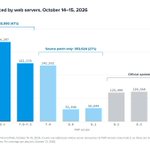
A day after PHP fixed PHP2Shell, about 3,000 of 409,494 servers on old, unfixed PHP versions had moved to a newer one (0.7%). On the fixed versions, 18% were already patched.
PHP only released updates for recent versions (8.2–8.5). Versions 5.4–7.3 are affected and get no official fix (a few vendors and volunteers patch old versions themselves); for most, the way out is moving the site to a newer PHP.
The flaw has the tech world on edge (rightly so). Government sites in Europe, Wikipedia and the Internet Archive went offline to be safe, and today RIPE NCC took three of its sites down as a precaution.

Millions of attempts is the attacker side.
On the defender side, @IPinfo re-checks the same ~1.3M PHP servers every day: the share on a patched release went from 5% to 10% in a day.
But servers on old versions with no official fix barely moved: 0.6% upgraded overnight, while 7% went quiet or started hiding their PHP version.
A day after PHP fixed PHP2Shell, about 3,000 of 409,494 servers on old, unfixed PHP versions had moved to a newer one (0.7%). On the fixed versions, 18% were already patched.
PHP only released updates for recent versions (8.2–8.5). Versions 5.4–7.3 are affected and get no official fix (a few vendors and volunteers patch old versions themselves); for most, the way out is moving the site to a newer PHP.
The flaw has the tech world on edge (rightly so). Government sites in Europe, Wikipedia and the Internet Archive went offline to be safe, and today RIPE NCC took three of its sites down as a precaution.
João Tomé retweeted

No Ocidente, as novas gerações têm rendimentos reais superiores aos dos seus pais e avós quando estes tinham a mesma idade. Talvez esteja na altura de deixar cair a lenga-lenga do empobrecimento geracional como explicação para o crescimento da extrema-direita.

Russian drone strikes cut power in Ukraine’s Zhytomyr region on October 22 (yesterday).
About 4 in 10 Internet addresses there stopped answering IPinfo’s pings. This morning, about a quarter were still silent. The neighboring regions stayed normal.
Routes stayed up, so this was a power problem, not a network one.

João Tomé retweeted

21 years ago I named "Reddit" and everyone said it was a horrible name, but I insisted one day people would say "I read it on reddit" and used my CEO-privilege to overrule everyone + kept the name. Now the company twitter account (unbeknownst to them) is making the joke. Heh.

João Tomé retweeted

Chief information security officer @ anthropic btw

João Tomé retweeted
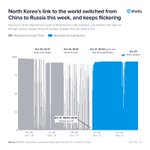
North Korea’s state websites are flickering again. The country reaches the rest of the Internet through just two carriers, one Chinese and one Russian.
Since Tuesday everything has gone through Russia, and early this morning even that link dipped three times, once to under a third of the Internet able to reach it.
The bigger problem now is the country’s own “phone book”: both servers that tell computers where .kp sites live are failing. Sites still open for most people because other servers remember the old answers, but those memories expire.

João Tomé retweeted

Today I turn 88…I’ve seen some serious shit. The most serious of it all is love. I love my family, my friends, and my wonderful fans. The power of love remains.
North Korea’s state websites are flickering again. The country reaches the rest of the Internet through just two carriers, one Chinese and one Russian.
Since Tuesday everything has gone through Russia, and early this morning even that link dipped three times, once to under a third of the Internet able to reach it.
The bigger problem now is the country’s own “phone book”: both servers that tell computers where .kp sites live are failing. Sites still open for most people because other servers remember the old answers, but those memories expire.
João Tomé retweeted
First issue of something new I’m trying: The Internet Brief. This one: Yandex’s data centers going dark, French supermarket fridges, today’s critical PHP flaw (!!), a month of outages, and the South Pole’s satellite hours. First try, so feedback welcome!

João Tomé retweeted
PHP fixed two critical flaws today. Wiz, which found them, says every version since 5.4 is affected, but the official updates only cover 8.2 and newer.
In @IPinfo's Internet-wide scan last week, at least 502,180 addresses showed a PHP version from 5.4 to 7.3: affected, with no fix at all. That’s nearly 4 in 10 of those that show a version.
Many servers hide their version, and some Linux distributions patch old ones themselves, so this is a floor.


ALERT - Multiple websites worldwide could go dark as critical PHP flaws spark global cyber alert
insiderpaper.com/critical-ph…


João Tomé retweeted

Introducing The Internet Brief, a new IPinfo data insights newsletter by João Tomé!
From Yandex data center outages to RPKI adoption and exposed supermarket refrigeration systems, the first issue explores what IPinfo's data reveals about how the Internet works and where things go wrong.
Read the first issue and subscribe for more data-driven research! 👇
