







Patricia Cummings, PhD, MPH retweeted

A 20-year study of a million children found that kids conceived by IVF frozen embryo transfer had double the cancer rate.
84% of US IVF transfers now use frozen embryos.
Danish researchers followed every child born in Denmark from 1996 to 2012 for up to 20 years. The study was published in JAMA last week.
Children conceived without assisted reproduction developed cancer at 18.3 per 100,000 per year.
After frozen embryo transfer, the rate was 41.1.
After ICSI, where a single sperm is injected directly into the egg, it was 27.9.
After frozen transfer, leukemia ran more than twice as high.
The only method that showed no increase was a fresh embryo, never frozen, created by placing eggs and sperm together in a dish.
That version is now the exception. In 2021, 84% of US IVF transfers used frozen embryos and 78% used ICSI, according to the CDC.
Compared with children of women with a history of infertility who conceived without treatment, the frozen embryo risk stayed at more than double.
In the authors' words, the results suggest "procedure-related, rather than infertility-related, factors." This is not the first time the pattern has shown up.
A 2019 JAMA study of the same Danish children at 11 years found it too. A 2022 study of 2.3 million children in Taiwan found those conceived through assisted reproduction had 58% higher cancer risk, "mainly owing to leukemia and hepatic tumor."
The absolute risk is small, and most of these children will never get cancer. The Danish children were conceived with older freezing methods, and the authors warn the results "may differ for contemporary protocols."
Nobody yet has long-term data on IVF as it is done today. Children conceived with today's methods won't have 20 years of data until the 2040s, so today's IVF children are, in effect, the trial.
Parents deserve to hear these numbers before they sign the consent form, because their child is the one who will carry the risk.
doi.org/10.1001/jama.2026.18…

Patricia Cummings, PhD, MPH retweeted

In an era of increasingly easy access to GLP-1s, some experts are raising concerns about the potential for misuse, especially among patients with eating disorders. Access has expanded dramatically, with oral formulations now available and prescriptions often a click away via telemedicine sites that may rely heavily on self-reported weight and health information.
The concern is not without basis. Although GLP-1s are approved for patients with type 2 diabetes, obesity, or overweight with certain coexisting comorbidities, the proportion of prescriptions written for patients without these conditions increased from 4.5% in 2018 to 17% in 2023, according to an analysis of prescribing trends. mdsc.pe/3QyMRBo

Patricia Cummings, PhD, MPH retweeted

WE ARE BEING POISONED.
Make smart choices.
DON'T EAT GARBAGE FOOD.
(There is no playing with your health.)
Patricia Cummings, PhD, MPH retweeted

Stanford researchers scanned teenagers listening to their mothers, having already shown that in young children her voice lights up half the brain. Something had switched.
In children under about twelve, the reward circuitry fires harder for their mother's voice than for a stranger's. In adolescents it flips. The reward regions respond more strongly to unfamiliar voices, and her voice stops being the sound the system reaches for.
The crossover happens somewhere between thirteen and fourteen. Nothing has gone wrong. The circuitry has not broken and she has not been demoted. It is being retuned deliberately, because a person who is going to leave home needs to start finding other people interesting, and the brain arranges that by making everyone outside the house more rewarding to listen to.
Which means the thing every mother of a teenager describes has a mechanism. He is not ignoring her out of contempt. Her voice is no longer arriving at the part of him that used to light up for it.
Two things worth holding onto here. The first is that the hearing and processing regions are still there and still working. He hears her perfectly. What changed is what his reward system does with the sound.
The second is that this is temporary, and there is a whole literature on adult children and their mothers to say so. The circuitry is being repointed outward for the years he needs to build a life away from her. It is not being deleted.
So a woman finds herself talking to somebody who used to run toward her voice across a car park, and who now barely registers it. That is her son's brain doing exactly what it is supposed to do, on schedule, and it is a horrible thing to be on the receiving end of.
jneurosci.org/content/42/20/…

Patricia Cummings, PhD, MPH retweeted

Fun fact: in 🇨🇦 + 🇺🇸, ~80% of grain-based foods have glyphosate.
It’s largely considered safe due to a study in 2000 that found it caused no DNA damage, reproductive harm or cancer.
It was recently retracted. Turns out it was ghostwritten by Monsanto.
sciencedirect.com/science/ar… – at Toronto, Ontario

Patricia Cummings, PhD, MPH retweeted

Lead found in 7 of 8 tampon brands we tested.
Tens of millions of people in the US use tampons every month, with previous studies flagging heavy metals concerns. Yet tampons had never been tested for 256 analytes, and brands don't typically publish their lab reports.
Oasis commissioned certified lab testing on 8 of the most popular products: Tampax Pearl, Playtex Sport, Kotex Click, L., Cora, Rael, Honey Pot, and Organyc. Screening for heavy metals, phthalates, residual solvents, and glyphosate.
Lead was quantified in 7 of 8 products tested. Cadmium in 3, all labeled conventional.
Conventional products carried substantially more lead than organic-cotton, the same pattern a 2024 peer-reviewed study found across 30 tampons from 14 brands.
Every conventional product in our panel exceeded that study's geometric mean of 120 nanograms per gram. with every organic-cotton product falling below it.
Why does this matter?
Between 52% and 86% of people who menstruate in the US use tampons, worn internally for hours at a time.
The FDA opened an investigation into metals in tampons in September 2024, and in 2026 its scientists published a risk assessment finding negligible toxicological concern from tampon exposure alone, with every metal's margin of safety above 1.
Two caveats. Our testing measured how much metal is in the material, not how much leaches out or gets absorbed, so these numbers are not a health-risk estimate.
And the FDA assessed tampons in isolation without accounting for total lead exposure from diet, water, air, and other products.
Phthalates, glyphosate, and residual solvents were not quantified above reporting limits in any product.
What the testing does surface is a regulatory gap. The FDA caps lead at 5 ppb in bottled water and 10 ppm in cosmetics, and finalized lead limits for baby food in January 2025 but sets no content limit for tampons.
Our findings do not indicate a significant health risk from tampon use. Yet some users may still wish to reduce heavy metal contact where they can.
Full methodology, product-by-product results and limitations can be found on the Oasis app and linked below.
Beginning in August, Oasis is launching large-scale batch testing across consumer products and supplements with the goal of leading the most honest testing of every product possible.
Testing and review overseen by Oasis Science Board @jacobmhands, @PhD_Leigh and @mike_lustgarten
Full results on Oasis app


Cases of cyclosporiasis being found in CA are no more than the usual amount found over this period (Jan 2026 to current - 41 cases). That’s down from 80 cases during the same period in 2025 — roughly half as many. Most
CA 26’cases are linked to international travel.
Patricia Cummings, PhD, MPH retweeted

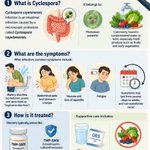
Cases of an intestinal infection caused by a parasite are rising, now up to 2,944 cases in 32 states
It causes a severe stomach illness that lasts over a week long
Confirmed cases of cyclosporiasis are being found in California, New York, Illinois, Ohio, Michigan and more
It’s spread by eating contaminated food or water. To avoid getting sick, it is recommended to wash your hands and all your fruits and veggies or to cook your vegetables
Here’s a list of cities being hit:
Detroit, Metro Detroit, Michigan: Heavily impacted with parts of Michigan’s 1,500+ cases; hundreds in Wayne, Oakland, Macomb counties
New York City, New York: Hundreds of cases
Chicago and Illinois area: Significant state total 31–80+ cases
Columbus, Cleveland other Ohio metros: Hundreds statewide with strong activity near Michigan border
Los Angeles, Long Beach area, California: Part of state’s confirmed domestic cases
Other notable mentions
- Houston / Dallas, Texas
- Atlanta, Georgia
- Miami / Florida areas
- Philadelphia / New Jersey metros
- Charlotte / North Carolina
- Smaller clusters in cities across PA, MA, IN, etc.

Patricia Cummings, PhD, MPH retweeted
“An outbreak involving a parasitic infection (called Cyclosporiasis) is, quote, large and growing in Michigan, where more than 300 cases have been confirmed, and the CDC is monitoring cases in 17 other states”
There have been 145 more cases in the US across 17 states with 20 hospitalizations
Cyclospora cayetanensis is a microscopic parasite. It spreads via contaminated food or water. Often by fresh produce like cilantro, basil, raspberries, snow peas, or leafy greens
- Main symptom: Severe, watery and sometimes explosive diarrhea
- Others: Loss of appetite, weight loss, stomach cramps, bloating and gas, nausea, fatigue, low-grade fever, body aches
Symptoms can last weeks
Patricia Cummings, PhD, MPH retweeted

For decades, endometriosis has been one of the most mysterious and debilitating conditions affecting millions of women worldwide, causing chronic pain, infertility, and reduced quality of life. Now, a major study suggests that a common bacterium may play a key role in driving the disease.
Researchers identified Fusobacterium (particularly Fusobacterium nucleatum), a bacterium frequently found in the mouth and gut, in the uterine lining of approximately 64% of women with endometriosis — compared to less than 10% of healthy controls.
Once present, the infection appears to trigger the release of a signaling protein called TGF-β, which causes normal endometrial fibroblasts to transform into aggressive myofibroblasts that promote the growth and spread of endometriotic lesions.
This discovery raises exciting possibilities for new, non-hormonal treatments. In mouse models of endometriosis, antibiotic therapy targeting Fusobacterium (such as metronidazole) significantly reduced both the number and size of lesions. While these results are promising, the authors emphasize that further clinical trials are needed to confirm whether eradicating the bacterium can effectively treat the condition in humans.
The findings represent a significant step forward in understanding the microbial contributions to endometriosis and could pave the way for more targeted, less invasive therapies beyond current options like surgery and hormonal suppression.
[Muraoka, A., et al. (2023). "Fusobacterium infection facilitates the development of endometriosis through the phenotypic transition of endometrial fibroblasts." Science Translational Medicine, 15(700). DOI: 10.1126/scitranslmed.add1531]

Patricia Cummings, PhD, MPH retweeted

You have noticed it. ChatGPT feels dumber than it used to. Your prompts that worked six months ago produce worse results now. The writing sounds flatter. The ideas sound safer. The internet itself feels like it is shrinking. Every article reads the same. Every email sounds the same. Every answer sounds like it was written by the same voice.
You thought it was you. It is not you.
Researchers at Oxford and Cambridge published a paper in Nature proving what is happening. They call it Model Collapse.
Here is the mechanism in one sentence. AI trained on AI-generated data gets dumber every generation until it forgets what real human data looked like.
The internet is filling with AI-generated content. Blog posts. Articles. Reviews. Comments. Social media. AI companies scrape the internet to train the next generation of models. Which means the next generation of AI is being trained on the output of the current generation.
Each cycle loses information. Not randomly. It loses the rarest, most unusual, most creative parts first. The researchers call these the "tails of the distribution." The weird ideas. The unexpected perspectives. The things that made the internet feel human. Those disappear first.
What remains is the average. The safe. The expected. The bland.
Then the next generation trains on that. And loses more. And the next generation trains on that. And loses more. The researchers proved this is not a slow decline. Major degradation happens within just a few iterations. Even when some of the original human data is preserved.
They tested it on large language models. On image generators. On statistical models. The pattern was the same every time. The output converges toward a narrow, flattened version of reality that looks nothing like the original data.
The lead researcher put it plainly. "Large language models are like fire. A useful tool. But one that pollutes the environment."
The pollution is invisible. You cannot see which sentence on the internet was written by a human and which was written by AI. Neither can the AI that is about to train on it. And once the tails are gone, they do not come back. The damage is irreversible.
This is not a prediction anymore. It is a diagnosis.
The internet you grew up on was built by humans writing things no algorithm would have written. Strange, personal, imperfect, alive. That internet is being diluted. One generation of AI at a time. And the models trained on what remains are learning a smaller and smaller version of the world.
Model Collapse is not a technical problem. It is a cultural one. The thing that made the internet worth reading is the thing that disappears first.

Patricia Cummings, PhD, MPH retweeted

Okay this is genuinely insane.
SpaceX just unveiled a satellite whose only job is to run AI. Not internet. Not GPS. Just compute, floating in orbit.
It's called AI1, and the reason behind it breaks your brain.
AI data centers on Earth are hitting a wall, not a chip wall, a physics wall.
They need staggering amounts of power and water just to stay cool, and we're running out of grid and land to build them.
So Musk's answer is: stop building them on Earth.
In orbit, the sun never sets. Free power, 24/7. No water for cooling, you just radiate heat into the vacuum of space. The two things choking AI on the ground barely exist up there.
And here's the wild part: Musk says it's easier to build than a Starlink satellite. Strip out the complex antennas and it's "a lot of solar cells, a radiator, and some laser links."
One AI1 carries the compute of an Nvidia GB300 rack, the same hardware data centers fight over down here.
AI1 is just the first one. The plan is a constellation of up to a million of them.
And the timing isn't an accident, SpaceX goes public this week at a ~$1.75 trillion target. This isn't a rocket company anymore. It's positioning itself as the power grid for AI, in space.
The race for AI compute just left the planet. Literally.
@SpaceX
Patricia Cummings, PhD, MPH retweeted

After the drastic change in guidance to no longer keep allergenic foods away from babies until 1 to 3 years of age and instead introduce them by 6 months of age, the prevalence of egg allergy among children fell by more than 17% in a new study published Monday in the journal JAMA Pediatrics. cnn.it/4v50rM0


😅 Oopsies 😂

they burned $500,000,000 on Claude in a single month
an AI consultant revealed the full story.
a company gave Claude access to all employees.
nobody set a spending limit.
what the bill exposed:
> $500,000,000 in 30 days
> $16,600,000 per day
> $694,000 per hour
> Claude has a builtin spending limit feature
> it takes 30sec to enable
> someone skipped that step
the most expensive click in corporate history was the one nobody made
Patricia Cummings, PhD, MPH retweeted

An MIT professor taught the same math course for 62 years, and the day he retired, students from every country on earth showed up online to watch him give his final lecture.
I opened the playlist at 2am and ended up watching three of them back to back.
His name is Gilbert Strang. The course is MIT 18.06 Linear Algebra.
Every machine learning engineer, every data scientist, every quant, every self-taught programmer who actually understands how AI works learned the math from this one man. Most of them never set foot on MIT's campus. They just opened a free playlist on YouTube and let him teach.
Here's the story almost nobody tells you.
Strang joined the MIT math faculty in 1962. He retired in 2023. That is 61 years of standing at the same chalkboard teaching the same subject to 18-year-olds.
The interesting part is what he did when MIT launched OpenCourseWare in 2002. Most professors were skeptical. They worried that putting their lectures online would make their classrooms irrelevant. Strang did not hesitate. He said his life's mission was to open mathematics to students everywhere. He filmed every lecture and gave it away.
The decision quietly changed how the world learns math.
For decades linear algebra was taught the wrong way. Professors started with abstract vector spaces and proofs about field axioms. Students drowned in the abstraction. Most never recovered. They walked out believing they were bad at math when they had simply been taught in an order that nobody's brain is built to absorb.
Strang inverted the entire curriculum.
He started with matrix multiplication. Something you can write down on paper. Something you can compute by hand. Something you can see. Then he showed his students that everything else in linear algebra eigenvectors, singular value decomposition, orthogonality, the four fundamental subspaces was just a different lens for understanding what the matrix was actually doing under the hood.
His rule was strict. If a student could not explain a concept using a concrete 3 by 3 example, that student did not actually understand the concept yet. The abstraction was supposed to come last, not first. The intuition was the foundation. The proofs were just confirmation that the intuition was correct.
The second thing Strang changed was the classroom itself. He said please and thank you to his students. Every single lecture. He paused mid-derivation to ask "am I OK?" to check if anyone was lost. He never used the word "obviously" or "trivially" because he knew exactly what those words do to a student who is one step behind. He treated 19-year-olds learning math for the first time the way he treated his own colleagues. With patience. With respect. With the assumption that they belonged in the room.
For 62 years.
The result is something that has never happened in the history of education. A single math professor became the default teacher of his subject for the entire planet.
Universities in India, China, Brazil, Nigeria, every country with a computer science department, started telling their own students to just watch Strang's lectures. The University of Illinois revised its linear algebra course to do almost no in-person lecturing. The reason was honest. The professor said they could not compete with the videos.
His final lecture was in May 2023.
The auditorium was packed with students who had never met him before. He walked to the chalkboard, taught for an hour, and at the end the entire room stood and applauded. He looked confused for a moment, like he genuinely did not understand why they were cheering. Then he smiled and waved them off and walked out.
His written comment under the YouTube video of that final lecture was four sentences long. He said teaching had been a wonderful life. He said he was grateful to everyone who saw the importance of linear algebra. He said the movement of teaching it well would continue because it was right.
That was it. No book promotion. No farewell speech. No legacy management.
The man whose teaching is the foundation of modern AI just thanked the audience and went home.
20 million views. Zero ego. The entire engine of the AI revolution sits on top of math that millions of people learned for free from one quiet professor in Cambridge.
The course is still on MIT OpenCourseWare. Every lecture, every problem set, every exam, every solution. Free.
The most important math course of the 21st century is sitting one click away from you. Most people will never open it.

Patricia Cummings, PhD, MPH retweeted

US fertility reached 1.57 last year, the lowest ever recorded, and the WSJ explanation is "uncertainty about finances, relationship stability, and the political climate"
my great grandma had eleven children during the second world war, in a country being bombed, in a house with no running water, on rations.
poor people have always had kids. the poorest people on earth right now still have kids and the financial excuse is a story we tell ourselves because it makes us feel good and the real one is unbearable
the real mechanism is that we got rich enough to redefine children as an expense instead of the point. somewhere in the last fifty years the cultural goal inverted and a child stopped being what life is for and became a line item competing with the lifestyle. once you frame it that way the math never works, because the math isnt supposed to work. that's the point
we are living in the richest moment in human history and we decided to use the surplus to buy ourselves out of the future. the most prosperous civilization that has ever existed is committing demographic suicide at the altar of personal optimization and comfort, and the official line is that we cant afford it
the birthrate is a lagging indicator of a civilization that forgot why it was alive


In charts: The nation’s fertility rates hit record lows in 2025 as childbearing continued to shift toward older women on.wsj.com/41qPbw7
