

Neuroderechos y Psicopatología Forense | #Neurolaw | #MIND | #NeuroRights | @NeurotechLaw | Neurociencia y Derecho | SNII-2
Joined December 2010
- Tweets15.1K
- Following541
- Followers4.5K
- Likes48.9K




Pinned Tweet
Neurolaw in Latin America: Current Status and Challenges: tandfonline.com/doi/full/10.…
Sobre las relaciones actuales entre Neurociencias y Derecho en América Latina, las repercusiones forenses de este nexo y su especial contribución a la Justicia: tandfonline.com/doi/full/10.…
#Neurolaw

Eric García-López 🧠⚖️ retweeted

A study of more than 300 people identifies molecular changes to DNA in brain cells of people with PTSD and depression
go.nature.com/4fnKjPG

2027 IAFMHS Conference – Call for Submissions | Mexico City | 15-17 June
Ojalá que puedan acompañarnos en este gran congreso internacional que, por primera vez, se celebrará en nuestra región; en la Ciudad de México específicamente.
iafmhs.wildapricot.org/page-…

Qué gran gusto da aprender de profesionales convencidos del valor de su trabajo.
Concluimos un nuevo ciclo académico aprendiendo de nuestros/as colegas del posgrado.
#PsicopatologíaForense


1
2
319
MMPI®-3
“🧠🇲🇽 Lo que conocías del MMPI está por evolucionar.
Muy pronto llegará el MMPI®-3 en su adaptación mexicana, con normas desarrolladas específicamente con población de nuestro país para ofrecer una evaluación más precisa y culturalmente pertinente”
#MMPI3

Eric García-López 🧠⚖️ retweeted
Could a blood sample, a brain scan and a look at your phone data transform how your psychiatrist treats you?
go.nature.com/4svMhCY
Eric García-López 🧠⚖️ retweeted

In this week’s issue: The unexpected discovery that it’s never too late for your brain to grow new neurons - and how to harness it.
Grab a copy in shops now or download our app for digital editions
newscientist.com/issue/3619/

Eric García-López 🧠⚖️ retweeted
The controversial discovery that our brains can generate new neurons surprisingly late in life is now prompting a rethink of adult brain health, pointing the way to better treatments for stroke, dementia and depression newscientist.com/article/259…

Caso Lindsay Clancy.
Un análisis desde la Criminología, el Derecho Penal, la Neuropsicología, la Psicopatología Forense y la toma de decisiones judiciales.
Una oportunidad para contrastar perspectivas y profundizar en las relaciones entre mente, conducta y justicia.

1
148
#CallForPapers
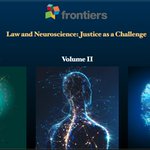
Law and Neuroscience: Justice as a Challenge
frontiersin.org/research-top…

Eric García-López 🧠⚖️ retweeted

Neuron continues its three-part series on neuroscience and AI with “Neuroscience and AI: Emerging Synergies”.
Explore how brains and AI are converging, from language models and scientific discovery to more brain-like AI systems.
The synergy deepens.
hubs.li/Q04zzx580

Eric García-López 🧠⚖️ retweeted

We’re releasing a broad range of new mathematical results produced by an internal frontier model.
We’ve been consulting with the independent Advisory Group on Mathematics and Artificial Intelligence at the Institute for Advanced Study, and we have drawn on their advice and public recommendations to inform how we release these results.
github.com/openai/math

Law and Neuroscience: Justice as a Challenge for Neurorights, Neurolaw, Forensic Psychology, and Neurovictimology - Volume III
frontiersin.org/research-top…

2
157
#CallForPapers
Law and Neuroscience: Justice as a Challenge for Neurorights, Neurolaw, Forensic Psychology, and Neurovictimology - Volume III
frontiersin.org/research-top…
#NeuroLaw
#NeuroRights
#NeuroVictimology

Si disciplinas como el Derecho pudieran valorar lo que significa este premio Nobel, tendríamos las actualizaciones legislativas y conceptuales que exigen este tipo de avances.
¡Congratulaciones para los científicos laureados!
nobelprize.org/prizes/medici…


“There is a big picture that brings it all into relief and my hope is that we can increase empathy and understanding,” says 2026 medicine laureate Karl Deisseroth.
As a medical student, Deisseroth completed part of his training at a psychiatric clinic. He was struck by the patients’ suffering and their need for help. At the same time, he began to wonder how the brain could function so differently from one person to another.
Deisseroth was awarded this year's medicine prize, together with Peter Hegemann and Georg Nagel, for discoveries leading to optogenetics – a biological technique making it possible to switch the activity of individual nerve cells in a living brain on or off.
Optogenetics is now helping us understand more about how nerve cells shape memories, emotions and behaviour in the living brain.
Learn more about the 2026 medicine prize: bit.ly/4ru82ml

ALT Karl Deisseroth in a white shirt sits at a table, thoughtfully holding a model of a brain in one hand. Photo by Christopher Michel.


Nuestros recuerdos y emociones están regulados por las neuronas, las cuales pueden ser alteradas para borrar recuerdos y generar emociones…a través de estímulos lumínicos programados.
El @NobelPrize reconoce hoy a tres neurocientificos por los avances en este campo:

98
En efecto, el error evidente es la generalización.
La psicopatología forense, que se apoya en la neurociencia y el análisis funcional de la conducta, es casuística. El sistema nervioso es fundamental para el comportamiento, pero no abarca la total complejidad de una persona.

Nicolas Badre y Paul Shronts defienden aquí que en los tribunales se está usando mal la neurociencia porque se dice con frecuencia que la responsabilidad no empieza hasta los 25 años.
Los peritos suelen citar estudios de grupo y los aplican al acusado concreto sin evaluar su cerebro ni su capacidad. En algunos sitios se llega a pedir que hasta los 30 se sentencie como a un menor.
Algunos de los argumentos de los autores son que esos datos generales no son del acusado sino que la media de un grupo no dice si esta persona controlaba sus impulsos. A la misma edad hay mucha variación, y la mayoría no comete esos delitos. Por otro lado, un estudio grande de 2023 (de más de 10.000 personas) muestra que la función ejecutiva se estabiliza hacia los 18-20 años y que casi todo el cambio ocurre antes de los 18. También dicen que distinguir el bien del mal llega mucho antes de la adolescencia.
En resumen, la madurez no “llega a los 25” de forma automática, y el cambio cerebral no es por sí solo una excusa. Lo justo es valorar a esa persona: qué entendía, qué podía controlar y si había enfermedad. No proyectar una curva media sobre todos los jóvenes.
4
224
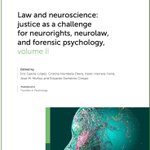
García-López, E., Nombela Otero, C., Herrera-Ferrá, K., Muñoz, J. M.,
Demetrio Crespo, E., eds. (2026). Law and neuroscience: justice as a challenge for
neurorights, neurolaw, and forensic psychology, volume II.
Lausanne: Frontiers Media SA. doi: 10.3389/978-2-8325-8615-0

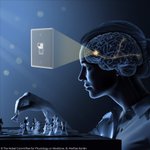
Law and Neuroscience: Justice as a Challenge for Neurorights, Neurolaw, and Forensic Psychology, volume II
frontiersin.org/research-top…

Eric García-López 🧠⚖️ retweeted

The first thematic brief from the Independent International Scientific Panel on AI is out. It examines the 2026 OpenAI-Hugging Face incident and what it tells us about AI agents and the risk of losing human control.
Read (advance unedited version): tinyurl.com/ha36jd2b

