
Tech lead for humans and AI agents • Closing SDLC feedback loop
Joined September 2025
- Tweets172
- Following76
- Followers19
- Likes142



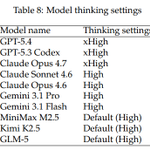



Can we get customizable list of presets in Codex to quickly switching between model+reasoning+speed combinations?
Because now it's like 60+ possible combinations while I actively use ~3 of them and switching is really tedious
@simpsoka @ajambrosino @thsottiaux @OpenAIDevs


TokenMap's own stats, because of course I had to add sharing


Made a tiny desktop app called TokenMap.
Open a local folder, and it shows you where the weight in codebase really is, measured by tokens, lines, or file size.
Useful for exploration, refactors, LLM prep, or just showing off your repo stats.
GitHub: github.com/etechlead/token-m…

1
3
129
Made a tiny desktop app called TokenMap.
Open a local folder, and it shows you where the weight in codebase really is, measured by tokens, lines, or file size.
Useful for exploration, refactors, LLM prep, or just showing off your repo stats.
GitHub: github.com/etechlead/token-m…
"Yes please" has become the most-used phrase in Codex since 5.4.
Can we get a button for that? /s
@thsottiaux @ajambrosino
3
86
GPT-5.4, vibe review
tl;dr
Very good, almost a universal model for development.
As OpenAI promised, it feels like a hybrid:
● GPT-5.2 with its depth of reasoning and breadth of knowledge
● GPT-5.3 Codex with its speed, solid coding, and agentic behavior
Pros
🟢 Feels like 5.2 + 5.3 Codex
No need to juggle models or compensate for one's weaknesses with another's strengths.
One model, consistently good, just switch the reasoning level.
🟢 Speed - on high it runs at roughly the speed of 5.3 Codex xhigh, without losing quality.
On xhigh it feels snappier than 5.2 xhigh.
🟢 General knowledge - inherited from GPT-5.2 :) Codex models are likely distilled or lightweight fine-tunes of the "full" models, optimized for code - but their understanding of the world outside of IT is limited.
That makes them hard to use in domain-specific areas where you need intuition and domain knowledge, not just raw reasoning.
GPT-5.4 is noticeably better here compared to both 5.3 Codex and even 5.2.
That said, Gemini Pro models still lead here.
🟢 Investigative capabilities
GPT-5.4 got even better than 5.2 at tracking down bugs at the intersection of multiple subsystems, handling complex interdependencies, building long cause-and-effect chains - all while staying reliably on top of the available tools.
I recently migrated my infra toward an agent platform (so agents can handle devops themselves), and it did some genuinely non-trivial things during that migration.
🟢 More pleasant to talk to
Doesn't sound as mechanical as 5.2, though it's gotten chattier in return (that's the 5.3 Codex side coming through).
Cons
🔴 Overengineering (on simple tasks)
This existed in 5.2 too, but less often.
In GPT-5.4 the risk of the model going off into unnecessary abstractions on xhigh is higher - worth keeping an eye on what it's proposing as a solution.
🔴 1M context - wait, how did this end up in the cons? GPT-5.4's effective context, based on OpenAI's own benchmarks, is still around its native 272k tokens.
Everything beyond that is "stretching" the model's attention - and quality degrades noticeably, at a 1.5x+ price premium.
The 272k+ context is experimental, off by default - and I wouldn't recommend it.
Native context with periodic compaction works much better.
🔴 UI/design - still not its strength
At least they've promised to address this in future releases.
(but honestly, UI work belongs in specialized tools anyway)
Notes
⚪️ The model prefers Plan-Act
5.3 Codex was more suited to interactive work where it was basically your tool. 5.4 is more about planning, context gathering, then executing against a finished plan - closer to 5.2 in that sense.
⚪️ /fast mode in the agent
Speeds up token output by 1.5x, but at 2x cost/limits.
I turn it on when I need to interactively discuss or work through something without losing flow while the model thinks.
For executing medium-to-large plans it doesn't really matter - those run for tens of minutes or hours anyway, and inference speed becomes irrelevant.
Verdict
For development use, GPT-5.4 is currently my SOTA.
Other models now get used in pretty specific cases:
● Opus 4.6 / Gemini 3.1 Pro Preview for building UI from scratch
● GPT-5.2 xhigh occasionally as a second opinion on architecture, planning, and tech debt
These are testing criteria explained: teapawt.org/etechlead/status/20224…


13 criteria I vibe-evaluate coding agents on
Fundamentals:
Reasoning · Context handling (including compact survivability) · Instruction following · Agency
Capabilities:
Planning · Architecture · Refactoring · Tracing (following the trail - debugging, security review, code review)
Operations:
Tooling (workflow customization, interfaces, automation) · Stability (output quality consistency across similar tasks) · Speed · Cost efficiency
Scored 1–10 relative to the best in the comparison.
No formal benchmarks - just real work.
Vendor harnesses only - Codex CLI/Desktop, Claude Code


First impressions of GPT 5.4 / Codex CLI:
* it thinks deeper than 5.2 and way deeper than 5.3
* become more conversational and explain itself better
* very good in tool use, and with 1m context I expect it to easily work on multi-task plans for days without stopping
1
2
65
Well, it's a no-brainer to switch from GPT 5.2 to GPT 5.4.
My new favorite "smart engineer" type of model
1
55


Even more so - critical thinking, the ability to ask right questions and a rinse-and-repeat approach are also pretty important when using AI in SWE, making it more like scientific work

If you’re not treating software development as an scientific discipline, with experiments, feedback loops, and measurable outcomes, then you’re not a software engineer…
1
49
Each time when use codex in codex to fix issue in codex, I remember this: en.wikipedia.org/wiki/Buffal…

2
62
That's the future, when you don't need to wait anyone to make software works for your own needs


2
69
I wonder how many people would say that Einstein just synthesized existing research and did not invent anything new, so it's not AGI?

Demis Hassabis’s “Einstein test” for defining AGI:
Train a model on all human knowledge but cut it off at 1911, then see if it can independently discover general relativity (as Einstein did by 1915);
if yes, it’s AGI.
1
57
Only recent ADRs are useful - they describe the moving parts and live in the repo.
Older ones become a source of confusion and shouldn't be in the agent's scope.
Instead, they get compacted/merged into a separate architecture document that reflects the current state and key decisions.
A separate workflow step detects drift and collapses ADRs when needed.
Think of it like DB migrations - you don't need to keep all of them forever