

Brazilian, dad, trying to help accelerate economic growth of developing countries @coeff_giving
Washington, DC
Joined November 2010
- Tweets122
- Following653
- Followers442
- Likes344





Pinned Tweet
The development economics community is not AGI-pilled enough. The possibility is real and the stakes are high.
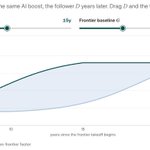
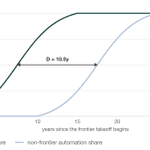
Imo, the main question is how poor countries can accelerate their growth after AI causes a frontier growth acceleration.
Here's a plan you can disagree with:


Rafael Proença retweeted

Leaving aside Lyman's claims about bednets (which seem like they've already been revised down) but @JustinSandefur, @externalidades, and I spend our days trying to use philanthropy to help boost GDP in poor countries on @coeff_giving's Global Growth Fund:
coefficientgiving.org/funds/…


GiveWell overestimates the effect of bednets on mortality by probably 5 times.
This size of error isn't even uncommon for EA-influenced assessments.
Once you understand how small the effect of aid is, other things look better by comparison.
lymanstone.substack.com/p/wh…
Readers added context they thought people might want to know
The author himself corrected his claims here in response to pushback from EA folks.
x.com/lymanstoneky/s…
Rafael Proença retweeted

I'm all for multilaterals. And I suspect we agree on saving the 2/3 of USAID devoted to health and humanitarian relief (ignoring one-off Ukraine budget support) -- and hopefully doing bigger, better things on top of that.
Less sure opposing USAID is a good legislative tactic to get there. Gradual restoration of USAID under current law seems like a more viable path than hoping for a 2028 Dem trifecta with 60 votes in the Senate to pass new legislation and create a new federal agency out of whole cloth.
Rafael Proença retweeted

The @WorldBankGroup's big new report on African urbanization dropped this week.
Full disclosure, @AfricaUrbanLab contributed, so I’m biased...worldbank.org/en/publication…
Also got to grill one of the lead authors, @mroberts10013, on the podcast. THread:
🧵 1/


🎙️🏙️ A Special New Episode of the @AfricaUrbanLab Podcast: Mark Roberts Catalyzing Jobs & Economic Growth in African Cities
To mark the release of the @WorldBankGroup's new flagship report, Sub-Saharan Africa’s Urban Awakening: Catalyzing Economic Growth and Job Creation, to which AUL contributed, AUL Founder & Executive Director @kurtislockhart sits down with @mroberts10013, Lead Urban Economist at the World Bank and one of the report’s lead authors.
The conversation centers on three areas at the heart of the report’s recommendations for cities: job-rich clusters, transport connections, and city revenue. Mark explains why jobs spread thinly across a city limit agglomeration economies, how informal and formal transport can work together to bring workers closer to opportunity, and why property tax remains the most untapped source of own-source revenue.
Rafael Proença retweeted

If transformative AI makes rich countries' economies go zoom, how can the poorest countries in the world avoid being left behind? My @coeff_giving colleague @externalidades has an idea: AI-intensive bootstrapping

In 1800, Mali's per capita GDP was roughly 5x smaller than Britain's. Today it is 25x smaller.
The Industrial Revolution widened the gap and two centuries didn't close it.
AI might cause a new growth acceleration in frontier economies. How can poor countries bridge the gap faster this time?

