

Change Management / (e)learning / storytelling / improv / serious games / toegepast theater / history @springintheater @spelwerkplaats @rchitectsof @terugspelen
Utrecht
Joined October 2010
- Tweets11.9K
- Following1.2K
- Followers673
- Likes4.6K


Nico Groenenberg retweeted

I am reading a book and come across the sentence:
“The universe extends as far as the human imagination can reach.”
I linger over it, because I realise that almost everything we know about ancient humanity has reached us through what managed to survive the people themselves, while the most boundless part of their existence, the world they carried within their consciousness, has disappeared irretrievably.
Archaeology can reconstruct the outlines of a settlement, determine the purpose of an object, or establish which plants were cultivated six thousand years ago. But it cannot tell us what it meant for a person to fall asleep believing that beyond the world familiar to them, another continued, inhabited by presences they had never seen, yet whose reality was no less convincing to them than the ground beneath their feet.
I am particularly preoccupied by those conceptions that were never recorded, because no one suspected that a time would come when it would be necessary to prove their very existence. How many cosmologies have vanished without leaving the name of a deity, a description of the afterlife, or a single account of the world's origins? How many different conceptions of time, death, and human purpose belonged to societies of which only a few stone tools and traces of hearths remain today?
Here an uncomfortable thought arises for the historian: we know ancient humanity primarily through those parts of it that possessed the means to preserve their own conceptions. Writing gave certain civilisations the possibility of being present in the future in a way denied to countless others. Thus, humanity's memory inevitably acquires an uneven geography, while the silence of some societies is sometimes mistakenly taken as evidence of the poverty of their spiritual life.
But the absence of testimony is not evidence of the absence of thought.
This is precisely why I feel a certain distrust towards the confidence with which the modern world sometimes describes the inner lives of people separated from us by tens of thousands of years. We can establish the chemical composition of the pigment used to paint an animal, but not reconstruct the entirety of meanings its image evoked in the mind of its creator. We can see how a dead person was laid to rest without knowing whether those who buried them imagined a continuation of their existence.
And I find myself thinking that the greatest loss inflicted by time is not the disappearance of ancient cities, but the disappearance of possible worlds that once existed within human consciousness.
Worlds that will never again be conceived in quite the same way.
For even if we discover every object left behind by a vanished society, we will never fully reconstruct its universe. We will possess the remains of its material life, but not the limits of the imagination within which that life acquired meaning.
And then I understand why the sentence made me stop reading.
Perhaps the most boundless thing in human history is not what ancient people did not know about the universe, but what we will never know about the universes they imagined.

Nico Groenenberg retweeted
Hannah Arendt was born in Hanover, studied philosophy with Martin Heidegger and Karl Jaspers, fled Nazi Germany, escaped from occupied France, and eventually settled in New York. She married twice, survived exile, and spent much of her life examining totalitarianism, freedom, responsibility, and the disturbing human capacity to stop thinking critically. She attended Adolf Eichmann's trial in Jerusalem, coined the phrase “the banality of evil”, and caused an enormous controversy by suggesting that terrible crimes did not always require extraordinary monsters, but could also involve ordinary people who failed to examine their own actions. She died in New York in 1975, leaving behind books that continue to make people profoundly uncomfortable.
Arendt was the classic example of the "independent thinker who refuses to belong to anyone's intellectual camp": she questioned authority, challenged ideological loyalties, disagreed with friends, and occasionally managed to offend almost everyone involved in the same debate. If you are the type of person who dislikes intellectual conformity, values uncomfortable questions over comfortable agreement, and would rather lose an argument's audience than surrender your judgement, know that you are in excellent company. Although Arendt would probably insist that thinking independently does not automatically mean thinking correctly.

Nico Groenenberg retweeted
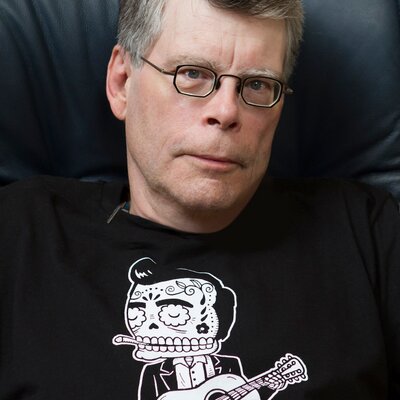
Twitter.
Twitter. Twitter.
Twitter. Twitter. Twitter.
Twitter-Twitter-Twitter-Twitter....

Nico Groenenberg retweeted

Imagine if Europe, in the days after 9/11, had cleared its throat and announced: We have struck a tremendous deal with Osama bin Laden. We have lifted the sanctions on his organization, so he is now free to trade on the open market and bankroll his war against the United States. Bush must step down. The man has no cards.
Has he even looked at his hand?
But no. Europe did nothing of the sort. Europe did not sit down with a mass murderer and come home gushing about what a strong and reasonable fellow he turned out to be.
Europe laced up its boots, flew to Afghanistan, stood shoulder to shoulder with the Americans and hunted that bearded wretch through every godforsaken mountain in the country, because that is what you do when a friend gets hit, and handing the attacker a shopping list while telling the victim to surrender is what you do when you have lost your mind.


Nico Groenenberg retweeted
"I enjoy books as misers enjoy treasures, because I know I can enjoy them whenever I please."
Montaigne


Nico Groenenberg retweeted

Maandag 21 september staat er een nieuwe cursus theatersport op intermediate niveau op de planning. Je hebt dus nog anderhalve week de tijd om in te schrijven
springintheater.nl/vervolgcu…
#theatersport #improvisatie #utrecht #improviseren #cursus – at Utrecht, The Netherlands

ALT Vervolgcursus Theatersport Utrecht
Nico Groenenberg retweeted
"Improviseren: zo doen we dat!"
Donderdag 24 september gaat er een nieuwe Basiscursus Theatersport van start. Je hoeft geen verstand van augurken of iets anders te hebben.
Kijk voor meer informatie en het inschrijfformulier op de website: springintheater.nl/basiscurs…
#improvisatie – at Utrecht, The Netherlands
Nico Groenenberg retweeted
"Every night 's improv night",
Maar met name donderdagavond, want dat wordt je wekelijkse cursusavond theatersport.
Donderdag 24 september gaat de 'Basiscursus Theatersport ' van start in Utrecht: springintheater.nl/basiscurs…
#theatersport #improvisatie #improviseren #improv – at Utrecht, The Netherlands

ALT "Every night 's improv night",
Nico Groenenberg retweeted

"I’ve never fell off a big chimney. You only fall off one of them once."
Steeplejack Fred Dibnah, back in 1979. He became a national treasure for doing this sort of thing.


Nico Groenenberg retweeted

September is Suicide Prevention Awareness Month 🎗️
You are not a failure
You're not a waste of space
You are not unloveable
Your struggle is temporary
I'm glad you are here
You can do this 💞
Reach out 🙏🏼

Nico Groenenberg retweeted
"In our time, my friend, the book is the honey of humanity."
Dostoyevsky,"Crime and Punishment"
Good night


Nico Groenenberg retweeted

Here's a twist on Canadian legend @Alanis's "Ironic" (who was fab when one of us saw her live last month) - in an acoustic version that addresses Trump's #tradewar with Canada and his attempted renaming of Lake Ontario. It's called "Moronic" 🎶 - lyrics: youtu.be/Y6OGKFQBG7s
Nico Groenenberg retweeted
In Denmark, there are libraries where you can borrow a person instead of a book to listen to their life story for 30 minutes. The goal is to fight prejudice. Every person has a stigma: "unemployed", "crazy", "ex-prisoner", "loser", "refugee"... - but listening to their story you realize that you shouldn't "judge a book by its cover". This innovative project is already practiced in several dozen countries around the world, it is called the "Living Library".
Calm evening
