

Tech Marketing. Music & Travels. Straight outta Kabul. 🤍🕊️ Likes/RT 🚫 endorsements. @ nutanix | Memento Vivere
💞💞💞
Joined December 2008
- Tweets4.8K
- Following2.5K
- Followers1.2K
- Likes158K
Pinned Tweet
Between stimulus & response there is a space. In that space is our power to choose our response. In our response lies our growth and our freedom. — Viktor E. Frankl
⋆˚。⋆✧˚ Fahima ✨ retweeted

“The average is the most useless statistic in the history of the world, because the average is nothing. It’s the average of the divergences from the average.”
David Dredge
youtube.com/watch?v=QOVGgHBF…


⋆˚。⋆✧˚ Fahima ✨ retweeted

Discover more about Stars and the Art of Astronomy in Islamic History: baytalfann.com/post/stars-th….

⋆˚。⋆✧˚ Fahima ✨ retweeted

Japanese author Haruki Murakami has a wonderfully bizarre writing practice.
He writes each book in English (his second language) before translating the second draft to Japanese.
When asked why, Murakami says, “Every language has its unique rhythm, its own essence. By translating my own work, I get to experience the story from two different perspectives.”
He goes on to say,
“Every line, every paragraph, I approach with the sensibility of both a writer and a translator. It allows me to bring out depth and layers I hadn’t seen in the first draft.”
Takeaway 1:
The modern world has an obsession with efficiency. We sacrifice thought, care, and craft at the altar of efficiency. There’s infinitely more writing and ‘content’ today than ever before, but how much of it really pulls you in and makes you think?
In Novelist as a Vocation, Murakami says, “One opposite of imagination is ‘efficiency.’”
Translating a book to another language as a second draft may be the least efficient process for getting words on paper. But if you’ve read Murakami, you can feel the thought he puts into each word.
Takeaway 2:
Write and edit in a different medium.
Murakami takes this to the extreme – different languages.
But even if you don’t speak two languages you can do this. I often write on my laptop and edit on my phone. You’ll notice nuances you wouldn’t if you stayed on the same medium.
Neil Gaiman does something similar. He often handwrites the first drafts of his books before doing the second on a computer.
Takeaway 3:
Every writer or artist has odd habits that might not work for anyone else.
Branson Sanderson writes best at 1am. Murakami drafts in English. Stephen King doesn’t use outlines.
There’s no way to know if these things are right for you than to sit down and try them. Do what works for you.
***
“If you only read the books that everyone else is reading, you can only think what everyone else is thinking.” – Murakami


⋆˚。⋆✧˚ Fahima ✨ retweeted
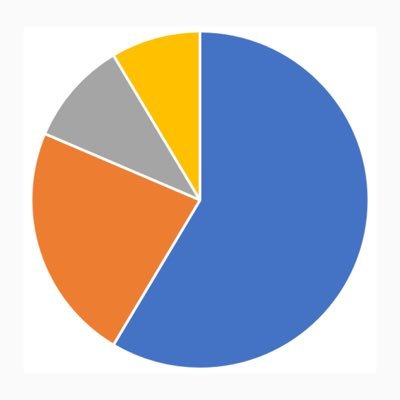
Humans only make up 38.5% of internet traffic.
The other 61.5% is non-human (bots, hacking tools, crypto, etc).


⋆˚。⋆✧˚ Fahima ✨ retweeted

“I want to write a novel about silence. The things people don't say.”
— Virginia Woolf

I enjoy both.
Treadmill Running vs Running Outside getpocket.com/explore/item/h… @Pocket
1
163
⋆˚。⋆✧˚ Fahima ✨ retweeted
Students at NYU asked the creators of South Park the million-dollar question:
“What makes a good story?”
They gave one of the best explanations of story I’ve heard:
“If we can take the beats of your outline, and the words ‘and then’ belong between those beats… you got something pretty boring.
What should happen between every beat you’ve written down is the words ‘therefore’ or ‘but.’”
They go on to say, “That gives you the causation between each beat, and that makes a story.”
Point 1:
There’s an idea in storytelling called ‘Promise, Progress, Payoff.’
Essentially, a story is a neverending cycle of promises that are paid off over the span of the story.
It’s a cycle of expectation and resolution. Cause and effect. Conflict and progress.
Point 2:
A story isn’t a bunch of random events thrown together.
A story is a series of but / because / therefore moments.
A famous example:
• Harry discovers he's a wizard. Because of this, he goes to learn magic at Hogwarts.
• But then he learns Voldemort wants to kill him and rule the world.
• Therefore, he must find a way to defeat him.
Point 3:
‘And’ implies a simple continuation.
‘But / Therefore’ give prior events meaning through causation.
‘But’ implies conflict. ‘Therefore’ implies progress.
I’m reminded of a Hemingway quote:
“Prose is architecture, not interior decoration.”
Great writing is intentional. It doesn’t wander. It builds upon itself.
***
I hope you enjoyed that! If so, follow @nathanbaugh27. I study the best storytellers ever and share what I learn.
⋆˚。⋆✧˚ Fahima ✨ retweeted
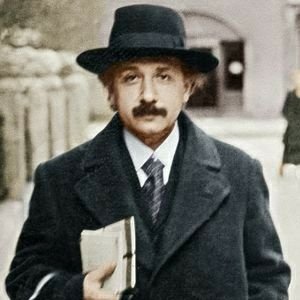
Claude Shannon, the father of Information theory:
Claude Shannon is widely recognized as the father of information theory. His groundbreaking work in the mid-20th century laid the foundation for modern communication systems and digital technology.
Shannon's most influential contribution was his 1948 paper, "A Mathematical Theory of Communication," where he introduced the concept of information entropy. This measure allowed for the quantification of information and optimization of its transmission, revolutionizing fields such as telecommunication and data compression.
Shannon's work on error-correcting codes enabled the reliable transmission of information even in the presence of noise or interference. This led to significant advancements in data storage and reliable communication systems. He also played a pivotal role in the development of digital computers. He applied Boolean logic to design logical circuits, which form the basis of modern computer architecture. His ideas and designs were instrumental in shaping the digital revolution we experience today.
Shannon's scientific contributions as the father of information theory and computing transformed the way we communicate, paved the way for efficient data transmission, and laid the foundation for the digital technologies we rely on. His work continues to have a profound impact on various fields, making him a true pioneer of the Information Age.

ALT http://archive.computerhistory.org/resources/still-image/Chess_temporary/still-images/2-1a.MIT_Bell_Laboratories.Shannon-Claude.BELL_LABORATIES.19XX.L062302010..jpg
2023 Imperva Bad Bot Report | Resource Library imperva.com/resources/resour…

115

Was wondering why purple potatoes yielded emerald color water in my steamer. Google didn’t disappoint: Green colour development in potato cooking water - ScienceDirect sciencedirect.com/science/ar…
128

