
Assistant Professor at @ucatolica | Machine learning & Cardiac Biophysics
Joined December 2009
- Tweets303
- Following323
- Followers403
- Likes668



Francisco Sahli Costabal retweeted

Did you know neural networks have a frequency bias when they learn? Namely, they learn low frequencies before high ones.
We explain this phenomenon and offer tools to eliminate/control it.
➡️ Learn more: arxiv.org/abs/2405.14957 🔥
Thread 🧵 (1/7)
@fcosahli @MirceaSci
New #preprint:
Probabilistic learning of the Purkinje network from the electrocardiogram
We identify potential representations of ❤️the cardiac conduction system❤️that explain patient's electrocardiogram with and without pathologies.
arxiv.org/abs/2312.09887
@SimPezzu
Francisco Sahli Costabal retweeted

🚨New #preprint 🚨
arxiv.org/abs/2310.03745
'Generative hyperelasticity with physics-informed diffusion fields'!
with @fcosahli @tajtac @ProfRausch @BilionisIlias
We use diffusion for uncertainty quantification in material models.
A 🧵👇
New #Preprint “Unsupervised reconstruction of cardiac cine MRI using Neural Fields”
We reconstruct dynamic images of the ❤️ with fully connected neural networks using only a fraction of the data, reducing acquisition times ⏳
arxiv.org/pdf/2307.14363
#neuralfields #MRI
Francisco Sahli Costabal retweeted
New preprint work from the lab by @tajtac in collaboration with @fcosahli and @ProfRausch: Data-driven anisotropic finite viscoelasticity using neural ODEs arxiv.org/abs/2302.03598 #MachineLearning #DataScience
new #preprint!
WarpPINN: Cine-MR image registration with physics-informed neural networks
We learn the deformation of the♥️using a continuous space-time NN, informed by the mechanics of cardiac tissue.
arxiv.org/abs/2211.12549
@ArratiaLo1 @DanielEHurtado1 @hernan_mella
new #preprint:
Δ-PINNs: physics-informed neural networks on complex geometries
We encode the domain using the Laplacian eigenfuctions, then we solve forward and inverse problems on any geometry, like geodesics on a bunny!👇
arxiv.org/abs/2209.03984
@ParisPerdikaris @SimPezzu
Thanks for the invitation!

Yesterday, @fcosahli opened the Fall '22 season of the Closer Look 🧐 journal club. Its a beautiful talk on his recent paper (👉https://teapawt.org/t.co/NH8cZqet0H), which also includes a neat review on Gaussian Processes! If you missed it, watch it here:
youtu.be/PLgLbPnB2DU
Francisco Sahli Costabal retweeted

Welcome back to school 🎒🏫! We are back with more journal club, join us tomorrow Wednesday 24th at 11:30am ET to learn from @fcosahli about 🫀🩺📈. More info about our Fall lineup: closerlookjc.com/

The ❤️ is made out of fibers that we can’t see in vivo with current imaging methods.
We developed a method to discover the orientation of the fibers from electrical measurements using physics-informed neural networks.
Website: fsahli.github.io/research/fi…
#EPeeps #DeepLearning
Great collaboration with Thomas Grandits, Gernot Plank @ParisPerdikaris @SimPezzu
Paper: doi.org/10.1007/s00366-022-0…
Code: github.com/fsahli/FiberNet/
3
Francisco Sahli Costabal retweeted
It took some time but it's finally out 😊: Data-driven models of soft tissue with automatic polyconvexity using neural-ODES . Includes implementation into Abaqus as a user subroutine. Work done with @fcosahli and @tajtac. authors.elsevier.com/a/1fPEQ… 1/5
How effective are ablation treatments for atrial fibrillation?
We developed a multi-fidelity classifier that works on the atrial surface to quickly identify inducible regions of ablation patterns.
Great collaboration with @SimPezzu @ParisPerdikaris
frontiersin.org/articles/10.…

New pre-print on
@arxiv
: Automatically polyconvex strain energy functions using neural ordinary differential equations. arxiv.org/abs/2110.03774
What are strain energy functions? why polyconvex? and what are neural ordinary differential equations?
🧵[1/8]
@abuganzat @tactaj
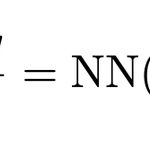
So, we approximate the derivatives of the strain energy function with N-ODEs, then the second derivative is always positive.
In this way, we can approximate the behavior of many different materials guaranteeing polyconvexity, just by fitting the data. [7/8]
1
