




Integrating @MonidHQ has given @okou_ai access to so much more data. Okou's performance and the quality of the work they deliver keep getting better every day. Thanks @shengkunye @feiyou_guo @Jasperli0122 and the Monid team!

What more can we say? Finding the right person has never been easier. 😏
With context, Okou goes beyond a name. The research. The details you didn’t know you needed. The tailored first email. Looks like someone’s about to land it.
🤝 Okou × @MonidHQ. Smooth from the start.
Ming (Guamian) retweeted

What more can we say? Finding the right person has never been easier. 😏
With context, Okou goes beyond a name. The research. The details you didn’t know you needed. The tailored first email. Looks like someone’s about to land it.
🤝 Okou × @MonidHQ. Smooth from the start.
Tried selling our product to a founder today. His team is testing their ICP and looking for a tool to help. They’re already using Instantly, but the results haven’t been great.
A few notes from the conversation.

Early morning thoughts:
The point of a subscription is to give users more usage than they’d get paying as they go. If you can’t do that, charge for usage.
With traditional SaaS, the tool was the service, and you paid monthly for it. Giving users more still had a low marginal cost.
AI is different. Every use has a token cost, and tokens are still expensive. That’s a big difference from the old SaaS pricing model.
OpenAI and Anthropic are spending heavily to subsidize those costs. Even grokbot and Muse can’t keep up with that level of subsidy.
This might not have been an issue even last year. AI hadn’t eaten into SaaS yet, and people were still willing to pay for products like AI website builders. But in 2026, adoption is much wider and the capabilities are much stronger.
People are still willing to pay for SaaS today, but it needs to do something they can’t easily get elsewhere. A simple tool isn’t enough anymore. People pay for your ability to deliver, and for service. Look at why so many agencies and FDEs are showing up now.
I have a Slack channel with a colleague and Okou. When there’s a lot of context to explain, I ask Okou to help.
We organized our illustration guidelines with Okou, then had it replace all the old illustrations in one go.
Nice & quick ✨


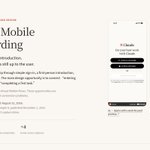
1/4 I gave @okou_ai the same task twice: analyze Claude’s mobile onboarding.
Both times, I got a report with real screenshots, a breakdown of the flow, and ideas for what to test.

3/4 Competitive analysis was a must-have skill in design and product. And it took a lot of time: finding references, going through flows, putting everything together.
Now I can hand that part to Okou and spend more time thinking about what to do with it.


1
2
55
We asked Okou to study @MonidHQ @shengkunye @feiyou_guo before pitching them a co-marketing idea.
The research itself ran on Monid. Okou pulled 160 posts for $0.064 in Monid tool calls, then read Monid's site, blog and Agent Hunt rankings through Monid's tools.
One finding was about Okou: Monid had already listed Okou on awesome-monid. 👇


Running paid ads lately, I keep coming back to "demand gen." I first heard the term almost 10 years ago, when I was a product designer at Yahoo Gemini.
AI has made reaching users directly incredibly cheap. There are now more products and solutions than needs, the market is still early, and content is easier to make than ever. That's why brand building and demand creation matter more now.
What makes a good brand? I think the most important thing is to stubbornly hold on to a personality, and keep executing on the brand and its elements consistently over time. In the AI era, being yourself, without getting caught up in the anxiety, matters more than ever.
1
2
101

AI hasn't made things ten times worse, Competition is always between people, including you and yourself.

AI made it so anyone can build anything, but everyone was already distracted, so AI just made it 10x worse. Your competition was non existent to begin with, and your only real competition is your own mind.
1
54
I completed the first online podcast as a founder. We explored a lot of questions, and I noticed that when it comes to AI agents and best practices, I tend to use examples and practical experiences to explain things, along with the principles and frameworks I've developed along the way.
However, when we got into business scenarios, like how to calculate the costs and ROI, I really struggled to give a good answer or figure out the numbers.
I do see a real difference in language and perspectives. If you compare how AI is used within tech circles versus how we pitch value and ROI in an actual business environment, the gap is striking.
1
56