

Exploring where creativity meets the universe✨
- Tweets37.9K
- Following2.9K
- Followers3.3K
- Likes67.2K




ALT Dynamic, textured clouds swoop across the scene. Their color ranges from deep, steely blue to bright silver. Pink and white stars of varying sizes decorate the clouds.


ALT MMX at Mars and Phobos


ALT Artist's illustration of the Chandra X-ray Observatory in space. (Credit: NASA/CXC & J.Vaughan)


ALT Una vista panorámica de un paisaje desértico y rocoso. Al fondo se observan colinas formadas por capas de roca. La imagen presenta dos tonalidades predominantes: tonos azules en las partes captadas por la mañana y tonos más cálidos en las tomadas al atardecer. En primer plano se observa la mitad trasera de un vehículo explorador en Marte, incluidos dos de sus ruedas, su cubierta superior, sus antenas y su generador termoeléctrico. Crédito de la imagen: NASA/JPL-Caltech


ALT A panoramic view of a desert landscape with reddish rocks and sand and low hills in the distance. At the center-right of the frame, rover tracks can be seen.

ALT A panoramic view of a rocky desert landscape. Hills of layered rock stand in the background. The image has two predominant colors: blue tones for the portions of the image captured in the morning, and warmer tones for the portions captured in the eventing. In the foreground is the back half of a robotic Mars rover, with two of its wheels, its top deck, antennas, and its thermal generator visible. Credit: NASA/JPL-Caltech

ALT The left two-thirds of the image is blanketed in thick clouds of green and yellow gas and dust that form swirling patterns. Some of the gas is spread into thin, thready wisps. The right third of the image is the black background speckled with stars and multi-colored dots that represent distant galaxies. Bright stars are scattered throughout the clouds, with the densest cluster situated in the center of the scene. Each is crowned with six long spikes and two shorter spikes created by the optics of the telescope’s mirrors.


ALT Collage of images: The Moon, with the Apollo 15 landing region (Hadley-Apennine) outlined and labeled, overlaps with a photo of an astronaut reaching out to touch a rover on the lunar surface. In the same photo, behind the astronaut, a dramatically shadowed grey hill rises towards a black sky. In the sky, text reads “International Observe the Moon Night” “September 19, 2026”. Along the bottom edge is a partial, zoomed-out screenshot view of a Moon Map document, with highlighted areas of the Moon, close-up photos, and location labels.
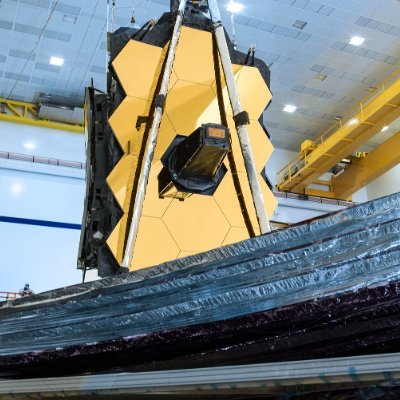


ALT The first color picture taken by Viking 2 on the Martian surface shows a rocky reddish surface with a peach-colored sky.

ALT Black-and-white photo of a small, dune-like ripple of sand and soil-like material. The ripple is crossed by a deep rover track.


ALT Black and white photo taken by Lunar Orbiter 1 showing the Moon's limb with a crescent Earth hovering near its edge in the blackness of space.

ALT Close-up of the center of the previous image, rotated 90 degrees, showing a portion of the Moon's horizon with the Earth appearing as a crescent immediately adjacent to it.

ALT A collection of red, white, and blue stars sparkling in the darkness of space. The stars are most concentrated in the center of the image. There is more space between stars as you move to the edges of the picture. Credit: NASA, ESA, and A. Dotter (Dartmouth College); Processing: Gladys Kober (NASA/Catholic University of America)