
Astronomer, musician, Yankees fan and @hubbletelescope scientist @stsci. Band Astronomer for the Pizza Underground. Hubble Tweets are my own.
- Tweets669
- Following92
- Followers605
- Likes14





ALT Credits: NASA, ESA, CSA, STScI, Klaus Pontoppidan (STScI)

ALT Credits: ESA/Webb, NASA, CSA, M. Zamani (ESA/Webb), and the PDRs4All ERS Team

ALT Credits: NASA, ESA, CSA

ALT Credits: NASA, ESA, CSA, STScI, Webb ERO Production Team


ALT Red dual opposing jets coming from young stars fill the darker top half of the image, while a glowing pale-yellow, cave-like structure is bottom center, tilted toward two o’clock, with a bright star at its center. The dust of the cave structure becomes wispy toward eight o’clock. Above the arched top of the dust cave three groupings of stars with diffraction spikes are arranged. A dark cloud sits at the top of the arch of the glowing dust cave, with one streamer curling down the right side. The dark shadow of the cloud appears pinched in the center, with light emerging in a triangle shape above and below the pinch, revealing the presence of a star inside the dark cloud. The largest jets of red material emanate from within this dark cloud, thick and displaying structure like the rough face of a cliff, glowing brighter at the edges. Credits: NASA, ESA, CSA, STScI, Klaus Pontoppidan (STScI), Image Processing: Alyssa Pagan (STScI)




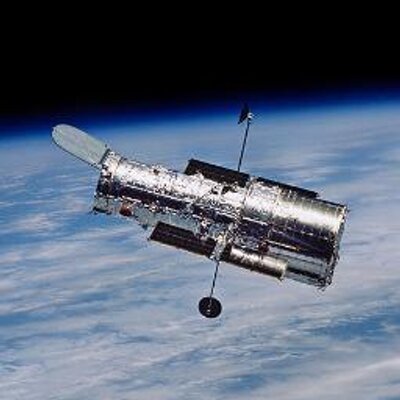


ALT A poster for the Hubble Space Telescope shows a drawing of the spacecraft with its observing window large in the center of the frame. Colorful renderings of exoplanets and galaxies are seen crossind the view and in the background, which includes a view of the planet Earth below. It says Hubble Space Telescope at the bottom.


ALT A Webb image of the central region of the Chamaeleon I dark molecular cloud, which resides 630 light-years away. This image primarily shows blue smoky wisps on a dark background. The left top side additionally features orange and white wisps. Just below them are four bright points of light. Three are orange and one is a mix of white and orange. Each of these points have Webb’s signature 8-point diffraction spikes emanating around them in long, thick orange lines, so that they look like huge snowflakes. Scattered throughout the image are distant stars or galaxies in shades of red, orange and blue, seen as tiny blobs.


ALT Photograph of Yao-Lun Yang speaking to an audience. He is standing in front of a screen with presentation slide with words “hydrogenation” “radical-radical reactions” “low temperature” and “high temperature” visible.





ALT SOFIA is on the ground in front of an orange sunset.




ALT Fluffy tan-colored nebula clouds, with rust-colored highlights, surround a black central area. Within that area, the focal point of the image is one large yellow star with eight long thin points. To the right of this star is a bright star cluster in an oval shape. The stars within the cluster look like tiny pale blue sparkles. The cluster is more densely packed at its core and scatters outward. Towards the bottom of the image, multiple arms appear to spiral out of a cloudy tan knob. Taken together, the structures resemble a spider or a squid. Other blue and yellow eight-pointed stars, as well as distant galaxies, are dotted throughout the image. Credits: NASA, ESA, CSA, STScI, Webb ERO Production Team

ALT The graphic shows the transmission spectrum of the hot gas giant exoplanet WASP-39 b, captured using Webb's NIRSpec Bright Object Time-Series Spectroscopy mode, and is titled accordingly. An illustration of the planet and its star is in the background. The vertical y axis is labeled “amount of light blocked” and runs from 2.00 percent (less light blocked) to 2.35 percent (more light blocked). The x axis is labeled “wavelength of light” and ranges from 3.00 microns to 5.6 microns. The data points are plotted as white circles with gray error margin bars running through the circles. A curvy blue line represents a best-fit model. A prominent peak in the blue line is labeled “Carbon Dioxide, CO2,” indicating the presence of carbon dioxide in the exoplanet. This peak is centered around 4.3 microns and has a y value of between 2.25 and 2.30 percent of light blocked. The baseline is between 2.10 and 2.17 percent.