

Gastrointestinal Medical Oncologist @Perlmutter_CC, Associate Program Director @nyulisom_HemOnc. Tweets my own. #Meded
Mineola, NY
Joined August 2009
- Tweets1.5K
- Following245
- Followers942
- Likes338






Michael Shusterman, MD retweeted

HERIZON-GEA-01 second OS interim at #ESMO26, and I'm a triplet believer.
In January I wondered if tislelizumab was necessary. With 35 months of follow-up, my answer is yes.
914 patients, 1L HER2+ GEA, randomized 1:1:1 to zani + chemo ± tislelizumab vs trastuzumab + chemo.
Median OS
• Zani + chemo + tisle: 27.0 mo
• Zani + chemo: 22.9 mo
• Tras + chemo: 19.6 mo
3-year OS: 39.8% vs 31.5% vs 22.9%
The doublet now has its own OS win over trastuzumab (HR 0.76, 95% CI 0.62–0.93, p=0.0088). The triplet vs trastuzumab got better with time (HR 0.72 at IA1, now 0.65).
Triplet vs doublet: HR 0.81 (95% CI 0.65–1.00), p=0.0502.
Yes, it technically misses. But 4 more months of median OS is clinically meaningful in metastatic gastric cancer.
Patients also stayed on the triplet longer (~47 vs ~30 weeks), with no new safety signal.
Takeaway: zani + chemo + tisle is my 1L default for HER2+ GEA.
Bring on the bispecifics 🔥
@OncoAlert @TheGutOncLab
@OncoAlert
Michael Shusterman, MD retweeted

🧬 NICHE-2 | Phase II | dMMR colon cancer 🇳🇱
👥 111 pts | Nivo + ipi → surgery
🎯 3-y DFS 100%
📈 5-y OS 100%
🩸 ctDNA clearance 82% pre-op
✅ All ctDNA− post-op
⚠️ Single-arm trial
💡 Remarkable long-term outcomes!
🔗 doi.org/10.1016/S0140-6736(2…
@OncoAlert

Michael Shusterman, MD retweeted

RASolute 302 ph3 study: Daraxonrasib, a RAS(ON) multi-selective inhibitor vs chemotherapy in previously treated mPDAC
#ESMO26 #ESMOAmbassadors
👉 mOS: 13.2 vs 6.7 mo
👉ORR improved in all RAS mutations
👉PFS & OS: small subgroups, favourable for all
🧐great data, consistent benefits for all pts
@myESMO @ASCO


Michael Shusterman, MD retweeted

🚨 A PFS win without an OS win — and a useful reminder that local + systemic intensification is not automatically better.
@OncoAlert
At #ESMO26, long-term results from phase III LEAP-012 evaluated lenvatinib + pembrolizumab + TACE vs TACE alone in unresectable, non-metastatic #HCC.
📊 n=480
➡️ Median PFS: 14.6 vs 10.2 months
HR 0.70 (0.56–0.89)
➡️ Median OS: 40.4 vs 40.8 months
HR 0.98 (0.76–1.26)
⚠️ Grade ≥3 TRAEs: 72.2% vs 32.0%
🎯 Why this matters: LEAP-012 clearly improved disease control, but that did not translate into longer survival, while toxicity increased substantially.
For me, the most interesting message is that a median OS of ~40 months in both arms may itself redefine expectations and make future trial design more challenging.
The next question is not simply whether to intensify around TACE — but which patients, if any, derive enough absolute benefit to justify the added toxicity.
Important data from @DrElkhoueiry @ArndtVogel and the LEAP-012 investigators.
Pinging @CathyEngMD @BenWestphalen @graokane @NiuSanford @GillSharlene @pashtoonkasi @DrVilmaPBarcia @GIMedOnc @MarioBalsaMD @DaisukeKotani
#OncoAlert #ESMO26 #HCC #LiverCancer #TACE #Immunotherapy #TargetedTherapy

OncoAlert 4Sight Abstracts to be Presented at #ESMO26
Phase 3 LEAP-012 Study of Lenvatinib + Pembrolizumab vs Dual Placebo With Transarterial Chemoembolization (TACE) for Unresectable Non-Metastatic Hepatocellular Carcinoma: Long-Term OS Results
@DrElkhoueiry
@ArndtVogel
🔬 Phase 3 (n=480): lenvatinib + pembrolizumab + TACE vs dual placebo + TACE in unresectable, non-metastatic HCC. Dual primary endpoints: PFS and OS. Long-term OS (IA3).
➡️ Median OS 40.4 vs 40.8 mo; HR 0.98 (0.76–1.26)
➡️ Median PFS 14.6 vs 10.2 mo; HR 0.70 (0.56–0.89)
➡️ Grade ≥3 TRAEs 72.2% vs 32.0%
✅ LEAP-012 met its primary endpoint for PFS but did not show OS benefit; a median OS of ~40 mo sets a new benchmark for trial design. #HCC
🎙️ Josep Llovet
👥 Masatoshi Kudo · Zhenggang Ren · Yabing Guo · Guohong Han · Hailan Lin · Jinfang Zheng · Sadahisa Ogasawara · Ji Hoon Kim · Haitao Zhao · Chuan Li · David Madoff · Mark Ghobrial · Tomokazu Kawaoka · René Gerolami · Masafumi Ikeda · Hiromitsu Kumada · Anthony El-Khoueiry · Arndt Vogel · Xiang Peng · Kalgi Mody · Corina Dutcus · Leonid Dubrovsky · Abby Siegel · Richard Finn
(4Sight Made from Abstracts publicly available at the ESMO website)
Pinging OncoAlert Faculty
@CathyEngMD, @BenWestphalen, @graokane, @NiuSanford,
, @GillSharlene, @pashtoonkasi, @DrVilmaPBarcia, @Erman_Akkus, @GIMedOnc, @UOzkerim, @MarioBalsaMD, @p_ciracimd, @DraMartinezLago, @DaisukeKotani, @Aiims1742, @ARosen380, @realbowtiedoc, @KoheiShitara,


Michael Shusterman, MD retweeted
ESMO 2026: GI abstracts I’m watching
ESMO is a week away so time to post thoughts on studies that will either change practice, move the field forward or are thought provoking!
Gut Onc Lab video next week once text is released.
BELOW THE BELT
AZUR-1: Dostarlimab for dMMR/MSI-H locally advanced rectal cancer (LBA87)
When: Sun Oct 25, 11:00 CET. Lower GI Proffered Paper session.
What: Stage II/III MSI-H rectal cancer (n=154) treated with dostarlimab alone.
My take: This will be positive. Incredibly positive. This is already what I’m doing in clinical practice and is a massive step forward for the 5–10% of rectal cancer patients that are MSI-H. Yay.
IROCAS: Adjuvant mFOLFIRINOX vs mFOLFOX6 in high-risk stage III colon cancer (LBA29)
When: Sun Oct 25, 10:15 CET. Lower GI Proffered Paper session.
What: Phase 3 of adjuvant mFOLFIRINOX vs mFOLFOX6 in T4 and/or N2 stage III colon cancer.
My take: Important study, and honestly, it is going to predict if US-CIRCULATE will be positive. If this is negative, CIRCULATE will be a nail-biter.
Encorafenib + cetuximab + FOLFIRI beyond progression in BRAF V600E mCRC (788RO)
When: Sat Oct 24, 14:50 CEST. Lower GI Rapid Oral session.
What: Continuing EC past progression, adding FOLFIRI, in BRAF V600E mCRC.
My take: Already doing this in clinical practice with patients who have BRAF+ disease w/o resistance mechanism on ctDNA at progression. Data for its use is HUGELY welcome.
CheckMate 8HW: Final overall survival (LBA32)
When: Sat Oct 24, 15:42 CEST. Lower GI Rapid Oral session.
What: Final OS for nivo/ipi vs nivo vs chemo in MSI-H metastatic CRC.
My take: What happens when you do a trial with an agent that essentially cures a disease against another that cures most people? It is a really long damn trial. Excited for the final OS data. Will it be positive? TBD, but I certainly think the magnitude of benefit of dual IO makes it better than single agent, and this data could reinforce that practice.
UNION: Short-course RT → camrelizumab + CAPOX in locally advanced rectal cancer (3530O)
When: Sun Oct 25, 11:10 CET. Lower GI Proffered Paper session.
What: Phase 3 of SCRT → camrelizumab + CAPOX vs long-course CRT → CAPOX in locally advanced rectal cancer.
My take: pCR reported at ~40% in 2024, let’s see if more people were cured. Some criticism in changing radiation schedule and adding IO compared to standard, but will set the stage for future studies.
EMT2: Omega-3 EPA after resection of colorectal liver metastases (LBA30)
When: Sun Oct 25, 10:25 CET. Lower GI Proffered Paper session.
What: Phase 3, double-blind, EPA vs placebo after CRLM resection.
My take: It’s like fish oil but better. File this in the ALASCCA category of “costs nothing, helps people” if positive. ALASCCA + CHALLENGE ❤️
QTX3034 + cetuximab ± mFOLFOX6 in KRAS G12D CRC (790RO)
When: Sat Oct 24, 15:15 CEST. Lower GI Rapid Oral session.
What: Early data on an oral G12D-preferring KRAS inhibitor + cetuximab ± mFOLFOX6 in KRAS G12D mCRC.
My take: Sick study. Moving us to molecularly driven treatments in earlier line settings for CRC. Where the field MUST move. If this isn’t positive I will eat a hat (a small one, preferably organic).
BOT/BAL in the real world: refractory MSS mCRC and advanced sarcoma (905eP, 3771P)
When: 905eP is an ePoster available throughout the meeting. 3771P is Mon Oct 26, 12:00 CET, sarcoma poster session.
What: Real-world botensilimab + balstilimab in refractory MSS mCRC (AGEO, France) and advanced sarcoma (Spanish expanded access).
My take: Gives us a look at Bot Bal in real world. Important data, multiple attempts to use CPI in advanced disease have provided mixed results, what happens when we use stronger agents?
Runner-up: Biweekly vs conventional TAS-102 + bevacizumab in refractory mCRC (LBA31)
When: Sat Oct 24, 15:37 CEST. Lower GI Rapid Oral session.
What: Randomized comparison of biweekly vs standard-schedule TAS-102 + bev in refractory mCRC.
My take: Runner up only because @cathyengmd already convincingly showed this is the dosing schedule we should be using. I already use this in clinical practice. Great to randomize but should be positive.
UPPER GI
CLARITY-Gastric01 + G-HOPE-001: CLDN18.2 ADCs in pretreated gastric/GEJ cancer (LBA7, LBA77)
When: CLARITY-Gastric01 is Sun Oct 25, 17:18 CET, Presidential Symposium II. G-HOPE-001 is Fri Oct 23, 13:30 CEST, Upper GI Proffered Paper session.
What: Two phase 3s of CLDN18.2 ADCs vs physician’s choice. Sone-Ve (CLARITY) was positive for OS, and arcotatug tavatecan (G-HOPE) was positive for PFS.
My take: The next generation of CLDN18.2 is here. Expect less explosive emesis and improved outcomes.
KEYNOTE-975: Pembrolizumab + definitive chemoradiotherapy in esophageal/GEJ cancer (2875O)
When: Fri Oct 23, 13:50 CEST. Upper GI Proffered Paper session.
What: Phase 3 of pembro vs placebo with definitive chemoradiation in esophageal/GEJ cancer.
My take: Merck joins the D-FLOT era for patients still receiving definitive chemoRT. After the CROSS/FLOT study the impact of this is going to be less, but still important for patients receiving definitive chemoRT.
HERIZON-GEA-01: Zanidatamab + chemo ± tislelizumab in 1L HER2+ GEA, second interim (LBA79)
When: Fri Oct 23, 16:15 CEST. Upper GI Rapid Oral session.
What: Second interim of zanidatamab + chemo ± tislelizumab vs trastuzumab + chemo in 1L HER2+ GEA.
My take: My practice in HER2+ upper GI/GEA has moved to Zani, will be helpful to see the longer-term outcomes here.
SANO: Active surveillance vs surgery after neoadjuvant chemoradiotherapy for esophageal cancer, long-term results (LBA78)
When: Fri Oct 23, 13:40 CEST. Upper GI Proffered Paper session.
What: Long-term outcomes of active surveillance vs esophagectomy after nCRT in esophageal cancer.
My take: People deserve to keep their organs. Our ability to offer this only improves when we layer in tools like ctDNA. Interested in what we can extrapolate to other organ systems (especially for MSI-H).
PANCREAS
RASolute 302: Daraxonrasib vs chemotherapy in previously treated mPDAC, subgroup analyses (LBA82)
When: Fri Oct 23, 14:22 CEST. Upper GI Proffered Paper session.
What: Additional subgroup analyses from the phase 3 of daraxonrasib vs chemo in 2L+ metastatic PDAC.
My take: Everyone benefited. G12V more than others. Maybe there will be another standing ovation? Come for the science, stay for the clapping.
AMPLIFY-7P: mKRAS vaccine ELI-002 7P vs observation in resected PDAC (LBA83)
When: Fri Oct 23, 14:32 CEST. Upper GI Proffered Paper session.
What: Randomized phase 2 of an off-the-shelf mKRAS vaccine vs observation after PDAC resection. It missed its DFS endpoint.
My take: Vaccine therapies are the next frontier. Merck has pushed them forward in Melanoma where they are an amazing success, very interested in the randomized data here. Even if negative it will be critical data to learn from.
HCC / BILIARY
HARMONi-GI1: Ivonescimab vs durvalumab + GemCis in 1L biliary tract cancer (LBA8)
When: Sun Oct 25, 17:42 CET. Presidential Symposium II.
What: China-only phase 3 of a PD-1/VEGF bispecific vs durvalumab, both with GemCis. It was positive for OS.
My take: PD-1/VEGF emerges in GI. Let’s see the benefit. China only.
ACTICCA-1: Adjuvant gemcitabine + cisplatin after resected biliary tract cancer (LBA21)
When: Sat Oct 24, 10:25 CEST. Upper GI Proffered Paper session.
What: Phase 3 of adjuvant GemCis vs standard of care (capecitabine) after resection of cholangiocarcinoma or gallbladder cancer.
My take: Might immediately change the standard of care for resected BTC. Worth tuning in for.
@TheGutOncLab @Onco_Nexus @OncoAlert @oncodaily

Michael Shusterman, MD retweeted

🚨SANO 5y: surveillance vs surgery after cCR
OS 50% vs 54% (NS)
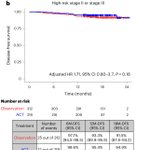
Distant mets 46% vs 29% (P<.01)
Reminder: only 41.4 Gy/23 fx, a pre-op, arguably non-definitive dose, especially with/ ~75% adenocarcinoma.
Nonsignificant OS doesn't establish noninferiority.
#ESMO26 #RadOnc #OncTwitter

Michael Shusterman, MD retweeted

#daraxonrasib clinical outcomes by allele in #RASolute302 from FDA NDA review.
These data perpetuate unresolved questions:
- is RASi as effective for KRAS WT; K12R? See Table 24; Fig 11.
- is 300 mg necessary for maximal clinical benefit? no data provided comparing 200 vs 300.


Michael Shusterman, MD retweeted

Devastating news 💔
Rest in peace dear Rachna.
medicine.arizona.edu/news/20…
Michael Shusterman, MD retweeted

Living with #MetastaticCancer involves complex decision-making beyond treatment. Join @guildsman & Jessi Kruse, PhD, for a talk on integrating clinical psychology and #SupportiveOncology to help patients not simply survive, but live well.
RSVP: bit.ly/4cEaqRf

Michael Shusterman, MD retweeted

Clinical impact of prospective circulating tumour DNA testing for minimal residual disease in colorectal cancer: the INTERCEPT programme experience
@Gut_BMJ
gut.bmj.com/content/early/20…

Michael Shusterman, MD retweeted
🔥off the press🔥
Real-world data from pts treated with CTx for BTC insights from a prognostic model
@JHEP_Reports
doi.org/10.1016/j.jhepr.2026…
👉No benefit continuation of CTx > 6 mo
👉CisGem > GEMOX
👉In ECOG 2, OS with CisGem > Gem
👏important RW questions
@myESMO @ASCOPost @EASLedu @ILCAnews

Michael Shusterman, MD retweeted

🔬 The phase 3 RASolute 309 trial has been initiated, investigating frontline daraxonrasib plus the RAS G12D inhibitor zoldonrasib vs chemotherapy in advanced #PDAC.
Read more: targetedonc.com/view/phase-3…
#PancreaticCancer #GIOncology #CancerTreatment #Daraxonrasib #ClinicalTrials

Michael Shusterman, MD retweeted

Happy to see one of my fellowship projects finally in print.
Our @UIowaCancer experience with interval anatomical imaging among patients with NETs undergoing treatment with Lu177-DOTATATE. Current guidance is to re-stage after completion of planned treatment with Lutathera (4 cycles, 8 weeks apart). In this small study (n=37), we show that mid-treatment imaging can inform outcomes with Lutathera. This is certainly something that I routinely do in practice.
We also tried to tackle the problem of pseudo-progression (due to radiogenic edema) in this paper- which is something that is often cited as a reason not to perform interval (mid-treatment) imaging.
@ChandrikhaC @RPatel20166
Link: thieme-connect.com/products/…

Michael Shusterman, MD retweeted
I really like this paper. Nicely summarizes the pitfalls of using RECIST criteria for response assessment in NETs.
doi.org/10.1007/s11154-021-0…


Michael Shusterman, MD retweeted
🧬 Reduced oxaliplatin exposure | GI cancers | Meta-analysis
📚 24 studies (N=30,395)
➖ No significant survival difference
✅ G≥3 neuropathy OR 0.34
✅ G≥3 AEs OR 0.67
💡 Less oxaliplatin may improve the therapeutic index without survival loss.
🔗 doi.org/10.1016/j.ctrv.2026.…
@OncoAlert

Michael Shusterman, MD retweeted

🔥 ASCOT final 5-year analysis (JCO)
Adjuvant S-1 after resection for biliary tract cancer
👥 n=440 randomised (S-1 218, observation 222), median follow-up 61.5 months
📈 5-year OS 64% with S-1 vs 52% with observation
⏱️ Median OS 8.2 vs 5.9 years - HR 0.72 (95% CI 0.55–0.95), one-sided p=.01
🧮 RFS favours S-1 less decisively: stratified HR 0.76 (0.59–0.98), unstratified 0.80 (0.62–1.03) crosses 1.00
I think we need to do better....
#GIOnc #BiliaryTractCancer
pubmed.ncbi.nlm.nih.gov/4277…


Michael Shusterman, MD retweeted

Read. This.
This Is the Biggest Obstacle to New Cancer Cures nytimes.com/2026/09/04/opini…

Michael Shusterman, MD retweeted
And just like that, adagrasib + cetuximab is no longer FDA approved for KRAS G12C colorectal cancer.
The accelerated approval was officially withdrawn September 1 after KRYSTAL-10 failed to confirm benefit.
We talked about KRYSTAL-10 when it was presented earlier this year.
The phase III randomized 461 patients in 2L to adagrasib + cetuximab vs chemotherapy ± VEGF inhibition.
It missed both primary endpoints:
▪️PFS: 7.5 vs 8.1 months, HR 0.89
▪️OS: 21.6 vs 21.7 months, HR 0.83
Hard to argue with a negative phase III trial.
But I still like the idea of a chemo free option.
Response rate was 47% vs 16%.
That could matter for some patients (like those who you need just a little more shrinkage to enable crative intent therapy).
KRYSTAL-10 asked whether adagrasib + cetuximab was better than chemotherapy in 2L.
It wasn’t.
That doesn’t mean the concept of KRAS G12C + EGFR blockade was wrong. And it doesn’t mean there aren’t patients for which this isnt valuable.
Anyone celebrating this should look themselves in the mirror; this is a tool that has just been removed from our arsenal. However, the FDA did exactly what the system is designed to do; pull back if the Ph III doesnt pan out after accelerated approval.
@OncoAlert @TheGutOncLab @Onco_Nexus
Michael Shusterman, MD retweeted
I find this study very interesting. Very much unlike my experience as an oncologist in the U.S. where most patients I see want systemic therapy. A very large Dutch population-based study.
Among 13,756 patients with mPAC, 72% did not receive systemic therapy (ST)
-- Independent predictors of no-ST included increasing age, worse WHO PS (>0–1), modified Glasgow Prognostic Score (mGPS) 1–2, Charlson Comorbidity index ≥ 2, and low socioeconomic position
-- Reason for not receiving ST was mostly due to patient and family preference (39%), followed by patient factors (31%, comorbidity or impaired performance status (PS))
-- Half of patients not receiving ST had a good PS (WHO 0–1) (50%), while this was 68% when not receiving ST was based on preference.
-- Median overall survival was 42 days (no-ST) versus 213 days (ST).
sciencedirect.com/science/ar…
