







The AIRR-ML-2025 challenge is LIVE on @Kaggle, but the real question is… are you up for it?
We’re challenging the best in #MachineLearning & #DataScience to decode the immune system. Think you have the skills? Prove it.
💰 $10,000 prize pool 📄 Co-author a @NatureMethods paper
2
1
114
Your mission: Predict disease from T-cell repertoires and identify the key sequences.
This is more than a prediction task, it’s about finding signals that could lead to new diagnostics & therapeutics. The data is complex, unpublished, and waiting for you. #immunoinformatics
1
19
Check it out!
Highly recommended for anyone passionate about ML/AI or computational biology and immunoogy.

📢 Announcing the Adaptive Immune Profiling Challenge 2025!
Can you predict immune state labels from adaptive immune receptor repertoires?
💰 $10,000 prize pool!
📄 Top 10 teams co-author a @NatureMethods paper!
🗓️ Launches Nov 5 on @Kaggle
More Info: uio-bmi.github.io/adaptive_i…

81
😍Excited to share the result of a long, creative journey with an amazing team. Our paper explores new ideas for aligning BCR/TCR sequences, now implemented in AlignAIR. Check it out: academic.oup.com/nar/article… and try it here: alignair.ai
Feedback welcome!


Big news! Our paper on enhancing immune receptor alignment with deep learning is out in #NAR!
We introduce AlignAIR: a new state-of-the-art tool for AIRR-seq analysis that we've been working on for the past two years.
#Bioinformatics #DeepLearning

Pre-print alert🚨:
"A Broad Survey and Functional Analysis of Immunoglobulin Loci Variation in Rhesus Macaques"
biorxiv.org/content/10.1101/…
A truly enjoyable and collaborative effort—this is what science should be all about!
@BosingerLab Corey Watson

Check out our new publication: An unbiased comparison of immunoglobulin sequence aligners academic.oup.com/bib/article…

Check out our new publication about reproducible analysis of adaptive immune receptor repertoire sequencing data:
academic.oup.com/bib/article…


🚨 New paper alert 🚨
Our recent paper, led by the one and only Ayelet Peres has just been published in Nucleic Acids Research. It introduces new methods for germline V allele annotation & genotype inference.
[t.ly/YsoGo] 📄
🧵1/5


New paper alert! 🔔
1/5 🎉 Thrilled to announce our paper on a novel approach to T-cell receptor beta chain (TCRB) repertoire encoding using lossless string compression has been published in Bioinformatics! This work is pivotal for our daily work and analysis of TCRB's #Bioinformatics #Immunology

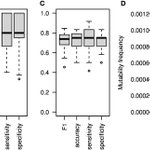
Paper alert: Although this paper has "COVID-19" in its title, it shows how mutation patterns can be used to classify individuals based on their antibody repertoires.
"Altered somatic hypermutation patterns in COVID-19 patients classifies disease severity"
tinyurl.com/n4jvwb48


(1/n) A fresh preprint in which we present a novel approach to T-Cell Receptor Beta chain (TCRB) repertoire encoding using lossless string compression.
biorxiv.org/content/10.1101/…


A similar situation happened to us as well. Minor comments by one reviewer led to two months of silence followed by a rejection w/o justification. Afterwards they gave us six days (!) to respond. We did it on time! but since then, two more months of silence.... @FrontImmunol
This post is from an account that no longer exists. Learn more
1/2 A fresh preprint to start 2023: PIgLET, a new R package to cluster and rename IGHV germlines and to infer individual genotypes from AIRR-seq data. Check also the interactive website: yaarilab.github.io/IGHV_refe…

IGHV allele similarity clustering improves genotype inference from adaptive immune receptor repertoire sequencing data biorxiv.org/cgi/content/shor… #biorxiv_immuno
2/2 The work was led by Ayelet Peres with valuable contributions from @ctwatson29 @olrodriguez_ @skleinstein @mats_ohlin @WilliamDLees @pazitp and more.

Our manuscript on decomposition of individual SNP patterns from mixed DNA samples is now out at mdpi.com/2673-6756/2/3/34…! We present a haplotype-based HMM algorithm (AH-HA) to extract an unknown SNP profile from whole genome sequencing of a two-person mixture: known and unknown.
