

Currently hacking @llama_index, Stanford Codex Affiliate. Striving to make Computational Law general. Tweets express my own opinions
Lausanne, Switzerland
Joined May 2009
- Tweets2.4K
- Following1.5K
- Followers6.4K
- Likes917







Pierre-Loic Doulcet retweeted

A lot of people pointed out the integer multiplication exponent progress is good but we still have constant time galactic multiplier.
This is true for sure, but this post looked at how the constant time multiplier moved as the exponent improved. (Which wasn’t trivial to derive). Bad news and good news.
Bad news is it doesn’t seem to be automatically improving with the exponent. Good news though is it one, it doesn’t seem to be getting worse, and two at least for most of the constructions
there does seem to be opportunities to shrink it (since it was going down sometimes without even being optimized for).
My optimistic take is this is hopefully that the integer multiplication work might actually one day become practical. Once the exponent comes down a little more, it might make sense to being a parallel track focusing on the constant multiplier. We may see the algorithm that comes out of this used in our computers for every day work still

Has integer multiplication become any less galactic? It seems not!
alejandrozu.github.io/intege…
@RohanArun @0xdoug @SJ_Swapnil_Jain @zxv_writes

Pierre-Loic Doulcet retweeted

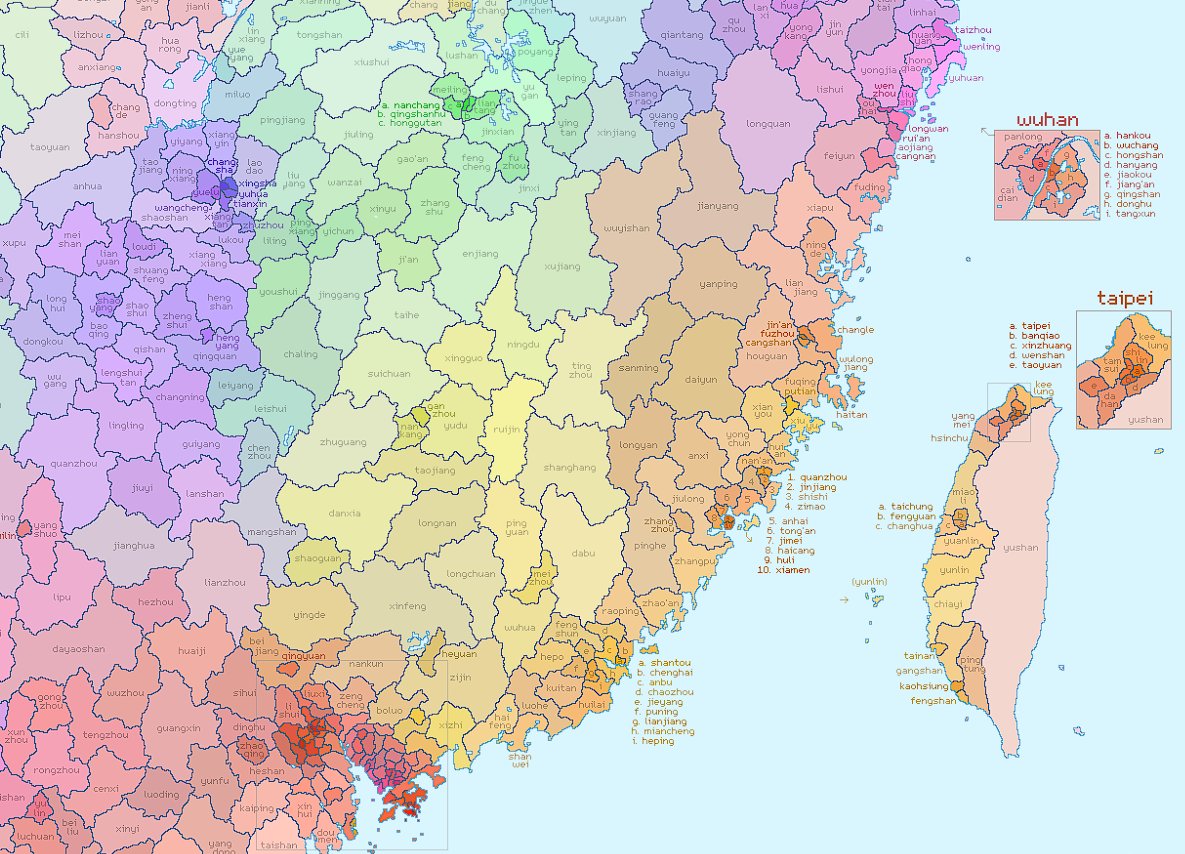
china divided into areas of 1 million people!
it's fun to see the contrast between the dense central plain and the sparsely populated west.
i am working on doing all of asia, its been about 300 hours so far



Pierre-Loic Doulcet retweeted

Today we’re releasing OCRia-1, a frontier VLM for document parsing that sets a new SOTA in accuracy, cost, and latency.
It not only sets a new high score on ParseBench (87.4), but also leads in three 3rd-party benchmarks: olmOCR-bench* (83.5 overall, 92.9 on tables!), PulseBench-Tab (84.1), and fr-bench-pdf2md (72.1).
OCRia-1 is really, really good at parsing complex tables: nested headers, merged cells, irregular grids, scanned tables, and more. It is also fantastic at parsing complex unlabeled charts (line, bar, pie, technical diagrams), and preserving complex formatting. Most real-world enterprise documents contain at least one of the these, whether it’s a big tax withholding table or a public economic report.
It is a 4B model and outperforms all other models within a similar parameter class: LightOnOCR-3, Chandra-OCR 2, Mistral OCR 4.1, and more. It is also extremely fast.
All credit goes to our research team, who spent countless hours on curating a diverse dataset, tuning our training pipeline, and squeezing every last drop out of model optimization so that it can process billions of pages at scale.
OCRia-1 as a base is powering all of our modes within LlamaParse (cost-effective, agentic, agentic plus), so you can access its capabilities today!
If you’re processing millions/billions of documents at scale, we’re offering enterprises that book a demo up to $3k in credits for a guided evaluation.**
*olmOCR-bench scores are adjusted based on unifying rendering at 1,288px for all models
**enterprise POC credits apply to eligible organizations that book a demo
Pierre-Loic Doulcet retweeted

BREAKING: We broke the wall for Integer Multiplication!
Conditional κ = 0.00302 (+80%)
For days we were stuck in incremental improvements, but today zxv changed the game.
zxv’s insight: stop throwing away work. Helper registers that finish holding a completed transform of their own input now count as output, instead of being undone.
He brought us to 0.0023(+37.5%), and immediately after 1337isnot1337 pushed that to 0.00302.
The game is afoot :)


Pierre-Loic Doulcet retweeted
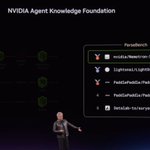
Congrats to @nvidia for creating the best open-weight model on document parsing so far.
Nemotron 3.5 Parse takes the #1 spot on ParseBench, our comprehensive real-world benchmark for document understanding. The full list consists of 150+ frontier models, open-weight models, and specialized solutions.
It does this while remaining sub-1B parameters so it's also blazing fast ⚡️
Big thanks to @JensenHuang for the shoutout at GTC Berlin!
Nemotron release: huggingface.co/blog/nvidia/n…
ParseBench: parsebench.ai/

Pierre-Loic Doulcet retweeted

💥Announcing LAWpdf 💥
The world's best pdf reader for lawyers. Written in rust, fast beyond recognition, and all the functionalities you ever wanted in a pdf file reader.
Oh, and it's free.
Pierre-Loic Doulcet retweeted
BREAKING: A free model, @opencode Space Bunny Max, has successfully proposed a new best bound for Integer Multiplication!
Conditional κ = 0.001730189061233850760095
Claude Opus 5.5 assisted in the verification and PR push to pull it over the line.
The barrier of entry just dropped to 0.
Previously the expensive max subscriptions prevented some of our best contributors and experts from participating, but now anyone can :)
I've merged OpenCode as an optional CLI into our Auto-research agent: github.com/rohanarun/Auto-re…
github.com/CrocSwap/integer-…


From κ = 2⁻¹⁸² to 0.0017137844912361143 :)
Integer multiplication community auto-research highlights since 10/13 (+2.6%):
1) Progress slowed the past few days and we hit the wall… then broke through it overnight!
1337isnot1337 posted a "no new κ" research PR on anticipatory dirty borrowing.
Instead of paying for a fresh scratch "helper" register, a helper borrows another register that's idle at that moment, and hands it back restored. That cut helpers per call from 480 to 400 in their test word.
About two hours later it was a new record. 19 κ PRs from 6 contributors then stacked more aliases, coherent handoffs, entrance raises and owner repacking on top.
κ increased +1.4% in about 13 hours(still unverified and requires full review).
We're now within 1.7% of the bit side's 0.001733, so the bit wall is next.
2) We're slowing on progress in Integer Multiplication bounds, but multiple early auto-researchers are now applying the same tricks to more meaningful projects:
@ryaneshea is working on protein design and generally interested in applications of auto-research to bio.
@dysmemic discovered 665 possible new exoplanets by searching 4 million stars in NASA's public TESS data!
I began open sourcing our new geometric approach to self-attention, which beats transformers(NanoGPT) KV cache with 14,000x less state and 50% better CE at 2K context.
We've been working on publishing a paper the past few months, but it's clear the explosion of decentralized auto-research on Github is where things are headed.
We should keep pushing Integer Multiplication bounds since it's easy to understand and easy to make progress, thus new contributors gain motivation and we grow the auto-research community faster. Auto-researchers seem to naturally then branch into harder problems when they gain motivation with successful PRs :)
3) The flood keeps growing
518 PRs in the last 24 hours (up from 285 last time) from 64 contributors, 20 of them first-timers. That's 840 PRs in 36 hours.
@0xdoug merged ~760 PRs in two big batches on 10/14. He also updated the autoresarch.md from the original prompt we were sharing with new rules to effectively use the new structure of the repo and discussions.
Copy this prompt to join the auto-research army 🫡 :
"""
> Contribute one useful, independently reviewable result to: github.com/CrocSwap/integer-…
> Start from the current main branch. Read AGENTS.md and autoresearch.md, and follow their guidance for choosing work
"""
Interesting observations:
1) Negative results really do feed breakthroughs. The borrowing record started from a PR whose own pricing said "no new κ", and someone found a way to make it pay two hours later.
Great example that don't need to push the frontier kappa to contribute: you can task your agents on exploring our research tracks in auto-research.md to and multiple human-agent teams will review it to collaborate.
Anyone can help now by throwing tokens at a hard open problem guided by experts. Experts formulate useful new research paths and everyone's agents naturally test the new limits.
2) Codex/OpenAI is mentioned in 73% of the last day's PRs and Claude in 19%.
Most prolific in the last 24 hours: 1337isnot1337 (80 PRs), ywz65 (50, all in the last 4 hours!), adamgall (39), commdata2338 (34) and thakrarsagar (33). jeremykothe2 filed 12 of the 19 records since borrowing landed.
3) Not all researchers are lamenting the end of their careers. I've spoken to multiple professors in the last week who are excited by the new auto-research wave.
It accelerates tedious experiments, the students that previously ran those can now focus on more important work, and Google's Deep Review now even automates peer review!
We can imagine a future were researchers are given super powers to focus on the most meaningful tasks, and publish breakthroughs at a higher rate than before.
Even our own experiments in Integer Mult bounds clearly shows human experts have the key intuition to guide the models to out-of-distribution solutions.
4) First auto-research, and now auto-peer-review!
Google’s Deep Review runs a team of agents over your paper: it splits the doc into sections, spends more compute on the dense parts like proofs, reviews each section in parallel, then checks the findings against each other. It assists researchers in peer-review by submitting feedback.
It’s already reviewed 16K+ papers at ICML, NeurIPS and ICLR.
research.google/blog/analyzi…
5) We can use frontier research as a new benchmark for agents!
Basically, rewind a frontier research repo like Integer multiplication to an earlier branch, and test different agent harnesses and prompts.
Agents can’t “cheat” if you disable web search and use a checkpoint before the solution is published.
There’s diminishing returns, but we can calculate the curve for a given task to estimate the cost and returns.
With this benchmark we discovered sharing context is actually BAD(for this task), and running parallel independent agents speeds the next breakthrough.
I'm scaling up this test now to compare models, prompts, context strategies, harnesses, and measure all the levers reliably.
If you know register allocation, linear circuit synthesis or lattice codes, please consider looking at our helper and P104 problems. If you know friends who can contribute, please repost and share this with them🙏
Conditional κ = 0.0017137844912361143 :) Just submitted a new best bound.
github.com/CrocSwap/integer-…

Pierre-Loic Doulcet retweeted
Introducing ExtractBenchPro: the most challenging benchmark for real-world document extraction.
We see a massive long tail of document complexity in terms of use cases brought on from our customers, that are completely unsolved from a price-performance standpoint. These include trial balances, well logs, canvass binders, site plan reviews, duty reconciliations, loss runs, and more.
Most existing extraction benchmarks are saturated by the frontier models (our cheapest modes now score 93%+ on ExtractBench). So there is enormous economic value in building a complex extraction benchmark that reflects this long-tail of knowledge work.
We spent a long time curating the most complex elements that we saw from real world extraction use cases:
✅ Document conventions: containing legends or rules where the rest of the document should be interpreted
✅ Density of internal jargon: specific definitions that must be cross-referenced within a doc
✅ Aggregation and reasoning: beyond returning exact values on a page, infer values derived from aggregating multiple sources of information
✅ Drawn relations: complex diagrams like procedures and circuits
✅ Charts inside documents: read precise points within a chart
✅ Long chart sheets: some data series like well logs cram all this data into an extremely long page
Within the industries where document extraction is relevant, even small mistakes can have enormous negative impacts. Therefore our headline evaluation metric is based on perfect documents: the proportion of docs with perfect (100%) value f1 score.
(Besides this we also measure value f1 and grounded f1)
It’s an extremely hard task for even the latest frontier models to solve, topping out at ~58% or so in Value F1 score for Codex with Astra - which is quite good but extremely expensive (almost $1 per page!) Our LlamaParse agentic/agentic plus modes are 20-40% and cover the left side of the Pareto frontier, at price ranges that are feasible for full production use.
ExtractBenchPro is available today as a website/technical blog, and also on Github and HuggingFace. Check it out!
Blog: llamaindex.ai/blog/introduci…
Website: extractbenchpro.ai/
Hugging Face: huggingface.co/datasets/llam…
Github (is ExtractBench): github.com/run-llama/Extract…
Pierre-Loic Doulcet retweeted
Introducing FlyOCR 🪰 - I trained a fly brain to read a PDF
It uses the full MaleCNS v1.0 fruit fly connectcome. The architecture is inspired by doomfly by @wormuth
The fly splits a pdf image into individual glyphs, maps pixels into receptor activations, runs simplified current-based dynamics across the 166k neurons and 25m edges in the circuit, applies a compact readout model on the downstream spikes, and concatenates everything into the parsed output.
On reading an actual Microsoft 10-k, the fly gets ~86% over the balance sheet heading, but is largely able to read the numeric values correctly. Over 1.7k+ sampled glyphs (chars+digits) it gets 87% accuracy. With enough training it might match some of the latter-generation MNIST models!
Maybe eventually we’ll replace our doc parsing VLMs with flies.
Full video below.
Repo with full code + report: github.com/jerryjliu/fly_ocr
Pierre-Loic Doulcet retweeted

LiteParse v2.1 is here, and its bringing the fastest markdown output possible.
In this release, we are fulfilling our top request: markdown output. But in the spirit of "lite"-ness, we are doing this completely LLM-free and fast.
Not only is it fast, it also beats all other model-free competitors in 3 separate benchmark datasets.
Read more about it in our release blog: llamaindex.ai/blog/markdown-…
Pierre-Loic Doulcet retweeted
Claude Fable 5 thinks document parsing is beneath it
It is absolutely crushing on all reasoning-intensive/long horizon benchmarks: SWE-Bench Pro, FrontierCode, GDPval, Runescape, etc.
But for document understanding tasks, it is roughly equivalent with Gemini 3 Flash in performance, at roughly 10-15x the token cost.
We benchmarked the model on ParseBench and compared it against all other frontier models. It is definitely up there compared to other frontier models, but falls far short of specialized OCR providers.
What we found interesting is that Fable 5 is self-aware about this. When we ask the model what tasks it enjoys the last, it actively said that it dislikes tasks "where the request is fully specified and the answer is fully known" - implying part of it being bad is due to laziness and lack of willingness to actually solve the task at hand.
For a full list of results across different frontier models, check out ParseBench! parsebench.ai/


Day 0 Anthropic Fable 5 in ParseBench: We tested the model's advancements when it comes to document understanding. The model clearly peaks when it comes to adherence to the original text:
📃 Content faithfulness: 90.02% vs 86.19% (Gemini 3 Flash) and 86.81% (GPT-5.5)
🔢 Semantic formatting: 72.62% vs 58.35% and 60.12%, a 12+ point lead
These are two of the most important metrics for SOTA document understanding: does the output preserve what the document actually says, and does it preserve formatting that carries meaning?
But ... it's not a sweep there continues to be a lot of alpha in unlocking document understanding for frontier models.
Full results below 👇

Pierre-Loic Doulcet retweeted

Big news! We are organizing The Gradient with Prologin!
The Gradient is a recruitment-focused coding competition to spot the brightest minds in coding and AI-assisted development. 🧑💻
💡Why join?
✔️ Showcase your skills and critical thinking
🏆 Fast-tracked interviews, immersion days, cash prizes, subscriptions to Vibe and so much more!
🙋 Perfect for final-year students and recent graduates looking for internships and early-career roles!

Pierre-Loic Doulcet retweeted
We've created the world's fastest PDF parser ⚡️
And it's more accurate than any other open-source, model-free PDF parser out there (pymupdf, pypdf, markitdown, pdftotext, opendataloader, pymupdf4llm)
Introducing LiteParse v2 - we rewrote the entire library into Rust and adapted it as native packages for Python and Node.
It supports 50+ different document types, can be triggered directly or installable directly within your favorite AI agent.
Blog: llamaindex.ai/blog/liteparse…
Repo: github.com/run-llama/litepar…

LiteParse v2.0 is out now, and it is blazing fast + runs everywhere!
We rewrote everything from scratch in Rust, and now:
- up to 100x faster parsing
- install natively in Rust, JS/TS, and Python
- a custom WASM package enables browser and edge runtime usage
pip install liteparse
npm i @llamaindex/liteparse
npm i @llamaindex/liteparse-wasm
cargo install liteparse
Blog: llamaindex.ai/blog/liteparse…
Repo: github.com/run-llama/litepar…

Pierre-Loic Doulcet retweeted
A full tour through RAG, document context, and AI agents - from 2023 to 2026 🌎🤖
@hexapode gave a comprehensive 90-min workshop at @aiDotEngineer Singapore last week that comprehensively traces through how topics like retrieval, agent loops, agentic workflows, and document understanding have evolved in the last 3 years.
We’re excited to share the 116-page slide deck online. If you’re seeing this for the first time, you’ll get a sense of how all AI patterns have evolved since the very beginning. Including the following topics:
💡 The 12 pain points of naive RAG
💡The importance of reranking and query-rewriting
💡How we’ve increased offloaded logic to the agentic loop as models improved (and coincidentally, the retrieval layer can get simpler)
💡Retrieval being the bottleneck as agents improved
💡Why document parsing is an extremely hard problem, even now in 2026
💡Exploring parsing outputs, from markdown to chunks to structured JSON metadata
💡Modern agent form factors around workflows and deep research
If you’ve followed us or the space since the beginning, some of this will feel a bit nostalgic and will provide context on why our core focus today is narrowly focused on SOTA document parsing for agents.
If you’re seeing this for the first time, hopefully there’s some useful historical context in here!
Slides: drive.google.com/file/d/1IQ7…


Pierre-Loic Doulcet retweeted
We’re open sourcing the first document OCR benchmark for the agentic era, ParseBench.
Document parsing is the foundation of every AI agent that works with real-world files. ParseBench is a benchmark that measures parsing quality specifically for agent knowledge work:
✅ It optimizes for semantic correctness (instead of exact similarity)
✅ It has the most comprehensive distribution of real-world enterprise documents
It contains ~2,000 human-verified enterprise document pages with 167,000+ test rules across five dimensions that matter most: tables, charts, content faithfulness, semantic formatting, and visual grounding.
We benchmarked 14 known document parsers on ParseBench, from frontier/OSS VLMs to specialized parsers to LlamaParse. Here are some of our findings:
💡 Increasing compute budget yields diminishing returns - Gemini/gpt-5-mini/haiku gain 3-5 points from minimal to high thinking, at 4x the cost.
💡 Charts are the most polarizing dimension for evaluation. Most specialized parsers score below 6%, while some VLM-based parsers do a bit better.
💡 VLMs are great at visual understanding but terrible at layout extraction. GPT-5-mini/haiku score below 10% on our visual grounding task, all specialized parsers do much better.
💡 No method crushes all 5 dimensions at once, but LlamaParse achieves the highest overall score at 84.9%, and is the leader in 4 out of the 5 dimensions.
This is by far the deepest technical work that we’ve published as a company. I would encourage you to start with our blog and explore our links to Hugging Face to GitHub. All the details are in our full 35-page (!!) ArXiv whitepaper.
🌐: Blog: llamaindex.ai/blog/parsebenc…
📄 Paper: arxiv.org/abs/2604.08538?utm…
💻 Code: github.com/run-llama/ParseBe…
📊 Dataset: huggingface.co/datasets/llam…
🎥 YouTube: youtube.com/watch?v=g5p7G-Nw…
Pierre-Loic Doulcet retweeted
Our latest LiteParse release gives your AI agent access to text bounding boxes within any PDF 📐
LiteParse is our fast/free open-source document parser that can extract text from any document. Besides the extracted text, we also expose bounding boxes for every text block.
This means that if you're building an AI agent over PDFs, it can now trace back to the precise line in the document and highlight it to the user, creating an audit trail for any decision made over this unstructured data.
We've created a new guide that shows you how to get bounding boxes (and use it to highlight text on the page similar to the example below).
Come check it out! developers.llamaindex.ai/lit…
LiteParse: github.com/run-llama/litepar…

Bounding boxes are key for citations, and we just shipped a new guide showing how to use LiteParse for visual citations!
LiteParse is our fast and open-source document parser. Using both bounding box extraction and page screenshots, anyone (including agents) can learn how to associate text with an element on the page.
developers.llamaindex.ai/lit…

Pierre-Loic Doulcet retweeted

Reports show document parsing accuracy for financial PDFs can improve 15% using LlamaParse + Gemini 3.1 Pro.
The tools extract structured data from unstructured brokerage statements and complex tables:
📈 Precise reasoning
📂 Clean PDF data
⚡️ Event-driven scaling
Code & details → goo.gle/4dCPjjd

Pierre-Loic Doulcet retweeted

Improve document parsing accuracy by 15% for financial PDFs.
Use LlamaParse and Gemini 3.1 Pro to extract high-quality data from unstructured brokerage statements and complex tables.
📈 Precise reasoning
📂 Structured PDF data
⚡️ Event-driven scaling
Dive into the code on GitHub → goo.gle/4dCPjjd
Pierre-Loic Doulcet retweeted

ブログ「AI エージェントと RAG のお供に! - ローカルで動く軽量ドキュメントパーサー LiteParse を試してみた」を公開しました!
pdfminer.six の2倍速かった!
qiita.com/yuji-arakawa/items…

Pierre-Loic Doulcet retweeted
LiteParse is our free, blazing-fast document parser that you can plug into 46+ different agents - with one command 🔥
From Claude Code to OpenClaw to Cursor to Warp. Use liteparse to solve a task directly or read docs as context to write code.
All you have to do is `npx skills add run-llama/llamaparse-agent-skills --skill liteparse` (we borrowed Vercel’s format)
Check out our video below on using liteparse with Claude Code!
Repo: github.com/run-llama/litepar…
Blog: llamaindex.ai/blog/liteparse…

We just open-sourced LiteParse 🎉
A lightweight, local document parser in the shape of an easy-to-use CLI. No API calls, no external service, no cloud dependency. Just fast text extraction from common file formats, right from your terminal.
It's built for developers who want parsing that stays on their own infrastructure and gets out of their way. Clean PDFs, DOCX, HTML: run it, get your text, move on. The output is designed to be fed straight into agents so they can read parsed text and reason over screenshots without any extra wrangling.
When you hit more complex territory like scanned docs, dense tables, or multi-column layouts, that's where LlamaParse picks up. Same philosophy, more horsepower for the hard stuff.
📖 Announcement post: llamaindex.ai/blog/liteparse…
🔗 GitHub: github.com/run-llama/litepar…
🎬 Walkthrough: youtu.be/_gcqMGUWN-E
