



Pinned Tweet
This is the Congressional Medal of Honor Society link to a free documentary narrated by Gary Sinise to commemorate MOH Day. It's how the Medal went from one no one wanted in the Civil War to become the United States' highest decoration for valor. cmohs.org/news-events/video-…
Still getting requests for this one, especially since the DVDs are gone. Made right before AI and the latest U.S. history debates. Built on hard research and interviews with regional and national experts — the information holds up. Link is in the first comment.

2
2
130
This is the link to it.
tennesseeed.gumroad.com/l/ux…

10
This is Constitution Day recognizing the 238th anniversary of the last meeting of the first Constitutional Convention in Philadelphia and signing of the United States founding document.
Since May of that year, more than 55 delegates had been sworn to secrecy in what was first said to be a revision of the Articles of Confederation, but what emerged was an entirely different document. Workers brought in fresh dirt every day to cover the cobblestone street so those in attendance weren't distracted by rattling trace chains and traffic outside the hall.
To say it was loud inside, is an understatement. Rhode Island didn't even send delegates. George Washington, who was voted president of the convention, regretted attending and, in the beginning, had even tried to avoid going. The fear of most was the nation sat on the brink of disaster. It was head-butting debates, walkouts, and compromises - most spent on the election process of congressmen and senators.
While states had agreed to form a federal government, each still saw itself as a sovereign nation and resisted relinquishing any power. James Madison and delegates from his state put forward the "Virginia Plan" he'd helped write, which created three separate branches of legislative, executive, and judicial. Madison took copious notes of all back-and-forth debates devising what became the structure of the Constitution.
In the end, 39 delegates signed it to disburse to the state legislatures for approval. The law then required a 9-13 majority to pass, but, without the guarantee of individual rights many had in their own constitutions, couldn't get past six states.
Federalist and anti-Federalist movements, newspapers evenly split for and against, one legislative fistfight, and threats of secession ruled the day. Thomas Jefferson even wrote Madison saying "... “A bill of rights is what the people are entitled to against every government on earth.”
The states resisting the Constitution and signed it only on the promise that a Bill of Individual Rights, which Madison wrote, be adopted into the U.S. Constitution. It was done by the first congress in 1789 creating the document we know today - still regarded as one of the greatest and most copied government instruments ever written.

4
208
This is the 248th anniversary of the Revolutionary War battle of Cooch's Bridge in Delaware. It's a little piece of a war that barely gets noticed. On 3 September 1777, German troops leading the British advance engaged militia forces and the U.S. light infantry on the road leading to the bridge. Though outnumbered four to one, the newly organized colonial forces pushed back hard forcing the enemy to call up reinforcements. They flushed the Americans out and drove them across the bridge. Each side saw 30 killed. Colonists reported 140 missing or captured and came away with 35 prisoners of their own. Most noteworthy were the colors the colonials reportedly unfurled that day in September. It marked the first time the United States flag made its appearance over American soldiers in the field. Colors that have flown over them since, as well as, from buildings, and front porches across the nation.


It was 249 years ago on a sweltering summer day in Philadelphia that 56 men began gathering at the state house to declare complete independence from Britain. They were well-read men educated in multiple philosophies honed by personal experiences under tyrannical kings and those who served them. They despised the tyranny of monarchs and those of the majority choosing to craft a constitutional Republic.
The strong words inscribed on the parchment in front of them declaring liberty and freedom severed ties with the most powerful nation on earth and set forth an aspirational blueprint for those who came afterwards to achieve. Upon signing their names to the document, Ben Franklin said: "We must all hang together, or assuredly we shall all hang separately."
One was betrayed by a neighbor before his signature dried, five were captured and brutally tortured, nine signers died in combat, two lost sons, a dozen had their homes pillaged and burned, and 17 lost everything they owned, but hang together they did - never selling each other out, denouncing the words, or the dream on that document that started one of mankind's greatest experiments.
See less

15
214
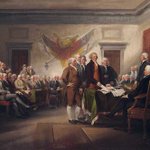
Most of our imagery of the Revolutionary War comes from one-eyed painter, veteran, and British POW John Trumbull, who served as George Washington's second aide-de-camp. His moving paintings of the "Declaration Signing" and "The Surrender of Lord Cornwallis" are iconic artworks hanging in the U.S. Capitol Rotunda.
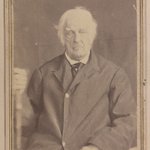
This is a daguerreotype (the first photo format) from The Library of Congress taken of Lemuel Cook born 10 September 1759 in Northbury, CT. He enlisted at 16 and served with the 2nd Continental Light Dragoons. He was one of six Revolutionary War veterans to survive into the age of photography.
The citizen soldiers from his unit served as scouts, spies, and Washington's personal guard. Cook fought at the Battle of Brandywine, the Virginia Campaigns, and was at Yorktown when British General Cornwallis surrendered - remembering General Washington ordering the men not to laugh at the British, as surrender was bad enough. Cook received his honorable discharge signed by George Washington on 12 June 1784.
He would go on to marry and raise ten children. Lemuel Cook passed in 1866 at the age of 102 having both served in the Revolutionary War and witnessing the Civil War. It's estimated that one in 40 Americans living today had an ancestor who fought in the Revolutionary War and more than 60% had ancestors living in the US at the time.
It was those citizens who kept July 4th sacred for 94 years. Congress didn't make it an official holiday until 1870. Sadly, not one of the surviving six veterans lived to see it, but their generation left behind a legacy that still echoes through time.

9
131

On this day in 1952, 2nd Battalion of the 223rd Infantry was sent north into Chinese territory to capture enemy soldiers for interrogation. Among them was Idaho native Sgt. David Bleak. The 6-foot five-inch, 250 lb. soldier was the medic in the 20-man Intelligence and Reconnaissance group probing the Chinese line.
The 20-year-old Bleak had left the farm to enlist in the Army two years earlier After basic training at Fort Riley, he was assigned to the medical corps. Bleak had made Sergeant when he was assigned to a mountainous area of Minari-gol, South Korea.
Korea had become a trench war in1952 and high casualties common in the back-and-forth battles for terrain features. In this case, Hill 499 where Chinese forces were known to be operating.
Bleak was rear of the formation when enemy soldiers spotted them and opened fire. Several went down and Bleak moved forward to the front of the line to treat their wounds. He stabilized them and continued on with the patrol when they started taking heavy fire again. Another soldier went down and Sgt. Bleak dove into the trench. He broke the neck of one of the Chinese, crushed the trachea of another, and found himself locked in hand-to-hand combat with a third. He managed to pull his combat knife in the fight and kill his attacker. He returned to the wounded and was treating another when a grenade bounced off his helmet. He covered the soldier with his own body to protect him and both escaped unharmed.
After mission success, the men were returning when another Chinese trench opened up on them taking down three soldiers and hitting Bleak in the leg as he ran to treat them. He dressed the wounds, but one man was in bad shape and couldn’t walk. Bleak was carrying him down the hill when two more Chinese soldiers popped up. Bleak put the injured man down and surprised the enemy by charging them and bashing their heads together until both were incapacitated. He picked up the soldier and the entire patrol got back to safety before accepting attention for himself – leaving five enemy casualties on Hill 499 without ever firing a shot.
On 27 October 1953, President Dwight Eisenhower presented Sgt. David Bleak the Medal of Honor for his actions under fire the night of 14 June 1952. Staff Sergeant Bleak was only one of eight corpsmen to receive the Medal of Honor in the Korean War.
He went on to marry Lois Pickett and raise a family of six supporting them as a farmer before taking a job at Idaho National Engineering Laboratory working himself up from janitor to Chief Hot Cell Technician where he retired in the mid-90s.
SSGT David Bleak passed on 23 March 2006 leaving behind nine grandchildren and six great-grandchildren. Ironically, the same day as Army Medic Corporal Desmond Doss, who received the Medal of Honor for his actions under fire in World War II.

16
200
Among my father's photographs taken during his career in the USAAC-USAF, was this one of President Franklin Roosevelt visiting Castelvetrano, Sicily in Dec. 1943 shortly after the Tehran Conference where plans for D-Day were coordinated with the Allies.
Many WWII soldiers carried personal cameras and were allowed to take photographs of the visit, as long they didn't take pics of him disembarking the aircraft.
This photograph capturing the American commanders behind the largest land invasion in military history.
From left in the background is General Henry Harlan "Hap" Arnold between heart attacks. He suffered four between 1943 and 45 requiring hospitalization and they never slowed him down. He was the father of the modern Air Force and one of the most colorful and legendary figures in military history. The only one to ever serve as a five-star general in two different branches of service.
General Dwight Eisenhower is sitting behind President Roosevelt talking to USAAC Col. Clayton Stiles, who led one of the few accurate paratroop drops in the Battle of Sicily. He and his crew were downed shortly afterwards and spent five hours at sea before being fished out.
The decorated colonel's quick thinking to fly under the clouds on D-Day made it a feat he successfully repeated in the invasion.

This June is the 75th anniversary of the start of the Korean War. Korea was separated at the 38th parallel in the wake of World War II by the US and the Soviet Union to manage the Japanese troop surrender without one nation or the other dominating it. Both nations established a headquarters to facilitate the surrenders establishing de-facto governments on their respective side.
What was a temporary “good-faith” solution developed into a permanent one due to obvious differences in governance. On June 25, 1950 after years of simmering tensions, the communist North Korean Army invaded the South. China and the Soviet Union backed the North against the U.S.-backed South and 22 supporting nations of the U.N.
Just a little prior to this, a Gadsden, Alabama native was able to get one over on the Army and enlist. Lee Mize, who had left school in the 9th grade to help support his family, weighed 120 pounds, and was almost blind in one eye from a childhood accident. He’d got turned away once, but put on some weight and practiced with spoons before the physical exam to manage a sleight of hand with eye paddles to read the chart. It worked. He passed basic and got assigned to the 82nd Airborne Division. His plans were to do a term, get out, and go to college. When the Korean War started, he changed his mind and reenlisted.
Sergeant Mize was posted to the 3rd ID manning a US post with 58 men in the mountainous area near Surang-ni at a place called “Outpost Harry.” On 10 June 1953, Mize got a report from a weapons squad leader something was wrong with the terrain. Mize had tried to call attention to the number of supply trucks he’d seen in the days prior, but was told it was nothing to worry about.
He arrived, looked over the edge of the foxhole, and saw a number of bushes ten yards away that weren’t there before. He shouldered his rifle and unloaded a clip in one. Chinese soldiers began falling out of it. Before he could duck back to cover, the bombardments began. One right behind him that slammed him into ground. He regained consciousness quick and started shooting anything coming at him, including six Chinese who were mortally attacking a medic. The Americans were outnumbered 30 to 1 and Mize wasn’t going down without taking as many with him as he could.
For two hours, it was an all-out close quarters battle. In the midst of it, he killed Chinese attacking one of his BAR men who was clubbing them with the butt of it. He started yelling at him it was better to shoot them with it when he was told the 10-round ammo clips they’d been given were loaded with .30 carbine rounds. None of the M-1s or BARs, who fired 30-06, could use them. After a check of his dead, he was infuriated to find them all with the wrong ammo.
With all of the officers dead or wounded and a small number of men left, Mize fought off the fury, took command, and went back to work. He assembled a team and mobilized them to shoot, throw grenades, and move to the next foxhole where they did the same. From one end of the line to the other, they went fooling the Chinese into thinking there were more soldiers than there were at Outpost Harry.
Two other times he was knocked down by blasts, but Mize retrieved wounded, fought, and cycled the men in foxholes until reinforcements arrived the next day. Sgt. Mize and eight other men were the only survivors of that first assault to walk off the hill. He was barely clothed and covered in soot when he tried to give his report to an officer. When asked who he was? He said “Sergeant Lee Mize.” The officer replied “You can’t be Mize. He’s dead.” The officer was quickly corrected by that North Alabama accent.
Sgt. Lee Mize was recommended for the Medal of Honor for his actions. He initially refused, but was convinced otherwise. He was sent stateside where he and his future wife Betty flew to the Little White House in Colorado. On 7 Sept 1954, President Eisenhower presented the nation’s highest award to to Mize and 11 others.
Mize remained in the Army. He became an officer and joined Special Forces in 1962. He got around the High Value Target concerns of command, as only Mize could, and was deployed to Vietnam in late 1963. He returned, was assigned to Special Forces Training Group at Ft. Bragg.
As head of the training committee, he was responsible for the HALO, SCUBA, and SKYHOOK schools and credited with starting the Combat Divers Qualification Course at Key West, Florida. He returned twice more to Vietnam where he was nominated for a second Medal of Honor for his actions under fire in 1969. DODSEC Robert McNamara turned it down because Mize was an officer and already had one.
Colonel Lee Mize ended his career as commander of the Special Forces School at Bragg retiring from the service in 1981. He held the MOH, Silver Star, five Bronze Stars, Purple Heart, Master Parachutist Badge, Ranger Tab, SCUBA Badge and Combat Infantryman’s Badge.
He spent his years working in miliary affairs, making speeches, and helping veterans. My first introduction to him got off on the wrong foot with him when he came in for a three-day veterans’ commemoration. He was s stern, no nonsense, type of man. Army through and through. Upset the directions someone gave him landed him and his wife at the wrong newspaper. This was pre-911 and attitudes towards the military weren’t stellar to say the least.
I walked away thinking Oh Hell, I’ve got to introduce him to an auditorium of school kids tomorrow unsure of how it would go. Lee was a hit. He handled even the most anti-military question with a style that won over the audience. I never imagined that day we would become the friends that we did over the years. He was a mentor, teacher, and sometimes guide through the labyrinth of military affairs and history. He passed from cancer on 12 March 2014 surrounded by his wife and family.
On May 14, 2015, the Special Forces Underwater Operations School at Key West, Florida celebrated its 50th anniversary. As part of the ceremonies, they named their Headquarters and Administration Building in honor of Colonel Ola Lee Mize, MOH.

25
494
Gen. Theodore Roosevelt, Jr. repeatedly asked command to assign him to the D-Day Invasion to lead his own soldiers onto the beach. He was constantly rejected, but continued pestering Allied command to let him. 4th Infantry Division commander General Raymond Barton finally relented giving him last-minute approval not expecting Roosevelt to survive a minute against the German guns. When the Comanche code-talker radioed he arrived safely, Roosevelt, Jr. became the oldest man and only general to go ashore with the first wave of troops on D-Day.
They landed at Utah Beach more than a mile off course. The 56-year old suffering heart problems and severe arthritis walked off the transport in a wool knit hat - cane and .45 in hand. In the midst of the momentary chaos, he casually strolled the beach with bullets kicking up sand and bombs busting around him redirecting troops, changing up tactics to counter the mistake, and telling confused soldiers "Don't worry. We'll start the war here." His inspiring coolness, courage under fire, and good humor saved countless lives.
He managed to adjust the tactics and get the soldiers off the sand and into the streets averting certain disaster. When Gen. Omar Bradley was asked post war to name the bravest thing he had seen. Bradley replied “Ted Roosevelt on Utah Beach.” Roosevelt died a few days later of a heart attack, but was one of the only generals ever awarded the Medal of Honor for his actions under fire on Utah Beach.
His son Quentin went ashore at Omaha Beach along with the all-black 320th Barrage Balloon Battalion where Army Medic Cpl. Waverly Woodson, Jr., suffering from shrapnel in his thigh and butt, worked for more than 30 hours straight saving allied soldiers before collapsing from his own injuries.
He and another U.S. Army Medic Penobscot Indian Charles Shay (first from left kneeling.) were later awarded the Bronze State and Silver Star respectively for their heroism retrieving and treating the wounded in that hellish rain of steel. Shay was one of more than 180 American Indian soldiers to charge the beaches that day, including Sgt. Pascal Poolaw, who would become the most decorated Native American in U.S. history.
It's a sample of June 6, 1944 where Americans and allies of all creeds and colors took the fight to the enemy in an action regarded as the largest seaborne invasion in military history.

15
217
James Alton Garder was born in the small town of Dyersburg, TN on February 7, 1943. He was well liked in the small town where he grew up. His school teachers remembered him as a chubby red-headed boy, who was a good-natured and sometimes mischievous student that grew into an outstanding football player. So good the U.S. Military Academy at West Point recruited him in 1960.
Gardner took his test at Fort Campbell, KY and played one year before leaving the academy and returning home. He spent a couple of years knocking around, tried college, and decided to enlist in the Army in 1964. After Basic, he was sent to Officers Candidate School, received his commission, and volunteered for Ranger training ending up assigned to the 101st Airborne Division at Fort Campbell.
In June of ‘65, he married his long-time girlfriend Joella and the next month found him in Vietnam. The 101st was battling to secure the region and runways for the 1st Cavalry Division. It was a hard-fought campaign where Gardner proved himself under fire to then-Major David Hackworth, who tapped the lieutenant to organize and command a Long-Range Reconnaissance Unit known as Tiger Force. Their goal was to “out-guerilla” the guerilla forces of the Viet Cong. A task Gardner and his men learned to do well.
On 6 February 1966, the 22-year-old was ordered to relieve a unit of the 101st under intense enemy fire near My Canh trying to keep a rice harvest from falling into enemy hands. The North Vietnamese Army outnumbered US forces and had built a textbook bunker system with interlocking fields of fire that knocked back every allied effort made to seize the fields. Major Hackworth’s directed airstrikes and artillery had little effect on it. He ordered Gardner’s “Tiger Force” to tackle it. The Major was stunned when he saw Gardner and his men crossing a neck-deep river on the flanking side. The brilliant move put them out of the line of fire, but the minute they stepped on the field Gardner’s men got hit hard.
Daylight was slipping away when Hackworth again ordered Gardner to take them out. The LT grabbed a bag of grenades and charged across the open field firing. He tossed one into the first bunker and, before it blew, tossed another into the second. Enemy soldiers charged at him, but Gardner never broke stride firing hitting the ground on his belly. The enemy thought they had killed him, but the lieutenant crawled up on the next bunker. The gunner seeing him raised to shoot, but Gardner got him first and blew it up. He called his men forward and reorganized them on the new ground, but enemy fire again pinned them flat against it.
Gardner gathered grenades and charged again blowing up the next bunker. The enemy were trying to get to the fifth bunker. Once more, he crawled to the fortification, pushed himself up, and charged it rifle firing. After the explosion, her turned to see if the enemy there were dead when an enemy rifle from another position ripped into him. Gardner reportedly turned and said “it’s the best I can do” before falling dead on the field.
His actions rallied the stunned men behind him. They charged the field and drove the remaining enemy into retreat from it. Gardner, who had turned 23 that day, was removed from where he fell. His platoon Sergeant Phil Belden wrapped Jim's body in a poncho liner and stood vigil all night until medivacs retrieved him from the field the following morning.
1st Lt. Jim Gardner was laid to rest in Fairview Cemetery in his hometown of Dyersburg. He was posthumously awarded the Medal of Honor for his actions under fire that day in Vietnam. Secretary of the Army Stanley Rogers Resor presented it to his widow Joella Gardner in a Pentagon ceremony on 19 October 1967.
A representative sample of one of the more than 1.5 million stories of those who have given their lives in service to this nation and a story worth remembering on Memorial Day.

2
24
486
Memorial Day is the only true American people’s holiday. More than 1.2 million citizen-soldiers have given their lives in U.S. wars since the United States’ origins in 1775. Arlington and the national cemeteries only contain a fraction of the men and women who died defending this nation. The rest are found in churchyards and small cemeteries in all 50 states, in foreign nations where they fell, and some we’ll never know where their remains are. It’s why Memorial Day is the most sacred on the nation's holiday calendar.
Major General John A. Logan is credited with the 1868 General Order 11 establishing May 30 as the official Decoration Day at National Cemeteries. The holiday rested solely on citizens to keep it and they did for a century without official decree or legislation.
The generational response of citizens turning May 30th into a national tradition led Congress to finally declare it an official holiday in 1968 commemorating its 100th anniversary. It became one of four dates they moved to create three-day weekends. The people revolted on Veterans Day forcing legislation President Gerald Ford signed in 1975 restoring it to November 11.
Memorial Day, however, moved to the last Monday in May. Protocol dictates U.S. flags are raised and lowered to half-mast over the capitol to honor the memory of the fallen. It’s then raised to full mast at noon to honor the nation they gave their lives to protect.
I’ve attended the burial ceremonies of those returned, interviewed family members of those lost in previous wars, and collected those stories from the men who served beside them. There are no words for the reverence this patriotic day of remembrance holds for them.
Memorial Day may be simply seen by many as one of seven three-day weekends for federal employees, the unofficial start of summer, or a day for sales. Most troubling is that so many believe the day is about all veterans – treating it like a second Veterans Day of sorts. It’s not. It’s about combat soldiers killed in action on the battlefield and a grateful nation honoring them.

1
18
335
October 10, 1947 the U.S. Army Transport ship Honda Knot sailed into San Francisco Bay. Sixteen days later USAT Joseph V. Connolly docked in New York, City. Each transport ship carried 6,500 remains of U.S. soldiers from World War II.
The flags in the respective harbors and on other ships were lowered to half-mast for the arrivals and people lined the streets on both coasts for the inaugural, yet somber, parade.
It was the beginning of a ten-year project repatriating more than 171,000 of the 280,000 American servicemen lost in the war. The “Bring the Dead Home” program was one of the largest post-war military operations undertaken - costing around $2 billion in today’s money to accomplish, but holding to the War Department’s promise to return the fallen soldiers to their families for burial. Though eligible for National Cemeteries. Of the more than 171,000 returned, 133,000 of them were interred in private ones.
More than 13,000 servicepeople and civilians worked on the post-WWII project. Their dedication to the global task, sometimes even at risk to themselves, often took allies by surprise and required diplomacy in some cases to make it happen, especially in allied nations’ that took great care of American remains in battlefield cemeteries.
The Defense Department’s dedication in returning the nation’s fallen men and women continued through Korea, Vietnam, and all conflicts since - long after the guns fell silent and the wars faded into history. Their mission of never leaving a fallen American behind continues to this day.
The remains of World War II Staff Sergeant Leroy Cloud, 744th Tank Battalion, 9th Infantry Regiment, 2nd Infantry Division were finally returned home to Texas. He was part of the Operation COBRA that helped push American forces past the hedgerow country that had all but stopped the D-Day invasion of Europe.
On the second day of the battle, his M5A1 Stuart light tank was hit by a shoulder-fired rocket engaging the Germans. Two men escaped the burning wreck, but the ensuing German bombardment practically obliterated the tank. Remains of two men were recovered, but no identification made and they were buried among the more than 6,000 WWII soldiers still listed as unknown.
Modern forensic analysis by DOD’s POW/MIA Accounting Agency identified his remains in 2023. They issued a death certificate for SSGT Leroy Cloud (pictured) citing blast injuries as cause and returned the remains to his family. He was laid to rest 6 April 2024 with full military honors in Taylor City Cemetery, Texas.
The last numbers as of July 2023 - June 2024 showed DOD DPAA recovery teams identified and returned the remains of 64 U.S. military personnel killed in World War II. More will be repatriated to their home soil this year. It’s only a small portion of the ongoing effort to identify and repatriate the 38,000 recoverable remains of more than 80,000 Americans still missing overseas from conflicts, including 72,000 from WWII.

The worst among the five beaches invaded on 6 June 1944 was Omaha. Pre-invasion bombings had missed everything because of heavy cloud cover. Rough ocean currents blew ships off course, equipment sank, and nothing was going to plan. Germans had spent months on that beach preparing to repel an invasion. So, when it began at 0630 that morning, it got brutal immediately.
Allied ships started going up in flames, some got caught on sandbars, and the rain of steel from Germans cleverly took out officers and sergeants at once. Seasick soldiers were drowning trying to get to shore, cutting vital equipment off themselves to swim, and retrieving helmets and rifles from the dead that did make it.
The carnage led LT Gen Omar Bradley to considered evacuation, but it was too late. The Army, Navy, and Coastguardsmen on the ground, in many cases leaderless, knew they were on their own. Everyone threw away the books and started fighting like pirates to get a toehold on the beach.
The USS Frankford, under command of LCMDR James Semmes (Upper left in photo), charged out of position looking as if it was going to beach the ship when he suddenly swung it broadside to the cliffs. Semmes had noticed a surviving Sherman tank with a broken track firing at the ridge. His crew used the direction of its barrel to point their own and pummeled targets on the cliffs.
The damaged Landing Craft Infantry ship USS LCI 90 carrying around 200 men jerked into position to attempt offloading them. With the ramps blown off, Machinist Mate First Class William F. Trump (lower left in the photo) volunteered in that chaos and confusion to run the anchor line. He slipped in the water, dodging bodies, bullets, and mines to get it anchored to the beach for troops to use as a guide – getting his helmet creased by a German bullet in the repelling assault.
1st Infantry Division Lieutenant Jimmie Monteith (Right) gathered what men he could and reorganizing a make-shift fighting force. The Virginia native led them through the beach’s barbed wire and minefields, retraced his steps to two Sherman tanks and got them through directing effective fire destroying enemy fortifications. He then led a determined attack on a German position getting his men off the beach and punching a hole in the line. He was organizing the defense of it against vicious counterattacks as Germans fought to surround them. He was firing his rifle and slinging grenades meeting each attack.
Monteith was stopping another one when a German machine-gun caught him in the back. He became one of more than 2,400 men killed on Omaha Beach. General Dwight Eisenhower was given the paperwork for Monteith’s Distinguished Service Cross, but tossed it back after reading the report. Instead, he posthumously presented him one of three Medals of Honor given for actions under fire on Omaha Beach.
Memphis native LCMDR James Semmes, USN, and Coast Guard Machinist Mate First Class William Trump were both awarded the Silver Star for their actions. Trump was one of 12 Coastguardsmen to ever receive the Silver Star. Two others were also awarded for actions that day. In 2012, the Coast Guard named a Sentinel class Cutter in his honor.

1
21
339
One of the best examples of original thinking once commonplace in this country came in the wake of the D-Day Invasion. U.S. troops got caught in what would become known as one of the biggest intelligence failures of World War II. It was the hedgerow country that lay beyond the coast of France.
Earthen mounds farmers had built up over centuries as boundary markers and fences that kept in livestock and prevented wind erosion from the sea. The tops covered with bushes, small trees, and brambles, with only narrow roads and trails between them. The Battle of the Hedgerows became a slug-fest between the two armies. It was costing the U.S. one man per yard going from field to field and creating a graveyard for tanks trying to get over them exposing their underbellies to anti-tank rockets.
The quagmire had everyone on the battlefield looking for a solution. Word went out to tank units to come up with something that could be done quickly. Cranford, New Jersey native Sgt. Curtis “Bud” Cullen in 2nd Armored Division put the question to his squad and a man only known on record as a “Tennessee Hillbilly” named Roberts asked "Why don't we get some saw teeth and put them on the front of the tank to cut through these hedges?"
According to British historian Max Hastings, Sgt. Cullen didn’t join in the laughter from the rest of the men, but, instead, took the idea and ran with it. He sketched it out angling the teeth downward to hold the tank on the ground while pushing through the hedges.
He ran it up his command chain staying steer clear of question-filled engineering committees, took some scrap steel from a roadblock, and mounted the device on the front of a tank. On July 14, Gen. Omar Bradley and other officers gathered to see the device and watched two tanks impressively punch through the hedgerows.
Finding the steel to outfit other tanks with the “Cullen device” was more than problematic. They didn’t want the enemy to know about it and steel was in short supply. They classified the project and U.S. soldiers hit the beaches of Normandy again – only this time it was with cutting torches to repurpose the steel crosses Germans had scattered across the beaches to repel the invasion. Gen Bradley flew in more welders from England to assist.
Within 11 days, 60 percent of the light tanks were outfitted with the “Cullen device” – all held in reserve until the July 25th launch of Eisenhower’s “Operation Cobra.” It was a slow, hard start against the German line that turned into a lightning advance for the American forces. The enemy was forced to abandon equipment and U.S. troops got clear of the Hedgerows by the end of August with the capture of Paris. Sgt. Cullen, who would lose a leg to a landmine four months later, return home, and be later awarded the Legion of Merit for the invention.
While Gen. Bradley considered it a great asset in the battle, the “Cullen Device” had its critics and detractors, but it’s performance can only be judged by the results. It was one of General and then President Eisenhower’s favorite stories of American ingenuity in World War II.

This is National Vietnam War Veterans Day. The irony is it falls within the same month as Jan Scruggs birthday. I met Jan back in the 90s driving him from a hotel to an event we were speaking at commemorating the moving Vietnam Wall that travels the country. Amid the good-natured jokes and ribbing on the way he told me about the journey of how the wall went from an idea to completion.
After watching the "Deer Hunter," he conceived it as a way to honor the men and women who served in the Vietnam War and the more than 58,000 who lost their lives in it. It was something he says he was obsessed with doing; an impossible dream he was convinced had to be accomplished so those who lost their lives in Vietnam would always be remembered.
The decorated, two-tour Vietnam veteran sold a car he had for $2,800 and started fundraising. Early on he was ridiculed in a national news story, the butt of jokes of late-night comedians for only raising $150, but those jokes and news reports raised his profile and let rank and file Americans know what he was trying to do. Veterans, their family members, and countless others found the address of the Vietnam Veterans Memorial Fund and began donating to the cause in those small amounts that add up.
Scruggs persevered going on to raise $8 million that would create the Vietnam Memorial Wall on the national mall in D.C. He authored a memoir that was made into the film “To Heal a Naton” telling his story and the remarkable journey to construct a national memorial to an unpopular war.
The iconic structure helped change and heal the nation in the wake of that war and bring appropriate credit to those who served. The monument remains one of the most visited in the nation’s capitol - drawing more than five million people annually to the site.
The Vietnam Wall is also one of the most interactive monuments on the mall. It's a place of reverence for veterans and their families who will often leave items of remembrance, touch the name of a loved one who perished in the war, or, with a piece of paper, do a "rubbing" to capture the name as it appears on the monument.
Jan retired from the Vietnam Veteran Memorial Fund in 2015. He still visits the monument and, on occasion does impromptu tours for schools or groups visiting the site. His is one of the great stories in America on how one person can make a difference.

It was 81 years ago this month that a Western Union messenger delivered the news to Guy and Emma Ainsworth their daughter had been killed in action at the Battle of Anzio. March 9 would have been her 25th birthday.
The World War II battle was among the worst of the war. 40,000 American and British troops had landed on the Italian beach surprising the German Army, but what started successfully suddenly got bogged down ten miles in by numerically superior forces. The casualties overwhelmed the Evacuation hospitals that came ashore the day after the troops arrived.
The Army's 56th Evac was one of four set up and quickly nicknamed "Hell's Half Acre" by medics and soldiers, who considered it as risky as the battlefield with the night and day shelling. Among the medical personnel, were Army nurses 1stLT Mary Roberts, 2ndLT Elaine Row, 2ndLT Rita Rourke, and 2ndLT Ellen Ainsworth.
The hospitals were normally placed out of artillery range, but, because of the bogged down Allies, they were less than ten miles from the front lines making them susceptible to enemy shelling and sometimes friendly fire as dogfights between planes took place overhead. The Army talked of evacuating the nurses, who loudly objected to it, and the idea was shelved. The nurses lived and slept in their helmets and sometimes jumped into sloppy trenches half-filled with water due to the low ground level.
10 Feb 1944 was the worst of the battle when the hospital came under intense German artillery fire. LT Roberts kept three operating rooms running under the bombardment. One shell tore through the tent injuring two corpsman and destroying equipment, but she treated the wounded and kept the procedures going in spite of it to get the soldiers patched up for transport.
Her colleagues worked as feverishly getting the wounded patched up and to safety. 2ndLT Ellen Ainsworth was on the night-shift when bombardments started. She gave the order to evacuate 42 patients then "floored" who she could, got them under their cots, and remained behind to tend them. An explosion rocked the tent and a steel fragment pierced her chest. Undeterred, she kept working until the shelling ended and the men could be moved back. Ainsworth would die from that wound six days later.
On 22 Feb 1944, the remaining three nurses who battled with her that day were summoned from their tents. Lieutenants Roberts, Row, and Rourke were greeted by General John Lucas, who presented them three Silver Stars for their actions under fire - becoming the first U.S. Servicewomen in history to receive the decoration. After an impromptu ceremony, the nurses shook hands and went back to work.
2ndLT Ainsworth was posthumously awarded the Silver Star along with a Purple Heart and the Red Cross Bronze Medal.She was buried with honors at the Sicily-Rome American Cemetery. She would be one of six nurses to lose their lives at the Battle of Anzio in the line of duty.

1
26
342