





Ibrostarg retweeted

🇧🇷 Brezilya'da olay anlar: Hastanedeki gecikme şikayetlerini denetlemeye giden belediye başkanı, hastalar sırada beklerken nöbetteki doktoru başka bir kadın doktorla birlikte olurken yakaladı.
Olayın ardından belediye, hastaneyi işleten kurumla sözleşmeyi anında feshetti 👇
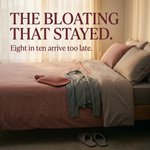
Ovarian cancer has no screening test and symptoms that read like ordinary life: bloating, early fullness, back pain.
In one series, 84% of women presented at stage 3 or 4. Seven in ten died within a year of presenting.
Two weeks of bloating deserves a scan.

Nigeria's suicide rate is about 9 per 100,000. Behind that figure, a pooled 9.7% of Nigerians have thought about it.
Asking someone directly whether they are thinking of ending their life does not plant the idea. It opens a door.
Ask. Then stay.

There is a fever in Nigeria that travels with cattle, milk and aching joints. It is brucellosis, and it is almost never tested for.
Raw milk is the usual route in. One national serosurvey put human exposure at 17.6%.
Boil the milk. Ask about the fever that keeps returning.

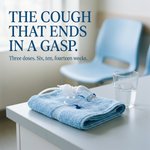
Whooping cough does not sound like a cough. It sounds like a child dragging air in after a fit that will not stop.
Nigerian DTP3 coverage sits near 57%. In a 2015 Gombe outbreak, half the cases had never been vaccinated and 15.5% died.
Three doses. Six, ten, fourteen.

Nigeria has one of the highest stillbirth rates in the world: about 54 per 1,000 births. Roughly half of those deaths happen during labour.
That is not fate. That is a trained attendant in the room, and a decision made in minutes, not hours.
Count them. Then prevent them.

The jigger flea burrows into the sole of a child's foot, feeds, and lays eggs inside the skin. It itches, then it ulcerates.
A study of Nigerian schoolchildren found 1 in 4 infested. The main risk factor is simply having no shoes.
Shoes are the intervention.

A child's toothache is not a small thing. Untreated decay in a baby tooth reaches the permanent one underneath it.
Pooled Nigerian data put childhood caries near 17%. In one Ile-Ife survey, 77% of decayed teeth had never been treated.
A filling costs less than an abscess.

Jollof Wars: Ghana edition 🔥🍗 Smoky, tomato-rich, plantain on the side. Nigeria, your move, who really cooks it better?


Trees older than empires 🌳 Avenue of Baobabs, Madagascar: zebu carts at golden hour. Bucket list yes/no?

Cavalry has entered the chat 🐎⚔️ Durbar festival, Kano : velvet robes, thundering hooves. Have you witnessed this spectacle?

Heard the Smoke that Thunders? 🌈 Victoria Falls : 1,708m wide curtain between Zambia & Zimbabwe. Dare to zipline across?


The crop that moved inland
Cocoa reached Nigeria in the 1870s. Saro merchants and Lagos clergymen planted the first farms near Ijan and Agege; Yoruba farmers carried the crop inland to Ibadan, Ife, Ilesa and Ondo.
For decades its export earnings were the Western Region's biggest single source of revenue.

Twelve boys in a borrowed house
On 31 March 1913 a young clergyman, A. B. Akinyele, opened a grammar school in Ibadan with twelve boys in a borrowed mud-brick storey building near Bere Square.
He ran it for twenty years and became the first Anglican bishop of Ibadan. The school is still there.

The railway house that became a museum
Jaekel House stands in the Ebute Metta railway compound: a two-storey colonial house from about 1900, once the general manager's residence, later a rest house, then derelict.
Handed to a heritage group in 1998, it reopened in 2010 as a railway museum.

The tower Ibadan calls 'the going-round one'
Bower's Tower has stood on Oke Are since December 1936: 60 feet high, 11 feet square, with about 47 spiral steps to the top.
Ibadan people call it Layipo, 'the one that keeps going round' after that staircase. It was designed by Taffy Jones, who also designed Mapo Hall.

She arrived in 1950 and stayed until she died
Susanne Wenger came from Graz to Nigeria in 1950, was initiated as an Ọ̀ṣun priestess, and lived in Osogbo for nearly sixty years.
With local artists she covered the Ọ̀ṣun grove in concrete sculpture and shrines. UNESCO listed the grove in 2005.
A religion that crossed the Atlantic and kept its language
In Bahia, the songs are still in Yoruba and the deities are orixás.
Enslaved Yoruba shipped from the Bight of Benin were logged as 'Nagô', and their religion became the dominant one among Afro-Brazilians. Candomblé Ketu is the branch named after the kingdom of Ketu.