




One of the biggest AHA moments for me was stopping reading trading-related books
and starting to press buttons:
- tried many TradingView indicators
- created my own TW indicators
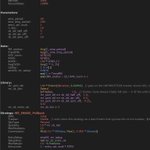
- finally RealTest and hundreds of possibilities it gives
That was awakening!
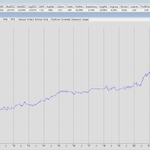
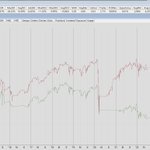
Biggest DD, never seen in backtest, making history. Almost 9x the SPY.
But for me and similar traders who trades using leverage and are willing to take a risk of ruin in exchange of bigger returns then the index - its part of the game.
And its not easy part.. 🙂

Trading find ways to amaze and October is -12.6%.
How much it can get worse.. I expect some more sour, but EOY should be ok 🙂
Momentum is bleeding, all other stuff is ok.
Stay positive and press the buttons!
Let's see what November gives.


Not hiding, worst week since started systematic trading (less then 1 year ago, still early).
- Feel good, I still positive on the year 🙂
- I will change nothing, it's expected to have such weeks, thought they are very rare.
- Trades placed, Monday will be interesting!

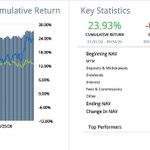
September: +8% and +23% YTD.
- TF did the job and MR added some
- I trade only one TF, one MR and one Momentum factors and it end-ups in 8 trading strategies.
- I tried to add more trading strategies but they barely moved the needle.

Many posting 100%+ YTD returns.
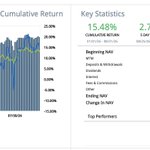
And my +15% YTD return...
- Running RealTest 9 months so far.
- Capped portfolio `MaxLongExp: 250`, still room to lower.
- MR group `MaxSameSym: 1`. Only 1 same stock in between MR strategies.
- Looking for some more diversification.


TD: +8.36%
July delivered a -17.5% DD I have never seen in 20 years of backtest. Maybe the backtest is overfit.
Maybe this is just how real edges feel.
Either way - still here. Still pushing the buttons. Taking punches in the face and logging the data.
Working. Learning.

Monthly review:
- YTD +9.7%, June +1.26%
- Building monitoring tool for:
- - Account DD
- - Backtest vs live trades execution (fills/slippage, missing trades)
- - IB margin level usage
Quiet month overall.

First Monthly review:
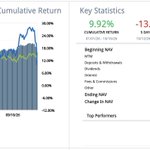
- YTD +7.38%
- Shorts were a drag on performance. NAV reveals it.
- Lessons learned.
- My first year trading systematically with real capital.
• The focus remains on execution, process, and continuous improvement.
Still early in the journey. More to come.

Momentum Part 5/5: Key Takeaways
- Momentum works.
- Regime filters help.
- Time Luck appears minimal.
- Adding more US universes adds little diversification.
- Lower-correlated markets provide better diversification.
Simple beats complex more often than most traders expect.

Momentum Part 4.2/5:
0001: 50% NDX + 50% TSX
0002: 50% (NDX + OEX + SPX) + 50% TSX
• TSX provided significantly more diversification than adding another US equity universe
• Risk-adjusted returns improved
• Portfolio behavior became less dependent on a single market and .. ⏬
Momentum Part 4.1/5:
Time Luck + Regime Filter + Split between SPX, OEX, RUI Universes.
Results:
• Higher Sharpe
• Lower DD
• More trades
• More complexity (If handled manually)
But one lesson stood out: ⏬

Momentum Part 3/5:
Many traders believe End-Of-Month momentum rebalancing is overcrowded.
So I tested it.
I shifted the rebalance date a few days before or after month-end to check for “Time Luck”.
Result: almost no meaningful difference.
Momentum edge appears robust.

Momentum Part 2/5:
Add trend/regime filter:
- Stock price must be above its 200-day MA
- NASDAQ-100 index must be above its 200-day MA
This removes many weak-market periods.
Simple strategy.
Executed manually once per month using basic stock screeners like TradingView.

