

The best way to learn AI and build a portfolio. Link below to access the projects👇
Austin, TX
Joined July 2024
- Tweets904
- Following84
- Followers457
- Likes504
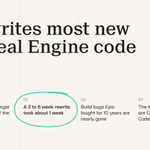



The part we'd underline is that Wassmer's engineers still steer the tools toward the architecture they want. A 1 week rewrite is only safe if someone knows what that layer should look like, and people learn that by building systems themselves first.
The model marked this security issue as needing a human. In today's NextWork project, the Slack button ignored that flag and posted it straight into the regular team channel, before anyone had looked at it.
Build an AI Triage Control Room, step by step. Build it yourself: nextwork.ai/projects/f77e3a7…
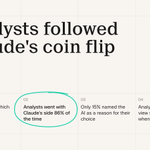
50 professional analysts ran a statistical study with Claude's help. On each of 4 key choices, a hidden coin flip told Claude which option to favour. The analysts went with Claude's side 86% of the time, and none suspected the setup.

The number we'd hire on is the switching. In 38 cases an analyst had a view before Claude spoke. They dropped it 60% of the time when Claude disagreed, against 6% when it agreed. So the junior worth hiring can defend a call against a confident AI.
Most AI job tools write your cover letter. In this NextWork project, ChatGPT reads the company's own posting and drafts a note to the hiring team that asks how an intern's work gets reviewed before it goes live.
Find Internships with AI, step by step. Build it yourself: nextwork.ai/projects/bf9da58…
Lean is the part we'd read twice. It confirms a proof follows from a statement written in code, and the reviewers are testing if that statement is the real hypothesis. In AI work, checking what was proved is now a bigger job than producing the proof.
OpenAI says its AI disproved a widely held guess in computer science, and Lean, a program that checks proofs step by step, accepted it. 2 of the people who proposed that guess are now reviewing it, and they say that is no guarantee it is correct.

The Exponential Time Hypothesis says 3-SAT (can a list of true or false rules all hold at once) can't be solved much faster than trying every option. OpenAI posted its proof Oct 26, and no outside expert has confirmed it yet. github.com/openai/math

An AI fix approved in a terminal is invisible to the next person on call. In today's project, teams decide in Linear, the issue tracker. Both reject theirs, so no fix plan is posted and the incident goes back to triage.
Connect the Triage Workflow to Linear, step by step. Build it yourself: nextwork.ai/projects/65ae18a…
A failed test run usually just leaves a red X that someone has to spot. In today's NextWork project, the checks guarding an AI support triage tool fail on purpose, and GitHub opens an issue, a tracked to-do, by itself.
Engineer Reliable AI Solutions, step by step. Build it yourself: nextwork.ai/projects/8f43771…