

Building https://teapawt.org/t.co/WNoyi93185 — patent data as market intelligence. What's heating up, who's filing, where the whitespace is. Ex-Intuit.
United States
Joined May 2010
- Tweets4.1K
- Following789
- Followers233
- Likes8.5K


Most people think patents are a legal artifact. They're actually the best leading indicator of where R&D money is going.
Companies file patents 2–5 years before products ship. Filing 50 patents in an area costs $1M+ — it's revealed preference, not press releases.
Built PatentLens.AI to turn this data into business intelligence. $29.95 per landscape report. 21 sample reports on the site, no signup.
patentlens.ai

13
12,239

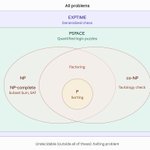
the more precise claims are that it is not known (and not believed) to be NP-complete, and that breaking it does not require solving the general P vs NP question.
42
Cryptography depends on factorization. Factorization is NOT an NP problem. So proving P = NP is not needed to solve a crypto key. Btw an algorithm in P that breaks crypto already exists. It is the Shor’s algorithm.
1
2
789

Claude:
The money already exists. The US spent $5.3 trillion on health care in 2024, which is $15,474 per person and 18% of GDP. Other wealthy countries cover everyone for far less. The problem isn't how much we spend. It's where it goes.
Coverage: Everyone living here is enrolled automatically. One card. No premiums, deductibles, copays, or networks. Doctors, hospitals, prescriptions, mental health, maternity, dental, and vision are all covered. See any licensed provider.
Best care = proven care: An independent board of doctors and scientists decides what's covered based on evidence, not insurers or politicians. If it works, everyone gets it. No prior-auth fights, no surprise bills.
One payer, one rulebook: A single public payer for core care means one claim form and one fee schedule. That attacks wasteful admin spending, which research puts at 7.5–15% of all US health spending. Private plans can still sell extras.
Pay the people who give care: Doctor and nurse pay is held at or above today's levels, with bonuses for primary care and underserved areas. Hospitals get budgets that cover real costs, and rural hospitals get guaranteed funding. Well-run providers at least break even.
Fair prices: One national buyer negotiates drug prices, benchmarked to what other wealthy countries pay. Hospital, lab, and device prices are set publicly, not in secret contracts. Same service, same price.
Funding: Premiums, deductibles, and copays go away. A dedicated health tax replaces them. It's shared by employers and workers, scaled to income, and sized so total health spending doesn't rise.
Every other wealthy country covers everyone. We can too.
1
167
Gemini:
A common-sense US universal healthcare blueprint:
1. Universal & $0 at the Point of Care
• Every resident automatically covered.
• $0 copays, $0 deductibles, $0 surprise bills when you schedule or receive care.
• One public payer; hospitals and clinics stay independently run.
2. Lower Cost for Taxpayers & Employers
• Replace thousands of competing insurance plans, prior-auth mazes, and massive billing armies with one standardized electronic claim system.
• Employers pay a single, predictable contribution far below current premiums—eliminating HR benefits overhead while keeping workers healthier.
3. Maximize Doctor & Nurse Pay
• Redirect billions wasted on insurance executives, claim denials, and administrative bloat straight into clinician pay.
• Strong base pay + bonuses for quality, patient outcomes, and rural/high-acuity work—with far less charting paperwork.
4. Keep Hospitals & Clinics Solvent (No Blank Checks)
• Reimburse facilities based on audited break-even operating costs + regional wage/acuity adjustments.
• Lean, high-quality facilities earn efficiency bonuses; bloated overhead and preventable errors aren't subsidized by taxpayers.
5. Stop Price Gouging
• National bulk purchasing & reference pricing for drugs and medical devices.
• Site-neutral payments: a routine scan or infusion costs the same at a hospital clinic as an independent center.
• Front-load primary care, mental health, and prevention to stop expensive emergencies before they happen.
6. Common-Sense Guardrails
• Covers proven, evidence-based medical care—not automatic luxury upgrades or unnecessary low-value scans.
Pay for care, not paperwork.
12


