

Building my bio...
Kampala, Uganda
Joined September 2010
- Tweets70
- Following370
- Followers256
- Likes200


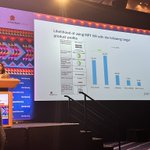

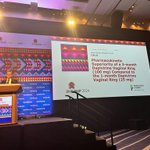


Extremely grateful to present our @MOSAICproj poster at #IAS2025 in Kigali! ✨
Conference highlights:
💉 WHO recommends LEN for PrEP
💊 MK-8527 monthly pill moves to Phase 3
💰 Protect #HIV funding
✊🏿 Advocates: “We will not be erased!”
See you in Rio 🇧🇷 for #AIDS2026!


Back from #HIVR4P2024 in Lima!
• Inspired by groundbreaking HIV prevention science
• Connected with amazing mentors & global colleagues
• Forged lifelong friendships
Can't wait for #AIDS2025 in Kigali, Rwanda, July 2025!
#HIVPrevention #GlobalHealth #ResearchForImpact


“40% of women prefer the dual prevention pill (DPP) compared to taking PrEP and COCs separately suggesting a market for this product. Women who engaged in transactional sex and had multiple partners are more likely to prefer the DPP.” @Pop_Council’s B Zieman at #HIVR4P2024


“74% of women were very likely or likely to use a non-hormonal MPT vaginal ring that prevents HIV, pregnancy, bacterial vaginosis, and other STIs with moderate efficacy, which is under development” says @Pop_Council’s @SanyuktaMathur at #HIVR4P2024


To reduce barriers to use of HIV prevention options, we need to:
• Counter misinformation with effective communication
• Focus less on risk and more on pleasure
• Implement a pleasure-centered approach for Chemsex
#HIVR4P2024


Exciting HIV prevention science at the late-breaker abstracts at #HIVR4P2024:
•PK superiority of the 3mthly 100mg PrEP ring
•Acceptability of LA PrEP placebos
•LAI-CAB continuum
•HIV RDTs for CAB-LA
•WGS and HIV prevalence gender-gap
•Estimating HIV acquisition time


“Oral PrEP maybe be altering the vaginal microbiota of pregnant women and predisposing them to the risk of preterm birth. A larger study is needed to confirm the findings.” says @DrFridaySaidi from the UNC Project - Malawi at #HIVR4P2024


At #HIVR4P2024’s prevention product profile session today, we were delighted to learn:
• Pipeline products to prevent HIV & pregnancy upto 2years!
• Choice also applies to service delivery
• Speak young people’s language
• Engage advocates as advisors in clinical research


“It’s an exciting time to be alive” says @LindaGailBekker after the novel antiretrovirals and formulations for prevention session at #HIVR4P2024. Breakthrough studies:
• TFV Douche
• IMPOWER 22/24 (ISL)
• Dual regimen for U=U
• LA silica hydrogel depot
• PURPOSE 2 (LEN)


Building on success plenary at the #HIVR4P2024 highlighted:
• Epidemic control by 2030 is unlikely with the current scale up of HIV prevention strategies
• PrEP choice is complex and dynamic
• Pleasure interventions increase condom use and sexual health outcomes


At the Manifest CHOICE session at the #HIVR4P2024, we learnt:
• There is no - and never will be - a miracle PrEP drug
• Advocate for CHOICE and not for individual products
• PrEP choice rollout is feasible but challenges and access gaps remain


“Sociobehavioral scientists are often treated as step-children and often encounter closed doors in research” says IAVI-Kenya’s @Kapellah7 at the SBR plenary session at #HIVR4P2024. We need more advocacy to ensure interdisciplinary collaboration between SBR & biomedical science!


“mHealth tools can support young women’s education and decision making regarding their sexual and reproductive health” says @FloridaState’s Kate Muessig at #HIVR4P2024. The Vuka App, for example is supporting adherence to PrEP and providing health and wellness information


Are we meaningfully engaging the youth in HIV prevention research?
We need to:
Invest in youth leadership
Foster participation
Co-design studies
Step back & let them lead
Amplify their voices!
#YouthEmpowerment
#HIVR4P2024"


“Young people bring a unique perspective, they are more than just a statistic!” Zambia’s Chilufya Kasanda Hampongo explains the role of youth advocates as advisors in clinical research at the #HIVR4P2024

Project PrEP’s DCE on service delivery preferences showed a strong preference for decntralized and pharmacy PrEP pick up points. #HIVR4P2024


“PrEP uptake is higher at facilities were all 3 options (oral, ring, and CAB PrEP) are available” Hasina Subedar from South Africa’s DoH #HIVR4P2024

Ivan Segawa retweeted

Dear Global Family, friends & colleagues;
Am inviting you to support me to get much needed Bone Marrow Transplants for my daughters Gloria and Moriah scheduled for Jan2024 in India.

ALT https://gofund.me/4e45a53c
Ivan Segawa retweeted

Bank Security 1:
No one needs your pin to withdraw money from your bank, all that is needed is 5 sec access to your VISA card.
On your VISA card, all that is needed online to withdraw money is the card number, expiration date, name on card and CVC code. These, if someone has 5 secs with your card, all they need is taking a photo of it and chill. Then can empty it.
Mistake most Ugandans do with their VISA cards is moving with it anywhere, use it to pay anywhere. In clubs, you give it to waiters and you continue drinking.
At fuel stations, you give it out and go to pee, even at home. You go with it in your bag to work.
ALL IT TAKES IS SOMEONE HAVING ITS PHOTO.
Not siding with any bank, but we need to understand security first. Never leave anyone with your card, not even for a second.
2: Bank security 2
If you use mobile banking or internet banking, never install unknown applications on your phone. Many people install Cracked versions of YouTube premium, Spotify premium etc but these are trojanized applications.
They are embedded with listeners and codes that can screenshot, read and upload info from your phone to the hackers computer including your phone password, password you use to login, read your cache Data and even access your emails. Now days passwords are saved on phone. Even when you use a 2F auth, they can read an sms sent to your phone via this method.
They're so many ways your money can be stolen and the bank isn't to blame, I'm not saying there's no ways a bank is to blame.
If you choose to go e-banking, make sure you know what security means.


Ivan Segawa retweeted

Nature rejected her paper for not being original,
University of Pennsylvania (her employer) demoted her,
and yesterday Katalin Karikó won the Noble Prize in physiology.
In mid-2000s, Karikó and her Drew Weismann submitted their paper on mRNA (messenger Ribonucleic Acid) to Nature.
Nature desk rejected their paper for being "an incremental contribution" only. The paper was later published in another journal, Immunity.
Earlier in her career at the University of Pennsylvania, Karikó was demoted because her applications for grants kept getting rejected.
But Karikó persevered and kept on going.
In 2013, she joined BioNTech, a German company founded by two scientists, Uğur Şahin and Özlem Türeci. In 2018, BioNTech partnered with Pfizer to develop mRNA vaccines against the influenza virus.
When the COVID-19 hit the world, Karikó's research helped Pfizer to produce the first vaccine against the disease.
I don't know how the Nature editors who desk rejected Karikó's paper and the Penn administration who demoted her feel about Karikó Nobel Prize.
Takeaway: Many academics and scientists worry about getting published in "prestigious" journals. Instead of worrying about prestige, we should try to put our work out as quickly as possible like Karikó did.
Once you put your work out without caring about prestige, two good things happen:
1. Your work will lead to newer opportunities.
2. You will start getting feedback from the scholarly community, which you can use to iterate and improve.
Here's another interesting Nobel Prize story.
Peter Higgs, a British physicist, joined the University of Edinburgh in 1956. By 1964, Higgs has published his groundbreaking work about subatomic particles.
After 1964, Higgs published less than 10 papers.
When his department would ask him how many papers, he published in a given year, he would reply "None."
It happened so often that he stared feeling like an "embarrassment to the department."
The University of Edinburgh, however, never fired Higgs because in 1980 he had been nominated for the Nobel Prize.
Higgs retired in 1996 and stayed on as an emeritus professor at Edinburg.
In 2012, experiments conducted at the CERN laboratory confirmed Higgs work and the existence of Higgs Particle.
And in 2013, Higgs was awarded the Noble Prize in physics and the University of Edinburgh got rewarded for being patient.

ALT Katalin Karikó's first science medal that she won on Feb 7, 1973, at an open biology exam in her high school in Kisújszállás, Hungary. Image source: Karikó's Twitter/X account.