AI for operators. Operating Advisor at Bessemer. Before: Turing, Speak, WisdomAI, 12 yrs at LinkedIn. I build a lot.
Silicon Valley
Joined March 2008
- Tweets6.7K
- Following845
- Followers1.6K
- Likes491
James Raybould retweeted

Welcome to Alta.
Today, we’re announcing our $80 million in funding, including our Series A led by @IndexVentures, to build a more efficient financial system.
alta.finance/news/series-a/
James Raybould retweeted

Bringing global finance onchain takes more than better technology. Trust is essential.
Today, Alta announced $80M in funding, including a Series A led by @IndexVentures, with @GVteam, @blackbirdvc, @SquarePegCap, and Capital 49 participating.
James Raybould retweeted

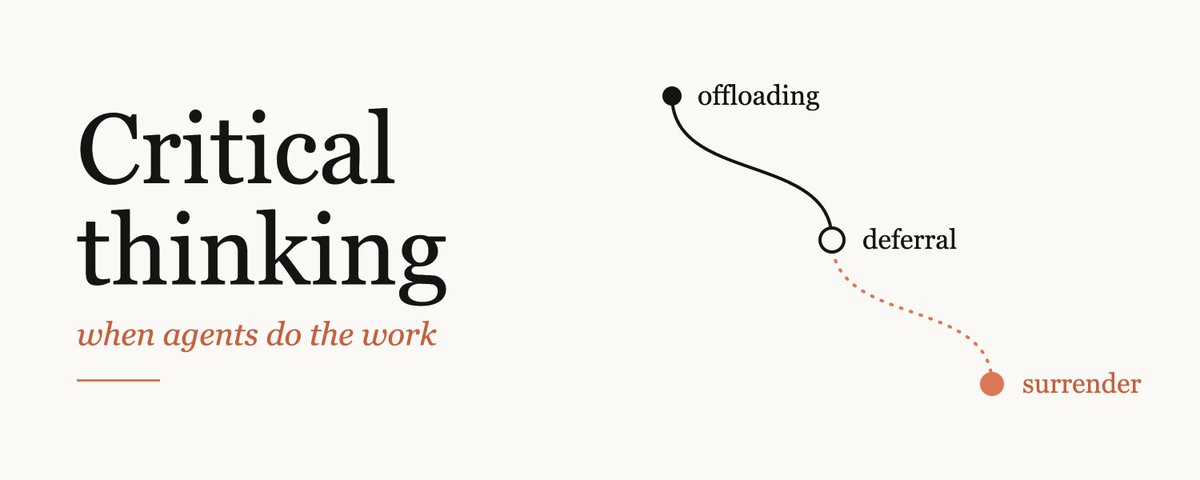
The coding interview is dead, at least for my team at Anthropic. I've seen enough to know that it no longer provides signal. I removed it from loops this month.
I have a spicy, optimistic take - I think there's an opportunity for junior engineers: felixrieseberg.com/hunger-be…



James Raybould retweeted

a big take I've been noodling on and I’m ready to call:
the newsletter is dead
@every's core business is a newsletter with 120k+ subscribers so I don't say this lightly.
persistent agents mean i dont look at my inbox
with dots (GrokBots, Muse, etc) I almost never look at my inbox. if I do it's for a specific thing I need to reply to.
i think in a year I'll be doing all of my email this way - fully filtered by my dot / something like it.
this is not new: it's a continuation of the trend of having a “newsletter” folder in Gmail, but 10x more filtered.
what it means
It doesn’t mean people won't read newsletters, but it does mean that getting a person’s email is no longer the guarantee that you have a relationship with them that it used to.
luckily, with persistent agents (and AI coding more generally) there is an entirely new playing field to build relationships with readers. instead of fighting to get an email address, publishers and creators will need to make sure we're installed in our reader's agent harness of choice, so that they get directly notified when we do something new.
we're already starting to experiment with this @every with our MCP and the frontier alerts we send users of our slack agent (every.to/agent)
it's also more affordable than ever for publishers and creators to build their own platform ecosystem: you can have your own website, app etc. and you can use AI to publish 100x more high-quality stuff to your community—so we may see a world where many creators themselves are running their own little empires that have their own apps, feeds etc.
to be clear: It'll take a while before this actually happens, but the idea of getting someone's email creating a direct relationship with them is over.
here's a set of predictions I made 3 years ago about AI and media that panned out pretty well: every.to/chain-of-thought/we…

Mistinct (n): a message meant for Instinct, your AI, that you send to a human instead
I Mistincted three people yesterday, and the rate is rising
Early prediction: "Whoops, that was meant for my AI" becomes the most-sent phrase of 2027
#JFDI
1
54
James Raybould retweeted

Assorted things I've been mulling over regarding agents in the economy:
• Companies are in some sense the original superintelligence. It's often the case that they can use their amortized cognitive surplus to advance their interests against those of certain consumers: relative to the optimization capacity of companies, consumers can be inattentive, underinformed, irrational, etc. (Think, say, of some of the classic insurance upsells at the end of a booking process, which is typically priced substantially above what a regular policy would cost.) Herbert Simon introduced the idea of bounded rationality, and firms often end up benefiting from it. Thanks to personal agents, we will probably get somewhat more rational in how we engage with companies.
• How exactly will outcomes change? Well, certain kinds of price discrimination will work less well (how do coupons work if every agent hunts fastidiously for them?), and certain kinds of customer cross-subsidy will change (today, people who forget to cancel subscriptions subsidize those who don't). Taken across the economy as a whole, I'm not sure what the incidence of all of this will be.
• In corporate strategy, people have long debated the relative importance of distribution and product quality. Perhaps you've made something better, but does anyone know about it? Won't people just continue to buy the ACME Corp Mousetraps? Personal agents will, I think, act as a kind of structural subsidy for product quality. How would markets look different if individuals always spent at least 10 hours researching their purchases? On the margin, focusing on making a product better is, I think, going to become a more effective strategy for companies. This is good!
• It true, a corollary is that information about product quality will become more important and impactful. Today, most people have very limited ability to aggregate and integrate such data, but agents will have insatiable thirst for such signals. (It's often said that data is becoming more valuable because it helps in the training of models. That's obviously true, but I think there's a secondary way in which it's more valuable simply as a complement to cheaper intelligence.)
• A big question is whether agents will increase superstar effects (rational agents all settle on the same product) or increase dispersion (because everyone has slightly different tastes and preferences, which agents are good at eliciting, finally overcoming the artificial clustering we've been subjected to).
• Many internet companies have monetized demand routing, which is in turn often predicated on short attention spans. "I'll click on the first thing I see." This has led to some amount of inefficiency, as companies try to propitiate capricious ranking algorithms and incur various placement fees. It's not all deadweight loss (willingness to pay is itself a kind of signal, which is valuable to buyers), but it's not great. How will the nature and value of this routing change in a world of personal agents? I don't know the answer, but I think that the effects might be pretty big.
• Much of what I'm writing hinges on the assumption that personal agents will be on the consumer's side. I suspect that that will be the winning strategy, but whether it's true, and what it means to be true, involves a lot of other questions.
Taken as a whole, the market is a massively parallelized, decentralized, and highly imperfect value attribution machine, and, taking stock of all of the effects, it seems to me that the quality point may well be the biggest: that agents will change the nature of the backpropagation such that the rewards for better products increase. Maybe this is too optimistic, but I suspect (and hope) that companies that make things that they're proud of will feel that the universe is a little more partisan in their favor.
James Raybould retweeted

If you’re interested in vertical revenue lines and working on one of the most interesting consumer usecases for generative AI, check out speak.com/careers or DM me!
Hiring excellent people across all functions.


On the day that Roger Federer announces his retirement, this David Foster Wallace (a junior tennis player turned writing god) article from 2006 remains the high water mark for capturing what made Federer Federer lnkd.in/dPTp_GRv
1
3
So fun to publish the latest article in my What's the So What? newsletter on "The Start-up of You" by @reidhoffman & @bencasnocha linkedin.com/pulse/whats-so-… via @LinkedIn

1
6
"What's the So What?" #9 is live today digging into "Thanks for the Feedback" by Douglas Stone and Sheena Heen! Fun to dig into growth vs acceptance, "let's explore, tell me more," the Wicked Queen in Snow White, Tom Hanks in Big, and more. linkedin.com/feed/update/urn…

Working with Chris Hatfield and Margot Kimura to dig into the world of Enterprise login, i.e, logging into applications that your company has bought for you. Any experts out there, ideally from the R&D side of the house, that you could introduce us to? Or…lnkd.in/eizdVJyU

1
What are the best resources out there for career development? Could be books, articles, courses/videos, or even specific people. I'm very familiar with "The Startup of You" and "The Alliance" from @reidhoffman, @bencasnocha, and @chrisyeh; what else do you recommend?
Loved this latest newsletter piece from Deborah Liu on taking a product manager's approach to your career. It's written for PMs, but all the lessons apply equally for anybody lnkd.in/dfFnpB2
1
1
Such a helpful read on the creator economy and the use cases for fans and the ensuing business models for creators (hat-tip Shyvee (Xinyu) Shi ) lnkd.in/dbq7uzX
Check out the latest article in my What's the So What? newsletter: great fun digging into "Never Split The Difference" by Chris Voss! linkedin.com/pulse/whats-so-… via @LinkedIn

At 12pm PT today (and as a recording), @mitali and I will jump back into the Product Jam fray, talking FinTech and Shopify, Square, and Stripe with @carlcummings, now at Chime, previously at Stripe (and LinkedIn!). Come spread some Product Jam! lnkd.in/dr3acin
Can't wait to spread more Product Jam sweetness with @mitali and special guest @carlcummings as we dig into FinTech and the $$$ triumvirate of Shopify, Square, and Stripe. Hope you can join us at 12pm PT on Friday! #ProductJam #FinTech lnkd.in/df49P5m
1