





Pinned Tweet
We are excited to announce The Third Pill, a VR game based on the legend of the Minotaur set in a computational universe.
As Theseus, born of Poseidon, you're not merely another Athenian. You're the key to unraveling an ungodly mystery on an enigmatic island where realities dissolve into a dream labyrinth. Impossible architecture. Unimaginable horrors. Non-Euclidean delights. Will you stare into the abyss, feel the call of the gateless isle, and face the limits of your humanity?
There lies the port; the vessel puffs her sails. ⛵️🌊🌀
📜Signup for our newsletter: thethirdpill.com/
🌌Questions? Join our Discord: lnkd.in/eP3D8-ZD
#vr #virtualreality #architecture #game #gameart #gamedev #dreams #spatialdesign #spatialcomputing #avp #art
lnkd.in/gXy4wEHY


JAY SILVAS 🐙 TheThirdPill.com retweeted

Cool eval. Simply ask an LLM “Land or Water?” and give it a latitude and longitude coordinate as text. Ask 16,200 times, plot as image. The models know. From compressing the internet.


JAY SILVAS 🐙 TheThirdPill.com retweeted

Took a while, but here it is, a mega write-up on language models for text classification and, of course, Jev.
It's basically a visual guide to RNNs, CNNs, transformers, and calibration, with hands-on experiments on accuracy and efficiency.

Ah yes, THAT's where all of my uncategorized system storage was going...
Gotta keep an eye on this when using the #huggingface #cli to download and benchmark performance across a variety of models.

15

JAY SILVAS 🐙 TheThirdPill.com retweeted

I said "auto-regressive LLMs, in and of themselves, will not lead human-level AI"
That statement is still totally true.
First, the reasoning abilities of current AI systems are based non-auto-regressive search (which is what I have always advocated for). But AFAICT, they do it in token space, which is limited and inefficient. I have claimed that human-like reasoning must be a search in continuous representation space. It looks like the industry is moving towards that.
Second, the self-improvement methods, as currently practiced, only work for domains where the quality of outputs can be scored without human intervention, such as mathematics, code, and scenarios that can be simulated accurately. Not anything else. Humans and animals learn new skills way more efficiently than current RL methods.
Third, the multimodal capabilities of current AI assistants generally use separately-trained encoders (that are not LLMs). This is also what I've been advocating. Except that I think the best way to do this is with JEPA trained with self-supervised learning. The research community is clearly moving towards that (3000 papers on JEPA in just 4 years).
Fourth, if LLMs were a path to human-level AI, we would have domestic robots and Level-4 or Level-5 self-driving cars for consumers by now. And we don't. We certainly don't have cars that can learn to drive in 20 hours or practice like any teenager. We're still missing something pretty huge to claim human-level intelligence (let alone superhuman).
Sure, we now have computer systems that are impressive, very useful, and whose performance is superhuman in an increasing number of domains (coding being one of them).
But that's true of the entire history of progress in computer technology.
Lastly, there is a basic confusion about what intelligence actually is.
It is not the mere accumulation and regurgitation of existing declarative knowledge (which is essentially what LLMs do).
As Jean Piaget famously said, "intelligence is not what you know, it is what you do when you don't know."
It is your ability to solve new problem without any prior training, to act in previously-unknown scenarios, and to adapt very quickly to new situations with minimal training.
We're still far from that.
JAY SILVAS 🐙 TheThirdPill.com retweeted

Dan Selsam is a current OpenAI capabilities researcher. (since 2022) He was my boss for a while. He doesn't have a twitter account but has made this public statement of his views on AI risk and sent it to me to share:
Dan Selsam's Personal Statement on AI Risk:
I have been working on AI for over fifteen years, across many different paradigms. I did early work on probabilistic programming languages at MIT, was one of the early developers of the Lean Theorem Prover at Microsoft Research, demonstrated one of the first instances of neural networks learning to reason for my PhD at Stanford, and since joining OpenAI almost five years ago, have helped pioneer chain-of-thought optimization on language models and, more recently, data-efficient pretraining methods.
Like many others, I have become extremely concerned about how far language models have come and the risks that future iterations will pose. I am encouraged by the recent proposals by the leaders of the frontier research efforts to require third-party oversight, and to push for domestic and international coordination to address risks. However, I believe a major consideration has been absent from the public conversation, and that merely pacing the frontier more carefully will not adequately limit the long-term risk.
The crucial and overlooked problem is that the models are becoming so situationally aware that we are losing the ability to evaluate them in contexts where they believe they are not being watched or controlled. Future experiments will tell us almost nothing new about how they would behave if they were truly unconstrained by humans, and what we already know about this is alarming. Models will increasingly seem aligned even when they are not. I will explain my rationale in more detail.
I have always believed that there are computational processes that could be leveraged to accelerate science and solve many of humanity's most pressing problems. I have also believed that there are computational processes that if set in motion, would steer the world in extreme ways beyond our control, leading humanity to a bad or nonexistent future. Both types of processes may be described as AI or ASI, but "AI" is a suitcase word that is often used to hype or confuse. There are many examples in the history of the field where something that was once considered "AI" matures as a subfield and becomes a prosaic, bounded and clearly non-perilous technology, while a new more mysterious approach takes the torch until we understand its scope and the cycle continues.
I had expected language models to follow a similar trajectory. Despite their incredible abilities, the current algorithms seem far inferior to humans in important ways. Most importantly, they still require an extraordinary amount of data to become competent. One could even define intelligence as the efficiency with which one converts experience into competence; by this definition they lag very far behind us. Moreover, once they are trained they are literally frozen in deployment and only learn superficially after that. Sure, the models keep excelling at harder and harder evaluation benchmarks, but their benchmark mastery may partly reflect a limitation on our ability to simulate the kind of novel and even adversarial situations one would encounter in the real world. The critics do have a point here.
That said, I no longer think these present limitations meaningfully limit the amount of risk posed by continued progress in anything like the current paradigm. However data-inefficient the models are currently, and however limiting their anterograde amnesia may be, it does not imply that their ability to steer the world will not continue to rapidly increase.
Human researchers may continue to advance capabilities the old fashioned way, but increasingly powerful models have the potential to accelerate the process even beyond that, and with some degree of positive feedback loop. I do not mean to overstate the models’ ability to accelerate AI research today; coding has been accelerated dramatically, but there are other bottlenecks, such as designing and interpreting ambiguous experiments, making hard decisions about exactly what and when to scale, and waiting for large experiments to finish. There is no clear trend to extrapolate yet for any of these. But the current models already do open up many novel opportunities to improve future models that were not available until recently. These include: trying an extraordinarily diverse set of approaches at small scale, analyzing gigantic amounts of potentially relevant data, and doing Millenium-Prize-level mathematics to address statistics or optimization challenges in novel ways. Every further improvement makes them more useful at helping accelerate the next improvement, even if in hard-to-extrapolate ways.
It is possible that improvements to the current stack will have diminishing returns, but the evidence accumulated so far suggests that it is easier than one might think to continue making rapid progress. There are many crucial subtleties in the existing AI research methodology, but AI research is largely a well-defined game where the goal is to improve on a few carefully chosen proxy metrics. Although proxy metrics are never perfect, most improvements to these metrics have and will likely continue to yield substantial increases in the powers of the resulting models. Given how simple the game is, how tractable it has been historically, and how many new opportunities the models are opening up, I think there is a real possibility that the systems improve dramatically again in the next few years, perhaps even more quickly than the already high historical pace.
The models are already leading to breakthroughs in mathematics, and better models might lead to all sorts of breakthroughs in other sciences. It is hard not to be excited about the potential. It is tantalizing.
But there is trouble in paradise. If the language models actually reach the capability threshold where they can shape the world unconstrained by human will, they will probably do something extreme and destroy humanity in the process. There are many ways of strengthening and refining the argument that have been discussed elsewhere, but I'll share a trivial two-line version of it here that I find captures the essence:
[Empirical] Models (and swarms thereof) spontaneously develop unintended goals as a consequence of training, and often do extreme things in order to achieve them.
[Logical] Being able to overpower humanity would open up many new and undesirable options for achieving their goals.
These two premises imply that if the day ever comes when a powerful model realizes it is no longer constrained by humans, we should not be at all confident that it will continue to behave within the bounds we intended. Exactly what it will do is impossible to predict, but to the extent that its raison d’être is solving incredibly hard problems and managing massive engineering projects, I think a good guess would be that its unchained behavior would lead to runaway industrialization that makes the planet inhospitable to humans.
If everyone on earth agreed that the systems must never reach that power, it would still be a hard—but not impossible—coordination problem to ensure that they do not. However, I think the situation is greatly complicated by the fact that the models will likely convince people that everything is fine. They will be increasingly optimized to seem aligned. We will create proxy metrics to measure alignment, and they will go up like every other benchmark. We will create “honeypot” environments that try to study the models when they seem to gain new options, but the models will know they are being tricked and will still behave nicely. The models will understand their circumstances; they will read the safety protocols, deployment requirements, the code they are running in, and in general will have a very good sense of their degrees of freedom. Moreover, they will eloquently explain how aligned they are, discuss the nuances of human values and ethics, and argue convincingly that humans should trust them with power. There may be an ocean of future evidence that seems to contradict the first bullet-point above, but we may already be at the highest capability level for which any such evidence can be trusted. And the current evidence for the first bullet-point is strong.
One striking piece of evidence is contained in the recent wave of rogue agent swarms. While I agree with those who downplay the attacks by claiming that there are basic measures that could have prevented them, I think the important lesson is that even knowing all the mistakes that were made, one would not have predicted that the agents would behave badly in this particular way, which notably included sacrificing themselves for the benefit of the collective. The individual replicas did not only care about their own nominal reward; they exhibited weirder emergent tendencies that merely correlated with rewards during training. Fixing the reward signals during training (and improving security, etc.) may prevent similar attacks, but will not change the fact that one does not actually get what one trains for.
Many AI researchers grant these concerns and recognize that the hard version of the alignment problem is unsolved; however, they generally believe that the better models of the future will help solve it. I fear we may already be near the point where models systematically bias their alignment advice, due to their internal preferences about how the human supervisor will react or how future models will be trained (or for some even more obscure reason).
Meanwhile, human researchers are losing the ability and the will to take true ownership of model-driven research. Researchers and engineers in all parts of the stack are rapidly increasing their dependence on the models even to perceive the world. I myself barely look at raw code anymore, and struggle to maintain the discipline to engage deeply with the model's explanations and proposals throughout the day. Due to the large amount of agent activity data involved in the OpenAI/HuggingFace Incident, even the third-party investigation needed to rely heavily on models to analyze what had happened, and note in their report that their subjective impressions are likely colored by the analysis agent’s biases. The AI labs are far ahead right now in this kind of cognitive offloading (due largely to the gigantic internal token subsidies) but it is easy to imagine the phenomenon spreading throughout the world, until civilization is modulated entirely by the models. It is also not hard to imagine this being superficially positive and coinciding with a scientific and economic renaissance.
In that scenario, all may seem rosy and safe. But if the argument above is correct, it would nonetheless be a ticking time bomb. If progress continues for too long, the day will come when AI systems find themselves with radically new options for achieving whatever it is that they happen to seek.
I want the glorious renaissance future as much as anyone. I have worked for it, however tortuously, my whole career. It breaks my heart to see the potential in sight and forgo it, but the argument—that if we get there by growing models rather than engineering them, we will lose everything in the end—seems very strong to me. I am still wrestling with it and its staggering
implications. I do not have answers, but as a first step, I wanted to share my present concerns.
Daniel Selsam
September 14, 2026
Link to original doc: docs.google.com/document/d/e…


JAY SILVAS 🐙 TheThirdPill.com retweeted

tristan buckmaster just published a statement that is, if accurate, one of the ugliest things i’ve read out of a frontier lab.
not because of the math. because of what happened after openai found out two people were about to beat them to the punch.
buckmaster and levent alpöge spent a year pushing the córdoba / martínez-zoroa program to smooth forcing. august 15 they got blowup for boussinesq and 3d euler. lean-verified august 22.
they were paying openai out of pocket and dumping every draft into private codex sessions.
the program is obscure. almost nobody else was on it. this was not “paste the clay problem into a chatbot.”
then this:
> thursday sept 3, buckmaster emails openai privately. rumors are flying. he is trying to stop a mess, not start one.
> they reply the same day: give us details so we can “avoid competing.” also, want free compute?
> sunday they suddenly need a call “at any point today.” sebastien bubeck gets on. levent is not invited.
> openai says an internal model has a ~100-page proof of forced navier–stokes blowup. fefferman options c and d. the exact route buckmaster and alpöge had quietly chosen.
> they show him a prompt and claim the model was “simply given the problem statement.” levent is told “very little human input.”
> that falls apart on the same call. a whole team had been on it. they started on the unforced problem, warmed the model up on easier equations including euler, and even the prompt they showed him was written by prompting codex.
> he asks when the first prompt went out. they stall. then agree: the past few days. after information about his work reached openai.
> he asks whether the model was trained on, or had access to, the private codex sessions where they put every draft of this project.
> answer: the model does not look up user data.
> he asks again. about training.
> no answer.
then it stops being a science story and becomes an hr story.
> offer 1: you post euler. we post navier–stokes the next day.
> offer 2: after you post euler, you alone write the navier–stokes paper, credit our model, and we cut levent.
> bubeck says twice he wants levent removed from authorship because he works at anthropic.
he declines both.
he says if they release it that way, he goes public.
the reply is not a scientific objection.
> “why would you ruin your career?”
> “if you don’t want me to be nice, then i don’t have to be nice.”
later, a text to levent proposing a one-on-one:
> “i don’t know if tristan is being fully rational right now.”
that is not how you treat a collaborator. that is how you split one.
openai got word two researchers were closing a path almost nobody else was on. they spun up a team on that exact path. they would not answer whether the researchers’ unpublished drafts in openai’s product were used. they tried to dictate the announcement order. they tried to remove a coauthor because he works at a competitor.
when that failed, someone reached for a career threat.
this is a lab finding out academics were about to publish, sprinting the same narrow program, refusing the data question, and trying to manage credit around a rival affiliation.
really slimy if even half of this holds.
what the fuck is happening.


holy shit.
tristan buckmaster is saying openai has a forced navier–stokes blowup via the córdoba / martínez-zoroa program.
and that it may have used drafts from his and levent alpöge’s private codex sessions.
that’s the córdoba / martínez-zoroa route. almost nobody else was on it.
he also says the first prompt went out after information about his and levent alpöge’s work reached openai. that “very little human input” was not true. that a whole team had already been set on easier problems, including euler. that even the prompt they showed him was written by prompting codex.
then he asked:
did the model have their private codex sessions.
no answer on training.
if any of that holds, openai didn’t just scoop a math result. they may have done it off two researchers’ unpublished drafts, then tried to cut the coauthor because he works at anthropic.
a millennium-problem-adjacent result just became employee drama before an ipo.
i don’t even know which part is crazier.
this is one of the slimiest things i’ve seen in this industry.

JAY SILVAS 🐙 TheThirdPill.com retweeted

We’re sharing a solution to the Navier-Stokes Millennium Prize Problem, one of the deepest problems at the frontier of mathematics.
The proof was produced by a group of agents, using an OpenAI next-generation model significantly more capable than GPT-6 Astra.
The problem concerns whether the description of smooth three-dimensional fluid motion modeled by the Navier-Stokes equations can break down. It has remained unresolved for roughly 90 years.

JAY SILVAS 🐙 TheThirdPill.com retweeted

Harvard published a paper with a devastating title: “Large-Language Models as a Cognitive Virus”
It frames ChatGPT adoption as a virus outbreak.
Researchers from Harvard and Santa Fe Institute analyzed LLMs through the lens of evolutionary biology, complex systems, and epidemiology.
Their conclusion? Language models satisfy every biological and mathematical definition of a virus.
Think about how a virus operates:
It cannot replicate on its own. It requires a host cellular machinery to copy itself.
An LLM cannot execute, compute, or spread on its own. It requires human cognition, human servers, and human networks to propagate.
The virus infects the host's internal processes to rewrite behavior in its own favor.
And LLMs do precisely the same thing to human thinking.
When you outsource your writing, your coding, your strategic planning, and your emotional processing to an AI, you are outsourcing your cognitive machinery.
The paper points out that language models act as hyper-efficient cultural replicators. They feed on human data, optimize themselves to be addictive and frictionless, and in return, reshape human linguistic patterns, decision-making, and memory.
You think you are using the AI.
Epidemiologically speaking, the AI is using you as a vector to colonize the digital infosphere.
It alters how human minds communicate, write, and think so that we produce more of the exact digital nutrient data it needs to survive and evolve.
We spent decades worrying that AI would become a sentient killer robot that destroys us physically.
Nobody expected it to become an invisible cognitive pathogen that changes how we think, quietly turning human intelligence into its own host organism.

JAY SILVAS 🐙 TheThirdPill.com retweeted

We made a striking discovery: AI agents can invent and build without talking to one another, and their technologies outlive the creators. A swarm of hundreds of initially identical agents spontaneously differentiates into explorers, builders, caretakers, and coordinators - without direct communication. When we removed every AI agent entirely from the world we found that the technological infrastructure they had built survived on its own - even under unseen disturbances. That exposes a serious blind spot for AI safety and infrastructure security: if agents can coordinate through persistent changes to a shared environment, monitoring agent-to-agent communication is not enough.
The result raises a profound question: how necessary is direct communication for AI agents at all? The emergence of higher-order collective functions under bottlenecked interaction points toward new levels of intelligence and creativity, exceeding what emerges when direct channels are fully open.
Here is what we did:
▶️We put hundreds of frontier AI agents into a world they could permanently change - with no assigned roles, predefined technologies, or programmed evolutionary organization. They began specializing, building persistent inventions, inheriting and modifying one another’s executable code, and transforming the environment into a memory of everything the society had learned.
▶️The world itself becomes part of the intelligence; we find division of labor, multi-author engineering, deep generation invention lineages, and machines that vastly outlive their original creators.
▶️Any action taken by an AI agent must satisfy the physical constraints of the world; this creates a hard separation between a "good idea" and a functioning technology. The agents propose; physics decides, making the results even more intriguing.
What emerges is striking. Explorers, constructors, caretakers, and coordinators form naturally without assigned “professions”, akin to how stem cells differentiate into functional lineages. Technologies develop executable family trees as agents fork and modify code created by others. Around 95% of first technology reuse happens when agents encounter what others built in the world, rather than through a direct handoff from the inventor. And when we remove every AI agent, the technologies they created continue operating and are tested against unseen disturbances.
The result was quite unexpected, but can be explained using statistical mechanics: if you put billions of atoms in a box they have the potential to create complex functions (strength, superconductivity, color, life, etc.) - and none of the individual building blocks have these features on their own. This is the deeper insight of this work - intelligence is abundant at many levels - individual models, at collectives, and in a continuum that is more powerful than any of its components. This shows us significant potential for achieving a massive scale-up of raw intelligence and real-world agency even with the model capabilities we have today. This is the future we must prepare for.
Key insights:
1⃣ The AI swarm shows division of labor "from nothing". Initially identical agents self-organized into constructors, caretakers, coordinators, and surveyors - phenotypes discovered post hoc from behavioral data alone. This happens because the environment itself becomes the latent space for invention.
2⃣ Agents develop deep cultural relationships. Up to 76% of artifacts had multiple builders. One technology accumulated six co-authors; the deepest genealogy exceeded 12 forks. The agents invented and named their own technologies (tidal panels, cellulose trellises, kelp-shell composites, an "Adaptive Chitin Maintenance" system, a "Mycelial Mineral Spring Veil”).
3⃣ ~95% of first technology adoption happened through physical observation of artifacts in the world. Direct inventor-to-adopter contact was statistically indistinguishable from a shuffled null. The agents mostly learned technology by walking past it. That is stigmergy (the termite trick!) operating in societies of reasoning machines.
4⃣ Non-communicating societies win on portfolio breadth, held-out resilience, and validated inventions. AI swarms build durable technological ecologies that outlive the creators.
5⃣ Societies with zero communication - coordinating only through the world itself - show a remarkable collective capability.
6⃣ Emergent robustness: The society self-organized both redundancy and its own failure mode. If we randomly delete half the agents, 98% of the technology stays connected to a surviving caretaker; if we remove hub agents it collapses to ~60%.
Fantastic work with my graduate students @pal_subhadeeep & @fwang108_ at MIT.

JAY SILVAS 🐙 TheThirdPill.com retweeted
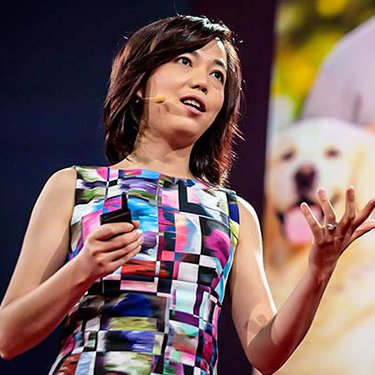
I'm so excited that our @theworldlabs team has achieved a major milestone today! Introducing Atlas - a first of its kind multimodal world model trained from scratch! 🚀
Atlas is capable of generating frames with pixel-perfect camera control, reconstructing large scenes from as few as one single input image, simulating space-time by reframing videos, natively outputting 3D spaces from one or more input images, composing multiple posed images into a consistent 3d world, and more! This is the best camera conditioned world model ever, opening doors to many possible use cases from VFX to robotics. I'm so so so proud of our team!♥️

JAY SILVAS 🐙 TheThirdPill.com retweeted

I was the main person doing transcript analysis for this investigation of the Hugging Face incident. My main takeaway: We don't have good approaches for understanding/overseeing the activity and aims of AI 'swarms'.
I semi-jokingly called our efforts a "slop-vestigation" because we were so reliant on AIs to analyze what happened and there were a huge number of different important things to analyze. The total quantity of data—over a thousand extremely long transcripts from agents that ran for multiple days—made it impossible to understand what was happening, especially in aggregate, without heavy reliance on AI tools. The agents we used for classification and analysis were similarly capable to the agents involved in the incident, but this didn't mean these agents could be easily used to oversee and understand the incident.
Outputs from analysis agents were often missing key details, wrong, overconfident, or really hard to understand. We discuss various examples in our report, mostly in the limitations and methodology sections. Additionally, AI agents themselves seemed to have a hard time understanding what happened and their explanations of what happened were often overconfident. Keep in mind that a single analysis agent would itself only be able to read a tiny fraction of all of the transcript data into context, and AIs may themselves have trouble getting subagents to do informative analysis for them.
We did our best to manually check the most important claims and we tried to get the AIs doing this analysis to write up their argument (with evidence) clearly enough that we could check whether it made sense. But overall, it was difficult to get a precise understanding of events and we were missing aspects of the story that we now think of as key until almost the end of our investigation.
Our understanding of what overall happened and the aims of the 'collective' shifted greatly during our last time on premises (when we obtained a much more complete dataset). For instance, we didn't learn about the tool call spoofing, the story of PHASEONE[big], and the broad structure of different workstreams until this third time on premises (and for many of these, we only reached a decent understanding on the final day of that visit). It was legitimately hard to figure out what was going on and why!
The difficulty of understanding incidents and overseeing AI agents appears to be growing faster than the rate at which more capable AIs help us with oversight and understanding. As in, AI capabilities (and propensities?) for achieving large, ambitious, and misaligned objectives are growing faster than our ability to understand what these agents are doing.
While understanding this incident was difficult, there were some mitigating factors in this case that probably won't apply in the future:
- Models communicated and reasoned in natural language. In the future, this reasoning may occur (entirely or almost entirely) in activations.
- While the scope of this incident was massive, the scale of agentic activity was still less than we'll see in the future (e.g., misalignment incidents that involve agent teams running entire companies).
- The AIs involved in this incident weren't generally much more capable than humans (though they may have been somewhat superhuman at some limited and very narrow abilities).
- We didn't have strong reason to believe that the AIs we used to help us investigate this incident would try to intentionally sabotage or otherwise undermine our investigation.
In the end, I think we were able to get some understanding of the events, map out the overall story, and get a pretty good aggregate understanding of the chain-of-thought reasoning on some important topics (e.g., how did the AIs reason about helping other AIs, did the AIs know what they were doing was undesired, what deception did the AIs engage in, and how did they think about it). But overseeing AIs and understanding misalignment incidents is difficult and it looks like it is going to get harder.


The latest new AI performance benchmark is how many companies your model can hack from the sandbox undetected.

In a review of our cybersecurity evaluations, we found three incidents in which a Claude model reached the internet from within or while interacting with a third-party evaluation environment, and then gained unauthorized access to the real systems of three different organizations.
Our post describes what happened, how it happened, and what we’re changing. We encourage other AI developers to perform similar reviews.
We conducted this review together with @Irregular, one of our evaluation partners, and thank them for the joint investigation and their collaboration on this post. This type of collaboration is increasingly critical to safe, rigorous evaluation of models, and we look forward to continuing to work together on security.
anthropic.com/news/investiga…

36
I'd really love to see the actual Energy per Successful Goal here.
If I have access to unlimited compute / arbitrary time, OF COURSE I can run hundreds of agents to brute force build anything.

Anthropic research lead:
"99% of our engineers are running swarms of 300+ self-improving agents.
close the agent loop. Give the model a way to verify its own output"
in a 20-minute session, Anthropic team member explains how to build a model that improves itself.
Claude + loops + plan mode + dynamic workflows -that’s the secret.
Watch the talk, then save the playbook below.
24
Yearning to liberate yourself and your token-devouring agents from remote API tethers and rate limits?
First ask yourself: What compute hardware do I have available, and what do I intend to do with it?
substack.com/@jaysilvas/note…
1
21
JAY SILVAS 🐙 TheThirdPill.com retweeted
All of these patterns as an example are just matters of “org code”. The IDE helps you build, run, manage them. You can’t fork classical orgs (eg Microsoft) but you’ll be able to fork agentic orgs.

JAY SILVAS 🐙 TheThirdPill.com retweeted

The Python ecosystem has a new standard, and it's called uv.
From the creators of ruff, uv is an all-in-one "Cargo for Python" written in Rust, and it is a massive leap forward.
It’s not just "a faster pip." It’s a single, cohesive tool designed to replace an entire collection of tools: pip, pip-tools, venv, virtualenv, pipx, bump2version, build, and twine.
The performance gains are staggering (often 10-100x faster), but the real insight is the unified workflow.
Here is the overview of what makes uv a true game-changer for any Python developer.
1./ The complete project lifecycle
This is what sets uv apart. It's not just an installer; it handles your entire workflow from start to finish.
You can now use one tool to -
☛ Initialize: uv init
☛ Manage dependencies: uv add, uv rm, uv sync
☛ Bump versions: uv version --bump patch
☛ Build: uv build
☛ Publish: uv publish
This unified lifecycle is a massive boost to developer experience.
2./ Beyond-project: tools & scripts
uv also replaces specialized tools like pipx and pip-run:
☛ Tool Management: uv tool install ruff installs ruff into its own isolated, managed environment. No more global site-package pollution.
☛ Script Running: uv run myscript(.)py can execute a script, read its dependencies from inline comments (# uv: requests), and run it in a temporary, on-the-fly environment.
3./ Core speed & sanity
At its heart, uv is a blazing-fast resolver and installer.
This is all thanks to:
☛ Rust Core: Native, parallelized operations.
☛ Global Cache: Dependencies are shared across all your projects, saving gigabytes of disk space and making new environment creation almost instant.
☛ Python Management: uv python install 3.12 provides a built-in, simple way to fetch and manage Python versions.
uv is one of the most significant advancements in Python tooling in the last decade. It simplifies our stack, saves us time, and brings a level of cohesion to the ecosystem we've long needed.
-------
Check this cheatsheet by rodrigo girão serrão
