

JBJS Inc. is an independent, non-profit organization dedicated to producing the best content and education for all musculoskeletal health professionals.
Needham, MA
Joined March 2009
- Tweets15.3K
- Following3K
- Followers45.7K
- Likes3.4K
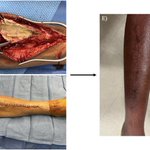


"Operative Versus Nonoperative Management of Calcific Myonecrosis: A Review with an Illustrative Case Report" by Hederick et al.
Read online at: bit.ly/4s7CliI

Do latissimus dorsi tendon transfers truly maintain long-term integrity in massive, irreparable rotator cuff tears? In this commentary on Baek et al., Bassem Elhassan, MD, reviews a 10-year follow-up study evaluating arthroscopically assisted latissimus dorsi transfers using repeat magnetic resonance imaging.
While the study demonstrated significant overall improvements in pain and shoulder function, repeat MRIs revealed that only 58% of the transfers remained intact—though intact transfers correlated with superior motion and functional scores. Dr. Elhassan discusses the impact of strict patient selection criteria and raises important questions regarding how these long-term outcomes compare to alternative tendon transfers and reconstructive strategies.
Read the full commentary 👉 bit.ly/4yAN1bg
And read the original study 👉 bit.ly/4kaH8Os
#JBJS

"Adult Cervical Deformity: Contemporary Evaluation, Classification, and Surgical Decision-Making" by Dekhne et al.
Read online at: bit.ly/4irR4lq

JBJS supports the appropriate and transparent use of AI in scientific publishing. Our updated AI Policy outlines expectations for authors, reviewers, editors, and staff—including disclosure, verification, and accountability. Swipe through for key guidelines and read the full policy at:
bit.ly/4eNQKev


One app. More ways to stay current.
Explore Expert Commentary, Audio Article Summaries, Author Insights, Specialty Updates, podcasts, and Community Voices on JBJS Audio: apple.co/3SVHBJc
#JBJSAudio

✈️ Can't get to Oxford for FRCS prep? Now Oxford can come to you.
Watch Professor and Course Director Tom Cosker explain how the 17th Miller's Orthopaedic Review Course Oxford is expanding access to world-class FRCS preparation with a new virtual attendance option.
💻 Join live from anywhere in the world
🎓 Learn from leading faculty in Oxford
💬 Ask questions during live sessions
▶️ Rewatch lectures on demand
📚 Access course resources and supporting materials
No flights. No hotels. No travel.
Just expert-led FRCS preparation, delivered wherever you are.
📅 Live online: 5-8 January 2027
📍 In-person course: 5-10 January 2027
Choose the format that works best for you and your exam preparation.
👉 Register today: bit.ly/46VIyTk
#FRCS #FRCSOrth #OrthopaedicEducation #MRCOxford #JBJS
🦴 Meet some of your Shoulder & Elbow faculty—less than one month to go!
Learn from an esteemed faculty of orthopaedic specialists in the JBJS MRC Oxford Diploma in Shoulder & Elbow Surgery, starting 17 November 2026.
Get to know a few of the experts who will guide you through key topics—from rotator cuff disorders and shoulder instability to arthroplasty, trauma, and complex elbow conditions.
💻 25 live, one-hour online sessions + on-demand access
📅 Tuesdays, starting 17 November
🎓 Build knowledge to support exam preparation and clinical practice
Explore the faculty and enroll today: bit.ly/3UH7OvU
#ShoulderAndElbow #OrthopaedicEducation #JBJS #MRCOxford
Residents: JBJS Ace is officially live — and your first 50 OITE-matched questions are free, right now, no subscription needed.
Download on the App Store and Google Play today and start studying with the test prep app built on 135 years of JBJS expertise.
ace.jbjs.org/
#JBJSAce #Ortho #OITE #BoardPrep
Do you know the correct answer? Scroll down to reveal the answer
.
.
.
.
.
.
.
.
.
.
.
.
.
.
Answer: C
C. Shoe modification. Nonoperative interventions such as wide toe-box shoes or shoe stretching should be the first line of treatment for a bunionette.


Can transcriptomic deconvolution help unravel the complexities of arthroplasty failure? In this commentary on Li et al., Anas Mohammad Al Abdallat, MD, examines a novel approach using transcriptomic deconvolution to characterize immune cell microenvironments in periprosthetic tissues.
While highlighting the study's insights into distinct inflammatory signatures between periprosthetic joint infection (PJI) and aseptic failure—as well as the prognostic relevance of the CD8+/Treg ratio—Dr. Al Abdallat discusses current limitations, including modest diagnostic performance and small sample sizes, and looks at the future of integrating high-dimensional molecular data into orthopedic research.
Read the full commentary 👉 bit.ly/4yYaNyV
And read the original study 👉 bit.ly/3U9olZs
#JBJS

📚 Our Hip & Knee Special Collection just dropped! 🦴✨
12 top JBJS articles | 100 pages | 100% FREE 📘
Explore hip and knee arthroplasty, knee alignment, implant fixation, robotic surgery, and hip surgical techniques—plus pain management, rehabilitation, and activity after joint replacement.
This convenient digital collection brings together 12 of the most-read hip and knee articles from JBJS over the past two years.
👉 Complete the short form to download your FREE 100-page PDF:
bit.ly/4ySB162
#JBJS #Orthopaedics #HipAndKnee #Arthroplasty

"Femoral-Canal Administration of Tranexamic Acid in Tourniquet-Assisted Total Knee Arthroplasty" by Yu et al.
Read online at: bit.ly/3VVkNuf

Can we find the oracle of fracture union? In this commentary on Lopas et al., Jaimo Ahn, MD, PhD, explores a new mathematical approach to analyzing the kinetics of fracture healing and nonunions over time.
While praising the study for infusing quantitative analytics into traditionally subjective clinical practice, Dr. Ahn discusses the hurdles of current methodology—including data granularity and radiographic intervals—and looks ahead at what it will take to build a truly predictive tool for individual patient care.
Read the full commentary 👉 bit.ly/4i6W3GU
And read the original study 👉 bit.ly/4icQIxI
#JBJS

💡Featured on the cover of this week’s JBJS issue: “Radiographic Measurement of Psoas Muscle Width: A Simple and Reliable Screening Tool for Sarcopenia” by Kataoka et al.
“These findings suggest that lumbar spine radiographs may have novel clinical applications beyond conventional diagnosis of degenerative spinal diseases and trauma, including muscle mass assessment and sarcopenia screening.”
Read the full article here: bit.ly/4zG9TXI

"Efficacy and Safety of Intraosseous Regional Versus Intravenous Tranexamic Acid in Total Knee Arthroplasty" by Tian et al.
Read online at: bit.ly/4ysfvEg

"Selective Femoral Motor Neurectomy for the Treatment of Quadriceps Spasticity in Incomplete Spinal Cord Injury" by Emanuels et al.
Read online at: bit.ly/4sdrRhY

JBJS Open Access welcomes new Co-Editors Dr. Kimberly J. Templeton and Dr. Yong Hai, following the conclusion of Dr. Robin Richards and Dr. Eng Hin Lee’s decade of leadership as the journal’s founding Co-Editors.
We thank Drs. Richards and Lee for their lasting contributions to the journal and look forward to this next chapter.
Learn more about their legacy and meet the new Co-Editors on OrthoBuzz:
bit.ly/4jDwxLE

"Posterior Reversible Encephalopathy Syndrome Following Pediatric Posterior Spinal Fusion" by Lima et al.
Read online at: bit.ly/4irQzYA

💡Highlighted on the cover of this week’s JBJS issue: “Long-Term Outcomes After Arthroscopically Assisted Latissimus Dorsi Tendon Transfer for Irreparable Posterosuperior Rotator Cuff Tears. Assessment at a Minimum 10-Year Follow-up” by Baek et al.
“Despite frequent radiographic osteoarthritis progression, clinical outcomes remained favorable, and most shoulders retained the native joint. LDT [latissimus dorsi tendon transfer] may serve as an option to delay rTSA in appropriately selected younger patients.”
Read the full article here: bit.ly/4se1F6X

Read the latest JBJS today! The cover of the JBJS Oct. 21, 2026, issue highlights 3 key articles:
“Long-Term Outcomes After Arthroscopically Assisted Latissimus Dorsi Tendon Transfer for Irreparable Posterosuperior Rotator Cuff Tears. Assessment at a Minimum 10-Year Follow-up” by Baek et al.
“Radiographic Measurement of Psoas Muscle Width: A Simple and Reliable Screening Tool for Sarcopenia” by Kataoka et al.
“A Fracture Healing Odyssey: Kinematic Comparison of Unions and Nonunions in Human Lower-Extremity Long Bones Treated with Intramedullary Nailing. A Retrospective Cohort Study” by Lopas et al.
Access the full issue here: bit.ly/3TOnJIF
