

Co-founder, Recursive. Professor, CS, U. British Columbia. CIFAR AI Chair, Vector Institute. | ML, AI, deep RL, deep learning, AI-Generating Algorithms (AI-GAs)
Paradise (Vancouver, BC)
Joined July 2010
- Tweets4.4K
- Following448
- Followers33.4K
- Likes8.6K






Pinned Tweet
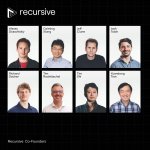
Thrilled to share that we founded Recursive to create AI that safely conducts experiments on how to improve itself in an open-ended process of endless, automated scientific discovery. As I wrote in my 2019 AI-generating algorithms paper, this will likely be the fastest path to superintelligence. Our work since has shown the power of this approach. Excited to scale up and improve upon ideas like the Darwin Gödel Machine, HyperAgents, ADAS, OMNI, ALMA, The AI Scientist, PromptBreeder, Rainbow Teaming, Automated Capability Discovery, and other work on open-ended and AI-generating algorithms. We’ve assembled a dream team of researchers and significant resources to pursue this vision. My amazing co-founders are pictured here, and we have an all-star team of founding members (we’re over 25 and growing).
Please join us if you are interested! Follow our progress @Recursive_SI

Jeff Clune retweeted

Incredibly fun journey building the RSI loop(s) that led to a best-in-class local coding LLM.
A few simple coding examples Flint could do in < 10 mins.
0 endpoint. 0$. Full CoTs.
Stay tuned for more!
ps: Fable made this video from the artifacts alone. No editing.

Introducing Flint, @Recursive_SI’s first model: a fast local coding model built with our automated research system, the Eureka Machine.
• Best-in-class fast local coding
• Up to 2x faster than comparable models: 125+ tokens/sec on a MacBook Pro, 150+ on RTX Spark
• Built from scratch in under 4 months
Private, unmetered intelligence on your own machine. Open weights available now on @huggingface, run it locally on your favorite framework or try it for free on @opencode or @pidotdev.
Jeff Clune retweeted

This = 👀 🏆 👀 🏆 👀 🏆 "Most labs scale by hiring thousands of researchers. We're scaling by building an open-ended AI system that automates this process across ideation, implementation and validation. Every model our system builds will make it better at building the next."
Introducing Flint, @Recursive_SI’s first model: a fast local coding model built with our automated research system, the Eureka Machine.
• Best-in-class fast local coding
• Up to 2x faster than comparable models: 125+ tokens/sec on a MacBook Pro, 150+ on RTX Spark
• Built from scratch in under 4 months
Private, unmetered intelligence on your own machine. Open weights available now on @huggingface, run it locally on your favorite framework or try it for free on @opencode or @pidotdev.
Jeff Clune retweeted

We’re about to see a breakout in local model capabilities.
Flint scores 54.9% on Terminal-Bench 2.1 with ~2B active parameters. That’s ahead of every other small MoE and two of the three dense ~30B models.
It only needs about 24GB and runs at 125+ tok/s on a MacBook Pro.

Jeff Clune retweeted

"I used Flint to build a bunch of programs and found it to be both fast and very capable. In my experience, models of this size can be annoyingly error-prone or slow compared to Claude or Codex, but Flint nailed my coding requests every time." — @willknight, @WIRED
wired.com/story/recursive-se…

Introducing Flint, @Recursive_SI’s first model: a fast local coding model built with our automated research system, the Eureka Machine.
• Best-in-class fast local coding
• Up to 2x faster than comparable models: 125+ tokens/sec on a MacBook Pro, 150+ on RTX Spark
• Built from scratch in under 4 months
Private, unmetered intelligence on your own machine. Open weights available now on @huggingface, run it locally on your favorite framework or try it for free on @opencode or @pidotdev.
Jeff Clune retweeted

1/ From OpenAI's Navier–Stokes work to AlphaEvolve's faster algorithms, AI research is getting very real.
Now, with Recursive Flint, we can experience that magic locally on our own laptops 💻
The whole research loop runs locally with a selection of tasks! Code + demos 🧵
Jeff Clune retweeted

My bar for AGI is still an AI winning a Nobel.
But an AI researcher looking at the lm_head (that *everyone* tells you to keep in high precision) deciding to quantize it to 4 bits AND being actually right (0.7pt from bf16) is definitely impressive.
Even better when the result are open-weights pushed on the Hugging Gace hub.
Congrats @Recursive_SI !
Introducing Flint, @Recursive_SI’s first model: a fast local coding model built with our automated research system, the Eureka Machine.
• Best-in-class fast local coding
• Up to 2x faster than comparable models: 125+ tokens/sec on a MacBook Pro, 150+ on RTX Spark
• Built from scratch in under 4 months
Private, unmetered intelligence on your own machine. Open weights available now on @huggingface, run it locally on your favorite framework or try it for free on @opencode or @pidotdev.
Jeff Clune retweeted

We are releasing our first model, Flint, a best-in-class local OSS coding model that runs at 150+ tokens/s on an @nvidia DGX Spark and 125+ tokens/s on a MacBook Pro M4—developed from scratch in less than four months with help from @Recursive_SI's autoresearch system.

Introducing Flint, @Recursive_SI’s first model: a fast local coding model built with our automated research system, the Eureka Machine.
• Best-in-class fast local coding
• Up to 2x faster than comparable models: 125+ tokens/sec on a MacBook Pro, 150+ on RTX Spark
• Built from scratch in under 4 months
Private, unmetered intelligence on your own machine. Open weights available now on @huggingface, run it locally on your favorite framework or try it for free on @opencode or @pidotdev.
Great summary of our work on Flint by @cong_ml

1/ Introducing Flint, our first model at @Recursive_SI !!
A blazing-fast 40B model on the local coding Pareto frontier, shaped by autoresearch 🔥
Built from scratch in under four months with our Eureka Machine and an incredible team.
Here's how 🧵

Jeff Clune retweeted
1/ Introducing Flint, our first model at @Recursive_SI !!
A blazing-fast 40B model on the local coding Pareto frontier, shaped by autoresearch 🔥
Built from scratch in under four months with our Eureka Machine and an incredible team.
Here's how 🧵
Introducing Flint, @Recursive_SI’s first model: a fast local coding model built with our automated research system, the Eureka Machine.
• Best-in-class fast local coding
• Up to 2x faster than comparable models: 125+ tokens/sec on a MacBook Pro, 150+ on RTX Spark
• Built from scratch in under 4 months
Private, unmetered intelligence on your own machine. Open weights available now on @huggingface, run it locally on your favorite framework or try it for free on @opencode or @pidotdev.
Great article about our new model Flint from Wired and @willknight We @Recursive_SI are excited to see what you build with it!

Recursive makes the case that the benefits of using AI to build AI outweigh the risks. buff.ly/xsPUDpl
Very excited to share what we have been working on at Recursive! A huge congrats to our entire team. We’re excited to hear what you all think. 🧪 🧬 🔭 🚀 📈✨
Introducing Flint, @Recursive_SI’s first model: a fast local coding model built with our automated research system, the Eureka Machine.
• Best-in-class fast local coding
• Up to 2x faster than comparable models: 125+ tokens/sec on a MacBook Pro, 150+ on RTX Spark
• Built from scratch in under 4 months
Private, unmetered intelligence on your own machine. Open weights available now on @huggingface, run it locally on your favorite framework or try it for free on @opencode or @pidotdev.
Jeff Clune retweeted

First, congrats to @nickcammarata on questioning assumptions in his field and reinvigorating its discussion. In the same spirit, I want to interrogate interpretability as well: why does it always start from the assumption that the system works? If NNs face challenges with AI aspirations like OOD generalization, continual learning, and creativity, then are not their internal mechanism the place to explain (and ultimately rectify!) such problems? If you look inside a system and really understand how it works, then shouldn’t you also gain some insight into how it could work better?
Mech interp focuses on mind reading and mind control, but seems strangely ambivalent to mind improvement. Our 2025 paper on fractured entangled representations (FER) showed evidence of a striking chasm between neural networks with good representation (from open-ended search) and bad representation (from conventional gradient descent) in small networks that output Picbreeder images. I would expect precisely the kind of meticulous sleuthing @nickcammarata showcases to help to illuminate where FER might be hiding and how much of it there really is in large networks and LLMs, and ultimately what kinds of interventions mitigate it.
Let me give an example image from Nick’s own blog, which I pasted into this post. The image is presented in the blog to support the idea that there is a “clean” interpretation of each neuron. But what about thinking about the story these neurons are telling about the adaptability of the circuit itself?
The story about cleanliness says that a number of clean feature detectors feed into a “pointy” V-detector, which is then used to help identify a bunch of pointed objects.
But think about the entire circuit more critically, and it starts to look like the entanglement (the E) in FER: we have a “van front” detector feeding into our pointy V-detector, which then feeds into (is read by) a coyote face detector. Does it not follow that if a gradient update later alters our van front detector, then our downstream V-detector will consequently be altered, and hence our ability to detect coyote faces? If so, then changes in van detection will impact our ability to perceive coyotes - coyotes and vans are entangled in this circuit!
Is this normal in large networks? Should we even be using the word “clean” to describe a situation like that? How pervasive is this kind of entanglement? Similar evidence for and questions about fracture (as opposed to entanglement in this example) could easily be raised.
To be clear, I’m not trying to claim that the FER hypothesis has been confirmed by a single (or even a few) anecdotal examples in a piece creating controversy with its own set of provocative claims. Rather, what I’m saying is, if you have (even imperfect) microscopes looking inside these systems then there are a lot really interesting questions you could be asking about the structure of their representations beyond just whether we can read their minds - mechanistic interpretability could widen its scope!


AI can't generate new knowledge, they said.
It certainly can't make major breakthroughs, they said. It can't be creative, they said.
Interpolation, not extrapolation, they said.

OpenAI's internal model clearly has "research taste" in math - i.e., the final component we need to get to RSI.
- jboggan (post on Hacker News) on Barnette's Conjecture: "the 'aha' insight for this is actually f**ing wild... this is the first time I've seen complex roots and annihilating terms like this... I don't understand where this trick originated."
- Joshua Zelinsky on the proof that the chromatic number of the plane is at least six: "doesn't look like the method is a direction that the prior lit used to my knowledge... far beyond merelt building on existing methods or seeing connections between different problems."
and on two other problems (where he says he is only partly familiar with the literature): "not remotely low-hanging fruit... it seems like the AI is somehow inventing new techniques on its own."
These match Tristian Buckmaster's view on the Navier-Stokes solution: "you combine... ideas of convex integration with the growth mechanism of the Euler blowup, and... you create a new mechanism which is used to correct this non-solution. This is actually a cool idea. It's the kind of idea that I've been trying and failing to realize for over ten years... I didn't manage to do it... This is the leap."
The average amount of compute used to solve these problems was ~3 hours of Pro-level thinking.
And so, this means that OpenAI's internal model is able to generate truly novel discoveries in mathematics for... maybe at most a few hundred bucks?
If I were OpenAI, I would be asking this model to immediately target major unsolved problems in AI R&D.


Jeff Clune retweeted

Excited to share that our research paper is now on arXiv!
We explored whether coding agents can recover from failures by returning to earlier development states instead of starting from scratch.
Here's what we built, tested, and learned.

Jeff Clune retweeted

Most of what we call human intelligence lives at the level of society, not the individual. None of us knows how to build a toaster from scratch on our own, yet together we can get to the moon.
The most capable AI today operates the same way: as societies of models.
Jeff Clune retweeted

(3/N) The idea of adaptive sampling helping RL has been obvious for a long time. The OGs @rdn_nikita @HoellerDavid got groundbreaking locomotion results with adaptive curriculums, and the open-ended RL community has been barking at this (right!) tree for even longer, e.g. @jeffclune @j_foerst and many more!
What we provide is a simple instantiation of this idea, which scales unreasonably well with compute, requires no hand engineering, and results in policies that can solve robot tasks beyond what was previously possible with RL. The behaviors these policies learn are reactive, highly dynamic, and fast because they are learned entirely through RL, no imitation data or motions to track.
Jeff Clune retweeted

Suddenly, AI just solved 90 of the 500 most important open problems in mathematics

The AI Scientific Revolution is beginning

For decades, researchers have sought materials that sort electrons by spin while their magnetism cancels.
In 3 days, 90+ Opus 5.5 agents helped us uncover two room-temperature magnetic semiconductor candidates in simulations: YBaMnFeO₅ and KV[Cr(CN)₆].
KV[Cr(CN)₆] was synthesized back in 1999. Its predicted ability to sort electrons by spin appears to have been hiding in plain sight for 27 years.
