
Designer & builder @figma.
San Diego, CA
Joined March 2007
- Tweets6.1K
- Following2K
- Followers1.2K
- Likes15.3K


Jason Calleiro retweeted

SO proud of the team for this launch and cannot wait to see what y'all make with it!!

Jason Calleiro retweeted

$FIG Q3 results:
→ $391M in revenue, 43% YoY growth rate and $16M above high-end of prior guidance
→ 131% net dollar retention rate
→ 36% YoY growth in non-GAAP gross profit
→ $1.7B in cash, cash equivalents and marketable securities
→ Raising our outlook for FY 2026
Jason Calleiro retweeted

Using @figma today to build and store agent-first knowledge on making web-based games including a 3D Design System & sample UI with Specs & Code Layers.
Building in Three.js, we needed a safe place for all of our decisions and future games.
The Figma canvas and MCP delivered.
Jason Calleiro retweeted

We’re training AI to get better at the details designers care about.
A button can look right but still use the wrong component. An edit can fix one detail and break another. The goal is AI that follows the designer's lead, not just produces a plausible design.
That goal shapes how we train and evaluate our first-party editing model for the Figma agent, with our designers helping define what good looks like.
Our engineering team shares how we're doing it, and what we're learning along the way. 👇

Jason Calleiro retweeted
This week my team at @figma rented an empty gallery and filled it with our own art: paintings, stained glass, sculpture, clothing, shader projections, a DJ set, IRL prototyping, video art, and more!
It feels so good to work with creatives, and for creatives. 💗


Jason Calleiro retweeted
In the world of software design and product, we're seeing exponentially more software. But the usage and utilization of apps? Flat.
Differentiate with design, a point of view, brand, storytelling, "taste" (and all the buzzwords you can think of)
Jason Calleiro retweeted

Today’s the day.
Code layers rolling out now.
Push and pull from real repositories, instantly branch with option-drag, and build anything you can dream of with best-in-class models and MCP support.

Jason Calleiro retweeted
Payload is now in Figma!
Available to everyone in Figma Make, so you can go from prototype to production all in one place.
Jason Calleiro retweeted
Introducing Specs! A new medium for markdown on the Figma canvas.
You can think of Specs as a container for your context. Use MCP, Github, etc to move context in/out of Figma and across the Figma platform.
Specs is rolling out in open beta over the next few weeks!
Jason Calleiro retweeted
When we announced Code Layers earlier this year, we wanted design and code to live side by side so you can collaborate with code directly on the Figma canvas.
Excited to share it's now rolling out in open beta!
Jason Calleiro retweeted

In about 6 months, we're going to see a massive shift toward fully webgpu rendered websites. Just a few more ticks to get there.
Jason Calleiro retweeted

Figma CEO @zoink predicts "design is the new code" within a year as AI turns coding into raw material and pushes value into taste, product, and judgment:
"A year from now, the same thing I think is very obvious now, which is that design is the new code."
"If you believe that coding models will continue to get better, then it's the decisions you make about how to build a system that matter, not the code itself. The code is material."
"The value rises to the top and that becomes brand, product design, your marketing, your point of view in the world, your judgment calls and strategy. Product design is really at the center of a lot of that."
"Designers will have a bigger role to play if they step up. Not everyone will step up. Some people will be like, 'But I like what I was doing.'"
@figma


Jason Calleiro retweeted

convergence to the mean
when everyone looks at everyone else to decide what to make, we eventually stop making anything of our own.
we copy what works. borrow the language, the aesthetic, the features. we call it learning from the market, following best practices, staying competitive. together, everything starts to feel familiar. polished, interchangeable. nothing wrong. nothing alive.
the mean isn’t necessarily bad. it’s where everything lands when we remove the reasons for it to be different.
numbers are easier to compare than feelings, so we make things that produce numbers. we study what gets attention, then shape ourselves around it. eventually the feedback stops informing the work and starts authoring it. we’re no longer asking what we want to say. we’re asking what will be rewarded for saying.
ai makes this loop frictionless. it can draw from more references than we could see in a lifetime. but access to every perspective isn’t the same as having one. it hasn’t lived a particular life that makes one detail unbearable and another beautiful. when we ask it to choose for us without bringing any intention of our own, we get something plausible, easy to approve.
then we ship it, measure it, copy it, and feed it back into the next round. a tidal wave of mid.
this changes not just the work, but the people making it.
we describe ourselves in categories platforms can distribute and markets understand. designer. founder. creator. pick a niche. build a brand. be consistent. the parts that don’t fit become inconvenient, even when those contradictions might produce our most interesting work. we become easier to classify and harder to tell apart.
i think we need to approach making things more like artists.
an artist develops a perspective through the work. making, noticing, choosing, failing, returning. learning what matters even when nobody else cares. craft gives that perspective a form precise enough for someone else to experience.
the life outside the work matters too. the places you’ve lived, the people you’ve loved, the things you’re embarrassed to care about. these aren’t distractions from having something to say. they’re how you come to have something to say.
we understand this with music, paintings, photographs, movies. we expect a person to be present in the choices. we want to experience something we wouldn’t have encountered without them.
software can do this too.
a piece of software expresses beliefs about how life should feel. what deserves your attention. what you should be free to change. whether a task should feel like paperwork or play. even a small interaction can carry someone’s care, humor, or curiosity.
but we rarely talk about software as a medium. we talk about it as an industry. markets to capture, workflows to optimize, competitors to catch up with. we add a feature because someone else has it, without asking whether it belongs. products accumulate the same parts and lose what made them worth choosing.
underneath the branding, it’s all the same thing.
artists learn from others too. the question is whether you’re absorbing those influences into a point of view, or using them to avoid developing one.
what are you trying to let someone feel, understand, or do? why this particular shape? what have you noticed that the existing tools don’t seem to notice?
those questions don’t have answers you can borrow from a competitor’s roadmap.
if we can make almost anything, deciding what deserves to exist becomes more important, not less. speed gives us more chances to exercise judgment. it doesn’t remove the responsibility.
i don’t want a world where every person becomes a more efficient distributor of the same ideas. i want people to use these tools to go further into what they actually care about. to make things specific enough that we can feel someone behind them.
what is the point of everyone being able to make something, if we all end up making the same thing?
Jason Calleiro retweeted
Belief is so powerful. And I’m not talking about the religious kind. It’s the kind that knows you will get there. That you will win. That you will overcome. That you will get through this. That you will be a good human. Believe.
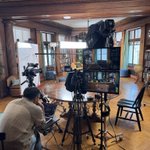
Filming some Generative plugins content @figma. I’m sharing how we used GenPlugins to build GenPlugins. How’s that for an inception moment.

I interrupt regularly scheduled programming to let everyone know that my son put out a fucking fantastic record today. Please check it out, share it and go catch Games we play on tour.
Congrats bud, proud of you and I love you. You inspire me everyday.
open.spotify.com/album/1cQgV…

2
14
456