
Prof @univienna Fellow @RadInstitute Astrophysics, mostly
Vienna, Austria
Joined November 2007
- Tweets715
- Following355
- Followers550
- Likes548




Thank you @stem_univie! And congratulations on your promising start. You are very much needed to spread the good work of @univienna STEM. These are the first steps of the VISIONS survey, more to come soon with the help of @ERC_Research ISM-FLOW advanced grant
Very nice essay and the 127th of a brilliant series. Mandatory reading for all who want to understand the impact of @ESAGaia in Astrophysics. Regarding the Radcliffe Wave, expect more news soon. The local Milky Way is fascinating beyond all expectations.
Hi Wlad, it was great to see you in Kyoto! Hard to believe that 20 yrs have passed. See you at #PPVIII, at the very least.
This a reminder that Astronomy & Astrophysics (A&A) Letters are not only Open Access but free for all astronomers in the world. aanda.org/articles/aa/full_h…
The Star Formation Newsletter #360 is now out: starformation.news
Bo Reipurth started the longest-running newsletter in astronomy precisely 30 years ago.
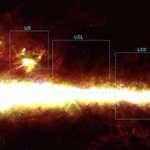
Sco-Cen is the closest stellar nursery (~150 pc), typically divided into 3 clusters (Upper-Sco, UCL, and LCC). Sigma finds 37. We compare our results to the @ESAGaia post-DR2 literature, but we might miss someone, let us know.
Image credit: IRAS/T. Preibisch

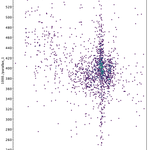
The SigMA algorithm outperforms HDBSCAN, distinguishing clusters with velocity differences down to about 0.5 km/s and cluster volume densities as low as 0.01 sources/pc^3. An application to Sco-Cen reveals about 13000 young sources arranged in 37 clusters.

@SRatzenbock from @univienna @dsUniVie new clustering method "Significance Mode Analysis" (SigMA) to extract co-spatial and co-moving stellar populations from large-scale surveys, like @ESAGaia (in 5D), is on astroph (not yet accepted, comments welcome). arxiv.org/abs/2211.14225

Want to join a research team that will measure the 3D motion of the Local Interstellar Medium for the first time? Understand our path through the Galaxy? Last week to apply for a @ERC_Research 5-year PostDoc position at @univienna jobregister.aas.org/ad/383ef…


We are finally going to understand the formation of filamentary structure in space… 😵💫 Time to move to self-organization and emergence? @burkert_andreas @CosmicFiber @cszucker @AlyssaAGoodman
This quoted post is unavailable.
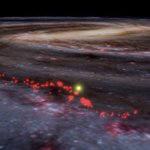
Great first PhD paper by @mac0598 now at @univienna. The Radcliffe Wave is the gas reservoir of the Orion Arm of the Milky Way. This result puts the Radcliffe Wave in context, making it the prime laboratory for spiral arm formation. Read thread. Thanks @ESAGaia #GaiaMission

Lovely article on El País (in Spanish) by @villavrr on our recent Local Bubble results "...supernovas are grey characters, one never knows if they are good or bad." 🙂 elpais.com/ciencia/vacio-cos… @cszucker @AlyssaAGoodman
This is an excellent time to acknowledge the people that made this result possible, starting with the
@ESAGaia #GaiaMission team, my fantastic collaborators, and the support from the @univienna. @cszucker @AlyssaAGoodman @GroJosefa @mac0598
Hi Eric! Indeed! When will visit Vienna again? Congratulations on your work on dark sky protection, it's critical and urgent. Hope to see you soon.
Thanks, Ron. I wonder if this science case was in the original case for Gaia. 3D changes everything. @ESAGaia #GaiaMission @Jos_de_Bruijne