

lvl 16 half-orc nerd 🍄💀🌈independent AI researcher https://xitter.cf/t.co/uwjF87I7m9 🐀 built @eggheadio and working on @badass_courses ex-@vercel
Vancouver, WA (pdx)
Joined January 2008
- Tweets66.3K
- Following786
- Followers24.1K
- Likes28.4K





Pinned Tweet
This is how Kathy Seirra’s Badass ends.
This is everything to me.
It’s what I want to do.
How I want to live.
I miss Kathy so much. I’m thankful for this powerful book. It’s affected me deeply and you should consider reading it too. ❤️

ALT A page from the book Badass by Kathy Seirra that summarizes how we can work together to be badasses
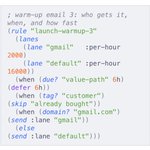
sending a shedload of (not spam, double opt-in) email is still v challenging but @jessethanley has taken some of the hardest bits and packaged it as a kickass service called @PostShiba
huge unlock for builders

meticulous craft
notice 👀
have standards
build systems
scale intent
built isn't done
done doesn't mean good
unleash creativity & artistry
youtu.be/GLvFTMtw4Jk?is=fuhC…
it's a prototyping dream, a playground, a fuckin litebright for zany ideas
people aren't aware enough the profound effect that pi had on AI this past year
thanks @pidotdev ❤️🐀

Pi is one of the coolest projects in the AI world today. I'm on their team. Giving developers and companies choice of model, control over the runtime, data, skills, plugins… Excited to have great support on @vercel:
vercel.com/blog/making-every…

how i started my actual dev career in 2005 🌀

3 steps to becoming an actual software programmer
1. Build personal software
2. Build internal software (for a select group of people)
3. Build public-facing software
If you've only ever built personal software you're not qualified to build public-facing yet.
As you climb the rungs the stakes get higher, your constraints get tighter, and you need to QA harder.
So my advice for anyone who's never built an app is this:
Find a small group of testers (even 1 is great) that will actually use an app you built in their real lives.
The feedback you'll get will blow your mind. It'll show you how forgiving you are of your own crappy product. You'll begin to focus on process and quality.
It'll be frustrating, slow, and hard work.
That's programming.


exploring the latent space with @mattpocockuk is always a treat
we discuss matt's archaic use of paper products, buuilding software factories that actually work, @poteto trust ladders, classic books, skills as process and a lot more
find it on yt too! xitter.cf/megadevhq/status/21126…

"the application of taste is essentially a differentiator"
🔥 new MEGA podcast with @mattpocockuk & @joelhooks: youtu.be/0BlAHq8D79U
i peddle (badass) courses for a living, and if you've followed theo for any length of time you know he's traditionally not a huge fan of "courses" in general
*i* was super f'n nervous to pitch him on the idea of doing a course
he insanely busy (like if you think you get how hard this man is locked in, you are not even close, it's more locked in than that), he's intensely focused, he definitely isn't going to pivot to course creator
BUT all of that is exactly why working on this with him is appealing in the first place
if you watch theo regularly you'll also know that he is hands down one of the best educators in the AI space, his videos are topical and "in the moment" but if you watch they are also deeply informative and educational (it's why i love them)
i'm stoked for this cohort and think we are lucky that it exists
but also, holy shit, that's not all
angie.
john.
kent.
yall.
a full month of soaking it up. lfg.

Can I be real for a sec? I'm super nervous about this launch. It's something I never thought I would do, and I want to be as transparent as possible.
This course is $1,300. You should not buy it. Let me explain.
I've done YouTube for over 5 years now. I've never done a paid course of any form before. I have worked hard to keep all of my content freely available.
I'm lucky to have found so many awesome companies that will sponsor short sections of my videos, enabling me to employ an incredible team without compromising my content.
I have always hated the idea of charging my viewers. If I can't convince a company to cover our costs, that's my failure, and I don't like putting that failure on my audience.
On October 26th, my first-ever paid course with @megadevhq goes live. It's $1300 a seat. That's really expensive.
I keep imagining a scenario and it makes me feel sick. I think of a young, excited dev who's recently gotten into my content. They're scared of falling behind, so they cut their expenses and save up the money, because they believe my course might be the key to getting a real dev job.
Even now as I type this, I feel my heart rate increasing and my stomach flipping over itself. The thought of anyone putting themselves in a harder financial position, all because of me?
This might actually be my biggest fear.
I don't want to sell promises. I don't want people paying me for hope.
So why did I do this course with Mega?
Two reasons: the people and the content.
I was hit up by Joel about this course late last year. I trust him with my life. Even then, it wouldn't have been enough to convince me.
Then I learned the other instructors who would be involved. Kent, Angie and John. All three were fundamental in my growth as an engineer. Getting to work with all of them was far too exciting. Made it really hard to say no.
If I had nothing unique to say, I still would have said no. I'm incredibly busy as-is, and I'm running low on space to even show you guys all the stuff I do.
What pushed me over the line was the realization that there is so much I want to say that doesn't fit in a YouTube video.
I just did a video about "prompting better". It's a deep dive on my real world workflows and how I think about building with AI. The only way I could get people to watch it was clickbaiting the title, "your prompts suck".
What if I wasn't bound by clickability? What if I didn't have to focus on being entertaining for the whole video runtime? What if I was freed from the constrains of making content for the 500,000+ people who watch my videos?
I love YouTube. I love my audience. I love the videos I make. But I'd also love to do a multi-part deep dive on "building with AI in real world code bases" that I know would bomb on YouTube.
That's what I filmed for Mega. I'm so proud of it. It's fundamentally different from any videos I've done before, but still feels like me just doing my thing.
Is it worth $1,300, though? If that $1,300 comes out of the same bank account that you pay rent with, probably not.
Is it worth $1,300 per person to a company trying to help their eng teams use AI properly at work? In my opinion, this is a bargain.
If you're paying your engineers $100k a year, and this course makes them 5% more effective at their jobs, that's a 4x ROI.
What I'm trying to say is simple: Don't buy this course.
Get your boss to buy it.
(If you have an education budget at your job that works too. Just please don't pay for this yourself. Seriously.)
Sorry for the rant. If you can't tell, I'm genuinely quite nervous about this 🙃
🧪 Potion Calendar
clean-room Google Calendar app.
Effect 4,
Alchemy and Foldkit
on Cloudflare Workers. lol
github.com/joelhooks/potion-…

"use REA and cleanroom a notion clone using ratstack.sh"
shit's crazy y'all

joel ⛈️ retweeted

Can I be real for a sec? I'm super nervous about this launch. It's something I never thought I would do, and I want to be as transparent as possible.
This course is $1,300. You should not buy it. Let me explain.
I've done YouTube for over 5 years now. I've never done a paid course of any form before. I have worked hard to keep all of my content freely available.
I'm lucky to have found so many awesome companies that will sponsor short sections of my videos, enabling me to employ an incredible team without compromising my content.
I have always hated the idea of charging my viewers. If I can't convince a company to cover our costs, that's my failure, and I don't like putting that failure on my audience.
On October 26th, my first-ever paid course with @megadevhq goes live. It's $1300 a seat. That's really expensive.
I keep imagining a scenario and it makes me feel sick. I think of a young, excited dev who's recently gotten into my content. They're scared of falling behind, so they cut their expenses and save up the money, because they believe my course might be the key to getting a real dev job.
Even now as I type this, I feel my heart rate increasing and my stomach flipping over itself. The thought of anyone putting themselves in a harder financial position, all because of me?
This might actually be my biggest fear.
I don't want to sell promises. I don't want people paying me for hope.
So why did I do this course with Mega?
Two reasons: the people and the content.
I was hit up by Joel about this course late last year. I trust him with my life. Even then, it wouldn't have been enough to convince me.
Then I learned the other instructors who would be involved. Kent, Angie and John. All three were fundamental in my growth as an engineer. Getting to work with all of them was far too exciting. Made it really hard to say no.
If I had nothing unique to say, I still would have said no. I'm incredibly busy as-is, and I'm running low on space to even show you guys all the stuff I do.
What pushed me over the line was the realization that there is so much I want to say that doesn't fit in a YouTube video.
I just did a video about "prompting better". It's a deep dive on my real world workflows and how I think about building with AI. The only way I could get people to watch it was clickbaiting the title, "your prompts suck".
What if I wasn't bound by clickability? What if I didn't have to focus on being entertaining for the whole video runtime? What if I was freed from the constrains of making content for the 500,000+ people who watch my videos?
I love YouTube. I love my audience. I love the videos I make. But I'd also love to do a multi-part deep dive on "building with AI in real world code bases" that I know would bomb on YouTube.
That's what I filmed for Mega. I'm so proud of it. It's fundamentally different from any videos I've done before, but still feels like me just doing my thing.
Is it worth $1,300, though? If that $1,300 comes out of the same bank account that you pay rent with, probably not.
Is it worth $1,300 per person to a company trying to help their eng teams use AI properly at work? In my opinion, this is a bargain.
If you're paying your engineers $100k a year, and this course makes them 5% more effective at their jobs, that's a 4x ROI.
What I'm trying to say is simple: Don't buy this course.
Get your boss to buy it.
(If you have an education budget at your job that works too. Just please don't pay for this yourself. Seriously.)
Sorry for the rant. If you can't tell, I'm genuinely quite nervous about this 🙃
Obligatory call out:
Yes, the course is expensive. That's because we want your company/boss to pay for it.
If you can't expense it, please do NOT buy this course if you aren't making Real Dev Money™.
It's super focused on "how to apply your existing engineering knowledge to building with AI". Genuinely not that useful if you're not a full time dev yet.
Seriously: DO NOT PUT YOURSELF IN A BAD FINANCIAL POSITION TO TAKE THIS COURSE. My free YouTube videos will help you more with getting your first job, I promise 🙏
opus trying to constantly run perf tests on planetscale and i swear to f'n god if i have to tell it one more time to trust...
previously defunct 2019 Mac Pro 188gb ram
beautiful machine i didn't throw away because it was too pretty
added a pci nvme booting to debian/proxmox
tailnet agent fleet can now slice/use it as needed moving prototypes and "claw stuff" off of OS X as much as possible
Rat King Awakes is an `until` scheduler that i'm using for loops/cron type shit evolved out of pi-until for @pidotdev prototype
pi-durable and celld 🤌
it's integrated into Rat King, which is an AT Proto agent network communication built on celld locally or durable objects on cloudflare (or both, whatever, @alchemy_run makes this a non-issue)
ratking-until-schema.wzrrd.s…
this is the design where i'm "looking at the code" before its built and iterating on @EffectTS_ schemas and xstate state charts for lifecycle/control
i'm using this with pi-durable agents that can be "freeze dried" and awoken in a schedule or from a message from another trusted (verified/signed) actor in the network (human or agent)
trust boundaries define access to infrastructure capabilities and knowledge
