

launch and run your vc firm from your phone
anywhere
Joined July 2020
- Tweets803
- Following207
- Followers2.5K
- Likes2.8K






You have two options:
Box 1 contains $1,000.
You are assured Box 2 contains $10,000 — but it can't be opened.
The decision ultimately rests on whether you need to distribute the cash, or if you can trade on the theoretical value of the box.

Odin retweeted

According to a study from Strebulaev and Jackson, only ~3% of mid/senior-level VC will make 10+ successful investments in their career.
Persistence is poor, the market is volatile, and success is inherently unpredictable. Clearly, it's a challenging strategy to sell LPs, if managers are honest about the challenges.
Alternatively, they can just lie.
Instead of dealing honestly with the uncertainty, they can tell LPs that it's obvious who the winners are and the only real constraint is "access" — an idea which conveniently favours incumbents.
It's a simple truth that if a system can be exploited, behaviour will gradually drift toward exploitation. In this case, that vulnerability is the weak GP:LP interface which is dominated by simple narratives.
This alternative "access" strategy is perfectly optimised for the incentives of institutional LPs: All the confidence of brand-name funds, binders of attractive logos, allocation at scale, and zero career-risk.
Unfortunately, the end-product is largely artificial, and it cannot interface well with real, functioning markets — like the public markets or M&A to public companies with reporting requirements (thus falling exits).
This shift in venture capital is effectively captured by Gresham's Law, which describes how bad money tends to push out good money:
"When two forms of the same thing circulate and one is easier to counterfeit, dilute, or exploit, the lower-quality version tends to dominate. The principle is frequently extended beyond currency to any system in which an exploitable substitute can displace a higher-quality one."
Read the full article: blog.joinodin.com/p/the-blac…

Odin retweeted

These thought pieces have no right to be as good as they are. Agree or disagree with the point they are making...
Founders should read this to understand more about the venture market. Many of you depend on it.
LPs and family offices should read it for some more insight into the game they are playing (and who's).
It's not long.
👏🏻 @credistick as per bloody usual 🙄
blog.joinodin.com/p/the-blac…

Odin retweeted

Investing in things that are “illegible to capital” may cost you the ability to raise your next fund. Takes balls. Safer to invest in consensus even if these aren’t the highest potential opportunities. angels are best positioned for early stage. own cash = not constrained

in theory, there are a ton of venture funds that write inception stage checks into a bunch of ambitious companies with very minimal overlap (i.e. taking idiosyncratic risk)
in practice, there are a ton of small venture funds that are trying to stay in business and make investment decisions on the basis of what they believe other a lot of investors like (esp megafunds), as this is the most reliable way to produce paper markups (and hopefully soon secondaries for liquidity, that other VCs or FOs will buy from them) to continue to persuade LPs to invest in their funds. This leads into more money going into less ideas and less companies (the numbers support this btw) i.e. it effectively orientates the market to invest in things megafunds like, who explicitly don’t take market risk at early-stage (which is the opposite of the idiosyncratic risk early-stage small funds ought to be taking)
(tangentially, many of best positions, both in terms of $$ raised and real traction, went through periods where no one wanted to give them money, so not really a “them problem”)
Odin retweeted


Robots Everywhere! — within ten to twelve years.
That’s @nunzi46's bet as Managing Partner of @CapitalAlso.
AI is the big breakthrough in digital labour productivity and robotics is the breakthrough on the physical side.
He expects knowledge work to commoditise further and more equity value to go to the companies that let AI interact with the physical world.
Full episode of Going Solo out now:
linktr.ee/goingsolowithodin
Robots Everywhere! — within ten to twelve years.
That’s @nunzi46's bet as Managing Partner of @CapitalAlso.
AI is the big breakthrough in digital labour productivity and robotics is the breakthrough on the physical side.
He expects knowledge work to commoditise further and more equity value to go to the companies that let AI interact with the physical world.
Full episode of Going Solo out now:
linktr.ee/goingsolowithodin
Mike Annunziata (@nunzi46) spent most of a decade on the LP side before making investments of his own.
He began at the Soros family office before moving on to the @Cornell endowment, where he learned how an institutional manager sets the bar for success.
Today, Mike is the founder of @CapitalAlso, a boutique hard tech fund which grew out of his angel investing alongside @WillBruey. Their early commitments include companies like @RadiantNuclear and @VardaSpace — where Bruey is now CEO.
In this conversation, he describes why @CapitalAlso answers around ten questions about enterprise value before it looks at technical risk, and why fundraising works like selling a luxury good.
He and @credistick get into processes for controlling groupthink, his formative experience with @DormRoomFund, and the introduction that helped @foundersfund understand (and invest in) portfolio company @NorthwoodSpace.
They finish on Mike’s advice to emerging managers to get into business early, and why his vision for the next decade is a Golden Age of Robotics.
Going Solo is Odin’s series talking to small and emerging managers in venture capital. Subscribe to catch future episodes:
linktr.ee/goingsolowithodin
0:00 Intro to Mike and Also Capital
1:24 From the Soros family office to the Cornell endowment
5:24 Where the bar sits for a new fund
6:00 Clearing an endowment's opportunity cost
7:31 Learning seed investing at Dorm Room Fund
11:43 Controlling groupthink in investment decisions
13:28 Why the best deals are contentious
14:22 Stories from Dorm Room Fund
16:28 Varda and the origins of Also Capital
20:07 Diligencing deep tech as a non-engineer
23:15 Using AI in technical diligence
25:34 Raising Fund 1 and Fund 2
30:34 Origination: Atlas and Northwood Space
35:48 The best advice for emerging managers
38:26 What the world looks like in 10 years
Odin retweeted
If you believe that many great startups begin on college campuses, you might wonder if college students are best placed to spot them.
Thus began the great experiment of @DormRoomFund, in 2012, led by @joshk.
The success of the program involved a high-trust alumni network, a cosntant stream of fresh perspectives, and a foundation of @firstround's investing wisdom.
In our conversation, @nunzi46 talked about his time at Dorm Room Fund in 2016–2018, and how the experience helped him think about herd behaviour and biases in venture capital.
Other alumni of the program include:
@mntruell - Cursor
@WillManidis - Financier
@aleximm - a16z
@ClaireSmilow - BoxGroup
@TaliaGold - Bessemer
@shawnxu - Lowercarbon
Dorm Room Fund continues today, as an independent spinout led by @themollette, across 30 college campuses in Canada and the US, with about 60 students per year.
First Round remains an LP.
Mike Annunziata (@nunzi46) spent most of a decade on the LP side before making investments of his own.
He began at the Soros family office before moving on to the @Cornell endowment, where he learned how an institutional manager sets the bar for success.
Today, Mike is the founder of @CapitalAlso, a boutique hard tech fund which grew out of his angel investing alongside @WillBruey. Their early commitments include companies like @RadiantNuclear and @VardaSpace — where Bruey is now CEO.
In this conversation, he describes why @CapitalAlso answers around ten questions about enterprise value before it looks at technical risk, and why fundraising works like selling a luxury good.
He and @credistick get into processes for controlling groupthink, his formative experience with @DormRoomFund, and the introduction that helped @foundersfund understand (and invest in) portfolio company @NorthwoodSpace.
They finish on Mike’s advice to emerging managers to get into business early, and why his vision for the next decade is a Golden Age of Robotics.
Going Solo is Odin’s series talking to small and emerging managers in venture capital. Subscribe to catch future episodes:
linktr.ee/goingsolowithodin
0:00 Intro to Mike and Also Capital
1:24 From the Soros family office to the Cornell endowment
5:24 Where the bar sits for a new fund
6:00 Clearing an endowment's opportunity cost
7:31 Learning seed investing at Dorm Room Fund
11:43 Controlling groupthink in investment decisions
13:28 Why the best deals are contentious
14:22 Stories from Dorm Room Fund
16:28 Varda and the origins of Also Capital
20:07 Diligencing deep tech as a non-engineer
23:15 Using AI in technical diligence
25:34 Raising Fund 1 and Fund 2
30:34 Origination: Atlas and Northwood Space
35:48 The best advice for emerging managers
38:26 What the world looks like in 10 years
Odin retweeted
I wonder how much of VC's disillusion about public markets is a product of the fact that so many went out in 2020–2022 and got slaughtered.
...which was a fairly specific product of that era and the capital environment.
In general, across history, the IPO has been the favoured exit opportunity and the driver of the largest returns by a significant margin.
Importantly, it also allows a company to stay in "founder mode" rather than just being sold-off to an incumbent — a feature that any "founder friendly" VC should value.


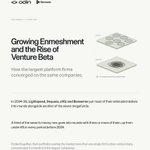
The largest VC firms are more frequently backing the same companies.
This research measures how alike the biggest platform firms have become: whetherthey back the same companies, enter the same rounds and follow each other’s picks.
Looking at dollar-weighted activity, they have converged sharply since 2023.
Growing Enmeshment and the Rise of Venture Beta
@JoinOdin x @harmonic_ai
research.joinodin.com/#/pape…

Bridgit Mendler (@bridgitmendler) hadn’t started a venture-backed company before @NorthwoodSpace.
Mike Annunziata (@nunzi46), Managing Partner of @CapitalAlso, backed the ground station problem her team was solving, and SpaceX engineers in his network agreed with that view.
When he introduced Northwood to @foundersfund and @a16z, that support took the pitch from “former Disney Channel star starting a space company” to “where do I wire?”
Full episode of Going Solo out now.

From an old dentist’s office in Palo Alto to this in less than 3 years
Legendary stuff happening at @NorthwoodSpace
Excited for @CapitalAlso to continue supporting @bridgitmendler and her exceptional team of ground nerds
A generational company in the making

Odin retweeted
A curious finding, as the dataset is extended to cover more M&A transactions:
While the methodology makes a real effort to control for scale, the focus on IPOs is likely to preference larger funds that require larger exits to drive DPI.
Despite that, debut funds and funds up to $25M are both significantly overrepresented in the top 10%.
The abruptness with which that Fund I edge falls away illustrates how bad most LPs are at deciding which managers will get to raise a Fund II.
Research indicates this is likely down to focusing on incremental (and potentially frothy) marks rather than making rational (bust costly) qualitative judgements about the underlying investments.

The Top 50 VC Firms
Ranked by the long-term value created by primary investments per dollar at risk.
The top 10:
1. @shv
2. @foundersfund
3. @iaventures
4. @gigafund
5. @Lowercase
6. @pelion_vp
7. @usv
8. @benchmark
9. @BessemerVP
10. @DFJvc
Read more: blog.joinodin.com/p/the-top-…

Odin retweeted

“Robots everywhere!”
More on that and other hot takes in my chat with @credistick and @JoinOdin 👇
It’s been 7 years since starting @CapitalAlso with @WillBruey and @Cfsocc, but we’re still having just as much fun as when we started
Mike Annunziata (@nunzi46) spent most of a decade on the LP side before making investments of his own.
He began at the Soros family office before moving on to the @Cornell endowment, where he learned how an institutional manager sets the bar for success.
Today, Mike is the founder of @CapitalAlso, a boutique hard tech fund which grew out of his angel investing alongside @WillBruey. Their early commitments include companies like @RadiantNuclear and @VardaSpace — where Bruey is now CEO.
In this conversation, he describes why @CapitalAlso answers around ten questions about enterprise value before it looks at technical risk, and why fundraising works like selling a luxury good.
He and @credistick get into processes for controlling groupthink, his formative experience with @DormRoomFund, and the introduction that helped @foundersfund understand (and invest in) portfolio company @NorthwoodSpace.
They finish on Mike’s advice to emerging managers to get into business early, and why his vision for the next decade is a Golden Age of Robotics.
Going Solo is Odin’s series talking to small and emerging managers in venture capital. Subscribe to catch future episodes:
linktr.ee/goingsolowithodin
0:00 Intro to Mike and Also Capital
1:24 From the Soros family office to the Cornell endowment
5:24 Where the bar sits for a new fund
6:00 Clearing an endowment's opportunity cost
7:31 Learning seed investing at Dorm Room Fund
11:43 Controlling groupthink in investment decisions
13:28 Why the best deals are contentious
14:22 Stories from Dorm Room Fund
16:28 Varda and the origins of Also Capital
20:07 Diligencing deep tech as a non-engineer
23:15 Using AI in technical diligence
25:34 Raising Fund 1 and Fund 2
30:34 Origination: Atlas and Northwood Space
35:48 The best advice for emerging managers
38:26 What the world looks like in 10 years
Odin retweeted
A great anecdote from this conversation is the story of @bridgitmendler and @NorthwoodSpace, and how it relates to the art of origination in VC.
@nunzi46 was the earliest investor in Northwood, and helped later investors understand the scope of the problem space, including getting input from engineers at @VardaSpace and @SpaceX.
The ability to recognise outlier opportunities and pull them into the venture-backed universe is why smaller firms like @CapitalAlso play a critical role as VC's discovery layer.
More on this topic in my article for @JoinOdin:
blog.joinodin.com/p/the-orig…
Mike Annunziata (@nunzi46) spent most of a decade on the LP side before making investments of his own.
He began at the Soros family office before moving on to the @Cornell endowment, where he learned how an institutional manager sets the bar for success.
Today, Mike is the founder of @CapitalAlso, a boutique hard tech fund which grew out of his angel investing alongside @WillBruey. Their early commitments include companies like @RadiantNuclear and @VardaSpace — where Bruey is now CEO.
In this conversation, he describes why @CapitalAlso answers around ten questions about enterprise value before it looks at technical risk, and why fundraising works like selling a luxury good.
He and @credistick get into processes for controlling groupthink, his formative experience with @DormRoomFund, and the introduction that helped @foundersfund understand (and invest in) portfolio company @NorthwoodSpace.
They finish on Mike’s advice to emerging managers to get into business early, and why his vision for the next decade is a Golden Age of Robotics.
Going Solo is Odin’s series talking to small and emerging managers in venture capital. Subscribe to catch future episodes:
linktr.ee/goingsolowithodin
0:00 Intro to Mike and Also Capital
1:24 From the Soros family office to the Cornell endowment
5:24 Where the bar sits for a new fund
6:00 Clearing an endowment's opportunity cost
7:31 Learning seed investing at Dorm Room Fund
11:43 Controlling groupthink in investment decisions
13:28 Why the best deals are contentious
14:22 Stories from Dorm Room Fund
16:28 Varda and the origins of Also Capital
20:07 Diligencing deep tech as a non-engineer
23:15 Using AI in technical diligence
25:34 Raising Fund 1 and Fund 2
30:34 Origination: Atlas and Northwood Space
35:48 The best advice for emerging managers
38:26 What the world looks like in 10 years
Mike Annunziata (@nunzi46) spent most of a decade on the LP side before making investments of his own.
He began at the Soros family office before moving on to the @Cornell endowment, where he learned how an institutional manager sets the bar for success.
Today, Mike is the founder of @CapitalAlso, a boutique hard tech fund which grew out of his angel investing alongside @WillBruey. Their early commitments include companies like @RadiantNuclear and @VardaSpace — where Bruey is now CEO.
In this conversation, he describes why @CapitalAlso answers around ten questions about enterprise value before it looks at technical risk, and why fundraising works like selling a luxury good.
He and @credistick get into processes for controlling groupthink, his formative experience with @DormRoomFund, and the introduction that helped @foundersfund understand (and invest in) portfolio company @NorthwoodSpace.
They finish on Mike’s advice to emerging managers to get into business early, and why his vision for the next decade is a Golden Age of Robotics.
Going Solo is Odin’s series talking to small and emerging managers in venture capital. Subscribe to catch future episodes:
linktr.ee/goingsolowithodin
0:00 Intro to Mike and Also Capital
1:24 From the Soros family office to the Cornell endowment
5:24 Where the bar sits for a new fund
6:00 Clearing an endowment's opportunity cost
7:31 Learning seed investing at Dorm Room Fund
11:43 Controlling groupthink in investment decisions
13:28 Why the best deals are contentious
14:22 Stories from Dorm Room Fund
16:28 Varda and the origins of Also Capital
20:07 Diligencing deep tech as a non-engineer
23:15 Using AI in technical diligence
25:34 Raising Fund 1 and Fund 2
30:34 Origination: Atlas and Northwood Space
35:48 The best advice for emerging managers
38:26 What the world looks like in 10 years
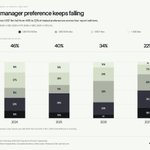
Across four annual @Intralinks LP surveys, the preference for managers >$1B AUM has fallen from 46% to 22%, and the >$5B bucket has fallen from 19% to 5%.
Meanwhile, LP preference for <$100M managers has tripled since last year's survey, to 18%.
Check out the latest survey:
ssctech.com/blog/alternative…

Of the top 10 funds in our ranking, five are debut funds from new firms:
- @Techstars Bullet Time Fund I
- @Lowercase Fund I
- @FirstMarkCap Fund I
- @Initialized Fund I
- @iaventures Fund I
Of the remaining five, @foundersfund and @firstround are in the ranking with a Fund II, and @foundersfund Fund III also makes the cut.
TL;DR — Almost all of the top-performing funds were emerging managers and half were new managers.

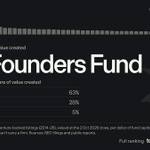
Top 5 VC firms by value/$
█████ 11.6× — @shv
█████ 11.2× — @foundersfund
████ 10.0× — @iaventures
████ 9.1× — @gigafund
███ 8.8× — @Lowercase
Median: 1.0× · top50.joinodin.com View article

In previous articles we've covered the outperformance of emerging managers:
blog.joinodin.com/p/venture-…
This analysis includes data from @ColibriInst, @Open_LP, @PitchBook, @stepstonegroup, @team8group and more.
Clearly, there's a strong argument for LPs to maintain exposure to the emerging part of the market and promising Fund I managers.

3
200
Odin retweeted

@JoinOdin's Top 50 VC firms ranking: portfolio IPOs since 2014, long-term value per dollar deployed, primary checks only, and a penalty for one-hit wonders.
Check out the full Top 50 report, which breaks down methodology, data sources, robustness checks, top firms, top funds, and top companies:
Get it here: top50.joinodin.com


"When you realise that different people have different ways of approaching problems, then they can work together — because we are all natural explorers."
💜 @OpenRouter

The biggest lie in AI is that the future belongs to one winner.
Every technology wave starts with one company promising that one walled garden is all you'll ever need. And every time, market forces and creativity break the walls down.
I cofounded OpenSea and now OpenRouter around the opposite bet: humanity will refuse to be locked in.
Intelligence was never meant to belong to one lab, one model, or one gatekeeper.
The future of AI is open, plural, and yours to choose.
3
290
Top 5 VC firms by value/$
█████ 11.6× — @shv
█████ 11.2× — @foundersfund
████ 10.0× — @iaventures
████ 9.1× — @gigafund
███ 8.8× — @Lowercase
Median: 1.0× · top50.joinodin.com View article