

Using Microbiology and Bioinformatics to discover how the bacteria that live in our mouth impact health and disease. Tweets my own.
Oregon Health & Science Univ.
Joined November 2020
- Tweets302
- Following322
- Followers689
- Likes759



Oral Microbiology and Immunology 4th Edition is out (ASM Press; ISBN: 978-1-683-67511-2). I wrote Chapter 9: From Bacterial Genetics to Genomics! Many thanks to the Editors for the honor of contributing! #microbiology #dentistry
wiley.com/en-us/shop/general…
New publication in collaboration with the Pfeifer Lab at OHSU. We identified commercially available drugs capable of inhibiting GtfC, a critical enzyme for biofilm initiation and cohesion by the pathogen, Streptococcus mutans. #microbiology #dentistry
nature.com/articles/s41522-0…

Big week for our lab, another publication is out!
In this article, we make the case that #dentistry has a strategic position in the fight against antibiotic resistance, yet is under-leveraged because of shortcomings and inertia in policy and education.
journals.asm.org/doi/10.1128…

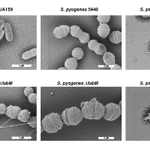
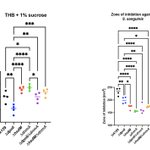
New Publication! Loss of de novo monounsaturated fatty acid biosynthesis impacts membrane homeostasis and stress tolerance in S. mutans, S. pyogenes, and S. pneumoniae--important pathogens that cause disease at different body sites. #microbiology
journals.asm.org/doi/10.1128…


OHSU published an article about my lab's research!
#microbiology #dentistry #bioinformatics
news.ohsu.edu/2026/05/05/ohs…

Jonathon Baker, Ph.D. retweeted

"This is the first synthetic species,” microbiologist J. Craig Venter told 60 Minutes’ Steve Kroft in 2010. His team of scientists created a synthetic bacteria designed on a computer, with man-made DNA. Venter says that from concept to completion, it took 15 years and $40 million to make.
Venter, who died this week at 79, was one of the most famous scientists in the world, known for his pioneering work in deciphering the human genetic code.
J. Craig Venter (1946-2026)
Polarizing, but an absolute science rock star who drove some of the most significant scientific accomplishments in my lifetime. Forever grateful and proud to have spent 5 formative years learning #bioinformatics while working for
@JCVenterInst


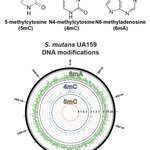
New preprint! Using cutting edge epigenomics, we comprehensively identified DNA methylation in the model oral pathogen Streptococcus mutans UA159 and uncovered its three distinct sources. #microbiology #dentistry
biorxiv.org/content/10.64898…
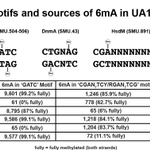
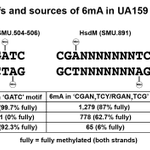
We found methylation in UA159 at:
1️⃣ GATC via DpnII
2️⃣ CGANNNNNNNTCY via HsdM (previously unstudied in S. mutans)
3️⃣ CTGNAG via DnmA—both the gene and motif were discovered in this study
Deletion of any of these systems resulted in a complete loss of the cognate methylation.


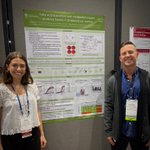
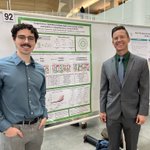
Congratulations to our NIH R25 DORS Intern Sadie Drucker who presented her research this week at the International Association for Dental Research conference in San Diego, and is a Finalist for the Cariology Research Group Student Research Award! Way to go Sadie! #microbiology

Matthew Barbisan and Mingzhe Guo did a great job presenting some of their research in our lab at OHSU School of Dentistry Research Day 2026! #microbiology #dentistry


Today at the OHSU School of Dentistry AI in Research Symposium, I presented that AI is a major driver of advances in third-generation sequencing technologies (e.g., Nanopore and PacBio). Our lab is using Nanopore sequencing to study DNA/RNA modifications in oral bacteria.

Epigenomics and epitranscriptomics, the next revolution enabled by third-generation sequencing. Our lab used nanopore sequencing to characterize the epigenome of the model pathogen Streptococcus mutans UA159 at single-nucleotide resolution, revealing 3 types of methylation.


New publication! In this intra-departmental collaboration, we report phenotypic and genotypic differences between species of oral Corynebacteria.
#microbiology #dentistry
journals.asm.org/doi/10.1128…

Very pleased to share that our recent article in Nature Communications was selected for the Editor's Highlights, which aims to showcase the 50 best papers recently published in the area of #microbiology & infectious diseases! @JWVeening @vincentdebakker
nature.com/collections/jedgc…

New Publication! In collaboration with Jan-Willem Veening at Univ. de Lausanne, we used multi-omics to examine the response of Streptococcus pneumoniae to infection-mimicking conditions, discovering a novel regulator of membrane fatty acid composition.
nature.com/articles/s41467-0…
