

Father, Husband, Marketing Leader, Scotch Lover, tech enthusiast. Working to understand this complex thing we use on a daily basis. Thoughts are my own.
Fort Lauderdale
Joined April 2009
- Tweets1.5K
- Following547
- Followers516
- Likes54




I've worked with a lot of challenger brands throughout my career, and there's a reason I still love working with them.
They're willing to push the envelope.
They question the usual approach. They're open to trying something different. And they're often willing to take a calculated risk because they know doing what everyone else is doing won't necessarily get them where they want to go.
Challenger brands may not have the biggest budgets, but they can make up ground with sharper strategy, creative thinking and a willingness to test new ideas. Some of my favorite work has come from that kind of environment.
And it's still one of the reasons I enjoy what I do today.
Most businesses will tell you they know their audience... but how well do they *really* know them?
Have you done the research? Built detailed audience profiles? Looked beyond your existing customer base to understand who else might benefit from what you offer?
Because there may be an entire segment of potential customers you haven't considered. People who would connect with your brand, but who aren't represented in your current data or assumptions.
That's why I think audience profiling is such an important part of a growth strategy.
You can't build a meaningful plan to reach new customers if you don't understand who those customers might be. If you're looking to uncover new audience opportunities for your business, that's something we'd be happy to help with at JSB Media.
One thing I'm particularly proud of at JSB Media is how much we value long-term relationships. With our clients, of course. But also within our own team.
I believe team stability creates something that's difficult to replicate: institutional knowledge.
When people stay close to a business over time, they understand the history, the customers, the challenges, what we've tried, what worked, and what didn't. We're not trying to build an agency around constantly changing teams or chasing the next short-term opportunity. We're investing in relationships and knowledge that compound over time.
For me, that's a much better way to build a business — and a much better way to serve our clients.
I don't think AI is going to replace human work. If anything, I think it's going to give great creative thinkers more tools to work with.
AI can help you move faster, explore more ideas, test concepts, and get from an initial thought to something tangible much more quickly.
But it can't replace the ability to think big. If your starting point is a small idea, having a faster tool doesn't necessarily make it a better one.
That's why I think AI is particularly interesting for independent agencies. We're already used to thinking outside the box, challenging assumptions, and finding ways to do more with less.
It’s easy to spend a lot of money on media and never really move the needle.
The difference is strategy.
With the right allocation, targeting and optimization, media can do more than generate impressions. It can put your brand in front of the right people and turn those connections into real business.
At JSB Media, we’re a team of fiercely strategic problem solvers and planners. Our job is to make your media budget work harder.
One of my favorite parts of marketing is how much we get to learn about people. We spend our days looking at customer behavior and trying to understand what’s behind it. Even after years in this industry, I still get so energized by putting that information together and figuring out what it means for a business.
This Marketing Week article makes a good point about taking that perspective into conversations across the company. What we learn about customers can help inform product decisions, improve the sales process, or spot an opportunity that deserves a closer look.
That’s a big part of how the JSB team works and collaborates with our partners. We want to understand the business well enough to contribute to those conversations, even when they fall outside the immediate campaign.
The more context we have, the better we can help our clients grow. marketingweek.com/marketers-…

In my humble opinion, marketers need to get more comfortable walking away from vanity metrics.
Impressions and engagement are useful, but those things shouldn't be the ultimate definition of whether marketing is working.
Instead, we should look at whether marketing is helping the business achieve its goals. Are we increasing conversions and growing revenue? Creating demand that turns into something tangible?
Those are the metrics I want to see.
Really enjoyed joining Bant on a recent episode of @theuncagedshow
We covered a lot of things that are top of mind for JSB right now, especially why traditional advertising metrics don't always tell the full story of a campaign's success
Thanks again to Bant and team for having me! You can listen to our full convo at this link:
open.spotify.com/episode/0yw…

"Let's not really be defined by scope. Let's really just say 'Hey let's do whatever we need to do to achieve the results for the clients." @JSBratter, Founder & CEO of JSB Media, shares how indie agencies can differentiate themselves by offering a targeted service offering.
I recently joined Bant Breen for an episode of the UNCAGED podcast where I got to talk more about some of my marketing "hot takes."
One of those takes being whether or not traditional, standard advertising metrics are actually telling brands what they need to know. Where most people would say yes, mostly. I say sometimes, but not always.
There's no shortage of numbers in marketing, but more data doesn’t automatically mean better marketing decisions.
And if those numbers are the only thing you're focused on, you might have already lost the plot.
The important thing is that you're generating meaningful growth for the business. Vanity metrics are important and helpful, but they're only one piece of the puzzle.
If you want to hear more of my hot takes, check out the full convo here: open.spotify.com/episode/0yw…

Why would you pay for search real estate when you can just do it organically for free?
Maybe a bit blunt, but it’s a fair question.
Organic search should absolutely be part of a strong marketing strategy. But the problem is that you’re not competing with just a handful of results anymore.
If you've looked up anything recently, you'll quickly see that search pages are crowded. There are competitors, AI-generated answers, and an endless number of other things competing for attention. That’s where paid search comes in. A strategically placed paid ad gives your brand an opportunity to appear exactly when someone is actively looking for something you offer.
If you're looking for more details on how to integrate paid search into your brand strategy, reach out to us at JSBMedia: jsbmedia.io/paid-search/
Happy National Coffee Day to all who celebrate! If you know me, you know I’m rarely far from a cup of coffee. If I don’t have one nearby, that’s probably a bad sign.
It's something that's been part of my mornings and afternoons for as long as I can remember, so I thought I’d share what a typical weekday coffee schedule looks like at the Bratter household...☕
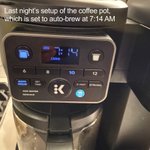
The coffee maker is set to brew at 7:14 AM.
I had initially picked that time by accident, but it turned out to be perfect. I walk my son to the bus stop for pickup at 7:20, so by the time I get back inside, the coffee’s ready.
Three mornings a week, I head to the gym before work. I have my first cup while catching up on emails, then pour two more into a tumbler for the drive there and back.
I drink it hot and black, usually from a mug with one of my kids’ school or sports photos on it. Yes, I’m one of those parents who gets a mug made whenever the kids have photos taken. And yes, I’m proud of it.
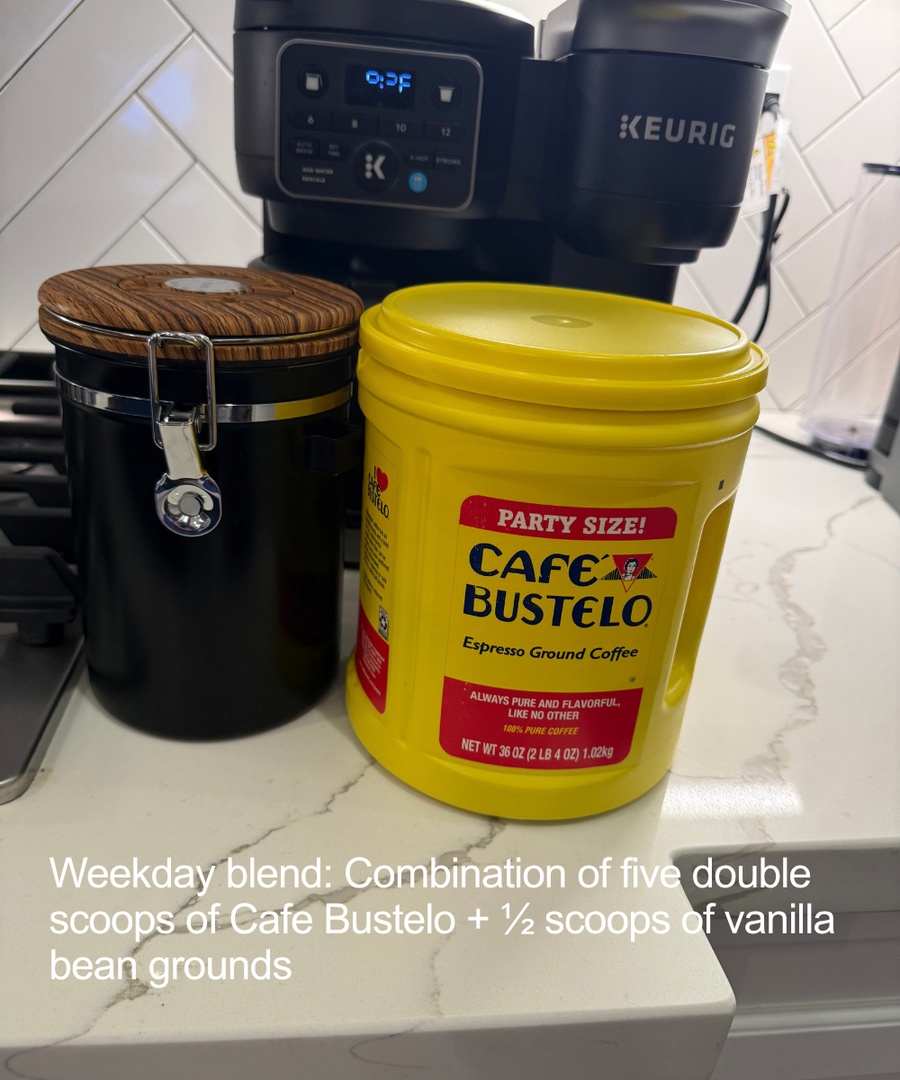
I like my coffee strong, so our weekday pot starts with five double scoops of Café Bustelo. We add a scoop and a half of vanilla bean coffee to mellow it out a bit for my wife. On weekends, it’s Illy. And as you can see, I get through quite a bit before 10:45.
That's my day-in-the-life, powered by coffee.☕



DAMDaryl was born from a pretty simple observation: finding and organizing creative assets is important, but finding a file is rarely given the same attention as making a major marketing decision.
And yet, asset management remains central to nailing creative... so what now? That’s where we saw an opportunity with DAMDaryl, an AI-powered digital asset management tool.
Instead of putting the asset library behind another chatbot, Daryl is built directly into the library. The goal is to make the assets themselves more useful by helping teams move from managing creative to making better decisions with it. damdaryl.ai/

I wholeheartedly believe marketing is a combination of art and science.
We have more data and tools than ever, but none of that changes the fact that creative is what ultimately gives people a reason to pay attention. One of my mentors, Jim Poe, always pushed the idea that we should lead with creative.
At JSB Media, we’re a media agency, so data and science are a huge part of what we bring to the table. But I don’t think media should exist in a vacuum.
If a creative partner has a great idea, our job is to bring the data that can help make that idea work harder. Who should see it? Where? What do we know about the audience that can make the idea more relevant?
Media can get you the attention, but creative is what can make that attention matter.
There’s no single solution that makes a brand stand out. It takes the right combination of data, creativity and media, but many people don't realize that how those pieces come together should look different for every business.
At JSB Media, we start by understanding the business and the customer. From there, we build the right mix of strategy, media, data and creative thinking to reach people in a way that actually connects. The best marketing strategy is the one built around the business it’s supposed to grow.
The point is that there isn’t a copy-and-paste formula.
One of the things we talk about a lot at JSB Media is being problem solvers.
That sounds simple, but I think it's one of the most important skills an agency can have.
Marketing rarely goes exactly according to plan. There are always a million things that can go sideways, and the easy response is to explain why something didn't work. The better response is to start solving the problem.
We're not emotionally attached to a particular tactic because our sole focus is to find an answer.
For a lot of travelers, Reddit has become a go-to resource.
The reason is pretty simple: people want recommendations that are specific to them. Not "10 things to do in Paris," but "I'm going to Paris for three days with my kids, I don't want to spend a fortune, and I like food more than museums. What should I actually do?"
That kind of recommendation is so valuable because it comes from people who have done it themselves.
For travel marketers, that's a difficult experience to replicate. But I think AI creates an opportunity.
What if destinations and travel brands could combine their expertise with AI tools that understand the context behind someone's trip and provide recommendations that actually feel personalized? forbes.com/councils/forbesco…

One of the reasons I started JSB Media was because I wanted to build a different kind of agency relationship.
Holding companies bring a tremendous amount of value and scale to many brands. But I also believe there is a real advantage to having an independent team that can roll up its sleeves and get involved in the business.
When we take on a business, our biggest question is, "What does this business actually need from us to succeed?"
That's how I think an agency earns a seat at the table. At JSB Media, we want to understand the business well enough to help shape the plan, and then do whatever it takes to make it work.
If you haven't seen this trend hit your TikTok home page, "lore-tripping" is the latest Gen Z travel trend.
Instead of traveling exclusively to the biggest tourist destinations, people are seeking out smaller towns and lesser-known places because of the stories behind them. Gen Z is also more conscious of the cost of travel, and smaller cities can often offer a more accessible trip without sacrificing the experience.
The best part is that these destinations don't need massive tourism campaigns to compete for attention. TikTok and other social platforms are already helping people discover places they wouldn't have thought to search for.
For smaller destinations, this is a good reminder that you just need to tell the story you already have.
At JSB Media, we try to stay conscious of not becoming too attached to our own ideas.
Some ideas work incredibly well. Others look great on paper and completely miss the mark once they meet the real world... and that's okay.
I actually think the willingness to throw away a good idea is one of the more important skills in marketing. It's easy to become invested in something you've spent weeks developing. But if something tells you it's not working, continuing to defend it doesn't make the strategy better.
Our goal is to find what works for our clients, and sometimes that will take more than one try. thedrum.com/opinion/spiro-ex…

One of the challenges with connecting marketing performance to business results is accepting that not everything can be measured perfectly.
We have more data and more sophisticated measurement capabilities than ever before, but it's still not the whole picture. At some point, you have to trust your understanding of the customer and your instinct about what feels right for the brand.