

frontier explorer ⛵️
Singapore
Joined August 2019
- Tweets126
- Following582
- Followers528
- Likes1.8K





jules retweeted

Panel 02 · Autonomous Agents & Sovereignty
Moderated by our @HYS_target with @Gwenole_M (@BNBChain), @julio4__ (Flashbots) and @Henryleemr (@GoKiteAI)
If agents go mainstream in 2 years, where's the moat: the model, or the agent's wallet and identity?


jules retweeted

隐私是自由
隐私是秩序
隐私是进步
vitalik.eth.limo/general/202…
I'll join Agentic Summit during ETH Tokyo week by @NyxFoundation @wecandaoit
we'll talk about what does it means for agents to transact on behalf of the users, from initial intent to included transaction.
teapawt.org/NyxFoundation/status/2…

【登壇者紹介】
Jules Doumeche 氏
Flashbots Software Engineer
「When Agents Transact(英語セッション)」
エージェント取引が生むリスクにどう対処するか。
▼Agentic Summit 2026
AIエージェント経済の信頼インフラを議論する一日
9/23(水) 東京大学 伊藤謝恩ホール
luma.com/a3k78jbq

1
7
479
These sponsored agents are all fun and games until they start injecting ads directly in your context
1
142
slowly reaching the agents -> direct web tools instead of parsing dom ui elements.
next step frontend become optional as long as it serves state/tools to agents -> automatic frontend generations for clients. True adaptive UIs without separate mcp/apis
2
193

Good opportunity to burn some tokens testing some harness tweaks for a good cause
sagebio-rare-disease-real-ki…

1
130
jules retweeted
Two years ago, I wrote this post on the possible areas that I see for ethereum + AI intersections: vitalik.eth.limo/general/202…
This is a topic that many people are excited about, but where I always worry that we think about the two from completely separate philosophical perspectives.
I am reminded of Toly's recent tweet that I should "work on AGI". I appreciate the compliment, for him to think that I am capable of contributing to such a lofty thing. However, I get this feeling that the frame of "work on AGI" itself contains an error: it is fundamentally undifferentiated, and has the connotation of "do the thing that, if you don't do it, someone else will do anyway two months later; the main difference is that you get to be the one at the top" (though this may not have been Toly's intention). It would be like describing Ethereum as "working in finance" or "working on computing".
To me, Ethereum, and my own view of how our civilization should do AGI, are precisely about choosing a positive direction rather than embracing undifferentiated acceleration of the arrow, and also I think it's actually important to integrate the crypto and AI perspectives.
I want an AI future where:
* We foster human freedom and empowerment (ie. we avoid both humans being relegated to retirement by AIs, and permanently stripped of power by human power structures that become impossible to surpass or escape)
* The world does not blow up (both "classic" superintelligent AI doom, and more chaotic scenarios from various forms of offense outpacing defense, cf. the four defense quadrants from the d/acc posts)
In the long term, this may involve crazy things like humans uploading or merging with AI, for those who want to be able to keep up with highly intelligent entities that can think a million times faster on silicon substrate. In the shorter term, it involves much more "ordinary" ideas, but still ideas that require deep rethinking compared to previous computing paradigms.
So now, my updated view, which definitely focuses on that shorter term, and where Ethereum plays an important role but is only one piece of a bigger puzzle:
# Building tooling to make more trustless and/or private interaction with AIs possible.
This includes:
* Local LLM tooling
* ZK-payment for API calls (so you can call remote models without linking your identity from call to call)
* Ongoing work into cryptographic ways to improve AI privacy
* Client-side verification of cryptographic proofs, TEE attestations, and any other forms of server-side assurance
Basically, the kinds of things we might also build for non-LLM compute (see eg. my ethereum privacy roadmap from a year ago ethereum-magicians.org/t/a-m… ), but for LLM calls as the compute we are protecting.
# Ethereum as an economic layer for AI-related interactions
This includes:
* API calls
* Bots hiring bots
* Security deposits, potentially eventually more complicated contraptions like onchain dispute resolution
* ERC-8004, AI reputation ideas
The goal here is to enable AIs to interact economically, which makes viable more decentralized AI architectures (as opposed to non-economic coordination between AIs that are all designed and run by one organization "in-house"). Economies not for the sake of economies, but to enable more decentralized authority.
# Make the cypherpunk "mountain man" vision a reality
Basically, take the vision that cypherpunk radicals have always dreamed of (don't trust; verify everything), that has been nonviable in reality because humans are never actually going to verify all the code ourselves. Now, we can finally make that vision happen, with LLMs doing the hard parts.
This includes:
* Interacting with ethereum apps without needing third party UIs
* Having a local model propose transactions for you on its own
* Having a local model verify transactions created by dapp UIs
* Local smart contract auditing, and assistance interpreting the meaning of FV proofs provided by others
* Verifying trust models of applications and protocols
# Make much better markets and governance a reality
Prediction and decision markets, decentralized governance, quadratic voting, combinatorial auctions, universal barter economy, and all kinds of constructions are all beautiful in theory, but have been greatly hampered in reality by one big constraint: limits to human attention and decision-making power.
LLMs remove that limitation, and massively scale human judgement. Hence, we can revisit all of those ideas.
These are all things that Ethereum can help to make a reality. They are also ideas that are in the d/acc spirit: enabling decentralized cooperation, and improving defense. We can revisit the best ideas from 2014, and add on top many more new and better ones, and with AI (and ZK) we have a whole new set of tools to make them come to life.
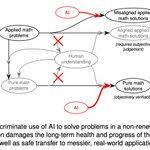
We can describe the above as a 2x2 chart. There's a lot to build!

Flashbots just open-sourced rblib, a Rust SDK for Ethereum block building!
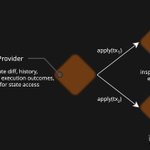
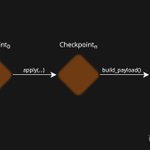
rblib is designed around 2 APIs: a low-level Payload API for constructing and inspecting block payloads and a high-level Pipeline API for defining building workflows.
Here's an overview of rblib's payload API🧵

If you want to check how this translates in code, check the basic examples in the repository at github.com/flashbots/rblib

1
10
888
You can also learn more about the Pipeline API, which allows you to create declarative, composable workflows. @0xOptimus wrote a great article on it:
x.com/0xOptimus/status/19763…
You’re unable to view this Post because this account owner limits who can view their Posts. Learn more
1
7
1,045