

El problema no es mi IQ, es mi escoba. Neurodivergente, ADHD, periodista.
Joined August 2007
- Tweets14.8K
- Following492
- Followers906
- Likes18.6K


You cannot celebrate the audience when it delivers ratings and dismiss it when it delivers criticism. Viewers are not just numbers on a spreadsheet. They're the people your entire business depends on, let me tell you why:
Ratings drive commercial decisions. That’s undeniable. But ratings tell us how many people watched a show, not how well its story was told.
Repeating the same formulas because audiences keep watching, then claiming “this is what viewers want,” seems a rather convenient way to avoid asking harder questions.
And let’s address another assumption: star power is no longer a guarantee of success. A stellar cast may attract an audience, but it’s the storytelling that gives viewers a reason to stay. Great actors cannot indefinitely compensate for weak character development, repetitive conflicts, or narratives that have lost their direction.
Where is the creative responsibility of broadcasters and producers? Are excessively long episodes, unnecessarily prolonged storylines, and endlessly delayed narrative payoffs somehow beyond scrutiny?
And yes, perhaps it’s uncomfortable to acknowledge, but storytelling and the economics of television are two different conversations. Both matter, and neither should be used to dismiss the other.
Of course television is a business. But being a business doesn’t exempt its business model—or its product—from criticism.
And broadcasters would do well to remember something fundamental: every time viewers turn on their televisions, they have the power to make or break a show. After all, isn’t the customer always right?
Ratings tell us what people watch. They don’t tell us why they watch, how satisfied they are, or whether the storytelling has earned their attention.
@KanalD @nowtvturkiye @startv @ShowTV @TvDunyasii

Dizi sektöründe her geçen gün büyüyen reklam krizi sonrası herkes aynı şeyi söylüyor; "Konu sadece reklam değil, aynı şeyleri izlemekten bıktık..."
Bu haklı bir eleştiri gibi görünse de reyting ölçümleriyle belirlenen sistemin gerçekleriyle örtüşmüyor.
Şimdiye kadar ne güzel, ne özel kadrolu diziler çekildi ama çoğu ekranda ya tutunamadı ya da ömrü çok uzun olmadı.
Özetle kaliteli içerik sayısı çekilmediğinden değil, ekranda tutunamadığından az...
Reyting ölçümlerinde seyircinin seçimi ne yöndeyse yapımcı onu çekiyor. Kanal da onu yayınlıyor. Sonuçta bu bir ticaret!
I don't need the writer to agree with my criticism. I need her not to mistake criticism for a failure to understand her story.
Everything stays in the internet, 😂
#UzakŞehir
@ayyapim


P.S.
Making your characters suffer isn't the same as making your story grow.
But you got the numbers, right?
@Uzaksehirdizi @ayyapim
#UzakŞehir
1
4
259
Turkish broadcasters seem increasingly eager to cast advertisers as the Big Bad Wolf. An interesting choice, considering the wolf has been paying the bills. 😂
2
4
627
Jumex 🇲🇽🇺🇦 retweeted
Blaming advertisers for abandoning your business model is an interesting strategy when your business model depends on advertisers.
Perhaps the problem isn't that brands have stopped understanding television. Perhaps television has stopped understanding its customers.
#justsaying
Türk televizyon sektörü krizde. Görünüşe göre çözüm, iş modeline dokunmadan herkesi daha ucuza çalıştırmak.
Oyuncular ücretlerinde indirime gitmeli. Yapım bütçeleri kısılmalı. Set ekiplerinden daha az kaynakla daha fazlasını yapmaları beklenmeli.
İlginç. Peki, reklamverenlere sormayı düşünen oldu mu?
Markalar gerçekten daha mı az harcıyor, yoksa bütçelerini başka mecralara mı kaydırıyor? Televizyon reytingleri hâlâ reklamverenler için anlamlı bir yatırım getirisi sağlıyor mu? Ve dünya çapında izleyiciye ulaşan bir sektör, neden hâlâ iç pazardaki reklam gelirlerine bu kadar bağımlı?
Çünkü reklam sektöründeki bir krizle, reklamverenlerin uzaklaşmaya başladığı bir televizyon iş modeli arasında oldukça önemli bir fark var.
Oyunculardan ve set çalışanlarından sektörün ayakta kalmasının bedelini ödemelerini istemeden önce, belki de finansal kararların nasıl alındığını sorgulamanın zamanı gelmiştir.
Personel giderlerini iş modelinizmiş gibi ele alarak bir iş modeli krizini çözemezsiniz.
#TürkDizileri #dizi
“Güneşi Doğduğu Yer” dizisinin oyuncularından indirim dayanışması
♦️Televizyon dünyasında yaşanan reklam krizi nedeniyle kanallar yapım şirketlerinden bütçelerini düşürmelerini istedi, şirketler de tek tek ekiplerinden indirim istemeye başladı. “Haysiyet” dizisinden yüzde 15 indirim istendi, ardından peş peşe tüm yapımcılar yüzde 30’a kadar ekiplerine indirim teklifinde bulundu. “Muhtemel Aşk” ekibinin yüzde 10 indirim yapacağı konuşuluyor.
“TEKNİK EKİPTEN DEĞİL, BİZDEN İNDİRİM YAPILSIN”
♦️Kulis söylentilerine göre yaklaşık bölüm başı 38 milyon TL ile en yüksek bütçeli diziler arasında yer alan “Güneşin Doğduğu Yer” dizisinin oyuncuları bu konuda taşın altına ellerini koymaya hazır olduklarını paylaştıkları fotoğrafla duyurdu.
♦️Dizinin Demir Leydi’si Celadet Kozan’a hayat veren Sibel Taşçıoğlu oğullarına hayat veren Burak Özçivit ve Muharrem Türkseven’le birbirlerine sarıldıkları fotoğrafı paylaştı ve İzel’in “Biz hep böyleyiz” şarkısı eşliğinde dayanışma içinde olduklarını gösterdi. Üç oyuncunun da yapım şirketi TimsBi'ye “İndirimi teknik ekip değil biz yaparız” dediği öğrenildi. 👇
birsenaltuntas.com/dizi/gune…

6
681
Turkish television is in crisis. Apparently, the solution is to make everyone cheaper—except the business model.
Actors should take pay cuts. Productions should slash budgets. Crews should somehow do more with less.
Interesting. But has anyone thought to ask the advertisers?
Are brands actually spending less, or simply spending elsewhere? Are television ratings still translating into meaningful returns? And why is an industry with a global audience still so vulnerable to the economics of domestic advertising?
Because there's a rather inconvenient distinction between an advertising crisis and a television business model that advertisers are moving away from.
Before asking actors and crews to pay for the industry's survival, perhaps it's time to examine the people making the financial decisions.
You cannot solve a business model crisis by treating payroll as the business model.
#Dizi #UzakŞehir
“Güneşi Doğduğu Yer” dizisinin oyuncularından indirim dayanışması
♦️Televizyon dünyasında yaşanan reklam krizi nedeniyle kanallar yapım şirketlerinden bütçelerini düşürmelerini istedi, şirketler de tek tek ekiplerinden indirim istemeye başladı. “Haysiyet” dizisinden yüzde 15 indirim istendi, ardından peş peşe tüm yapımcılar yüzde 30’a kadar ekiplerine indirim teklifinde bulundu. “Muhtemel Aşk” ekibinin yüzde 10 indirim yapacağı konuşuluyor.
“TEKNİK EKİPTEN DEĞİL, BİZDEN İNDİRİM YAPILSIN”
♦️Kulis söylentilerine göre yaklaşık bölüm başı 38 milyon TL ile en yüksek bütçeli diziler arasında yer alan “Güneşin Doğduğu Yer” dizisinin oyuncuları bu konuda taşın altına ellerini koymaya hazır olduklarını paylaştıkları fotoğrafla duyurdu.
♦️Dizinin Demir Leydi’si Celadet Kozan’a hayat veren Sibel Taşçıoğlu oğullarına hayat veren Burak Özçivit ve Muharrem Türkseven’le birbirlerine sarıldıkları fotoğrafı paylaştı ve İzel’in “Biz hep böyleyiz” şarkısı eşliğinde dayanışma içinde olduklarını gösterdi. Üç oyuncunun da yapım şirketi TimsBi'ye “İndirimi teknik ekip değil biz yaparız” dediği öğrenildi. 👇
birsenaltuntas.com/dizi/gune…
2
521

After 72 episodes, perhaps the grandest love story Uzak Şehir needs to repair isn't Alya and Cihan's. It's the one between the writers and their audience.
The plot holes are enormous and what happened with Deniz kind of make me nauseous, to be honest. Good for Cihan for telling the truth about Ecmel.
And the only word that I can feel and think is amends.
Personally, I'm not buying much of it anymore.
#UzakŞehir
@ayyapim

#UzakŞehir I 73. Bölüm 1. Tanıtım
“Benim kalbimin sadece tek bir kişiye ait olduğunu bilmek zorunda…”❤️🔥
#UzakŞehir yeni bölümüyle pazartesi 20.00’de #KanalD’de!
@ayna_yapim @ayyapim @KanalD
Türk televizyon sektörü artan yapım maliyetleri, düşen reytingler ve dijital platformların giderek güçlenen rekabetiyle mücadele ederken, önemli bir soru hâlâ ortada duruyor: Seyircinin ekran başından uzaklaşmasında hikâye anlatıcılığının rolü ne?
Bir zamanlar dünya çapında telenovela sektörünün öncülerinden biri olan Meksika'nın deneyiminden yola çıkan bu yazı; şok etkisi yaratmaya yönelik olayların, sürekli tekrarlanan çatışmaların ve anlatıdaki tutarsızlıkların karakter gelişimini ve seyircinin hikâyeye duyduğu güveni nasıl zedelediğini inceliyor.
Türk televizyonunun en başarılı dizilerinden örneklerle, ticari başarının her zaman iyi hikâye anlatıcılığı anlamına gelmediğini savunuyor.
Asıl soru seyircinin değişip değişmediği değil, Türk televizyonunun seyirciye izlemeye devam etmesi için yeterli neden sunacak kadar gelişip gelişmediği.
#dizis
@ayyapim
@KanalD
@OGMPictures
@nowtvturkiye
@timsbitv
@startv
@ngmediatv
@atvcomtr

Türk dizileri kriz yaşıyor. Peki mesele gerçekten para ve reytingler mi, yoksa hikâye anlatıcılığı mı? Şok, karakter gelişiminin yerini alıyor; çatışmalar tekrarlanıyor, seyirci uzaklaşıyor. Tanıdık bir soruna Meksikalı bir bakış.
#Senaryo #UzakŞehir #Dizi

4
615
Türk dizileri kriz yaşıyor. Peki mesele gerçekten para ve reytingler mi, yoksa hikâye anlatıcılığı mı? Şok, karakter gelişiminin yerini alıyor; çatışmalar tekrarlanıyor, seyirci uzaklaşıyor. Tanıdık bir soruna Meksikalı bir bakış.
#Senaryo #UzakŞehir #Dizi
As Turkey's television industry confronts rising production costs, declining ratings, and growing competition from streaming platforms, one critical question remains: what role does storytelling play in driving audiences away?
Drawing on Mexico's experience as a former global telenovela powerhouse, this essay examines how an increasing reliance on shock, recycled conflicts, and narrative inconsistency can undermine character development and audience trust. Through examples from successful Turkish dizis, it argues that commercial success and compelling storytelling are not necessarily the same thing.
The question isn't whether audiences have changed, but whether Turkish television has evolved enough to give them a reason to stay.
#dizis @ayyapim @KanalD @OGMPictures @nowtvturkiye @timsbitv @startv @ngmediatv @atvcomtr
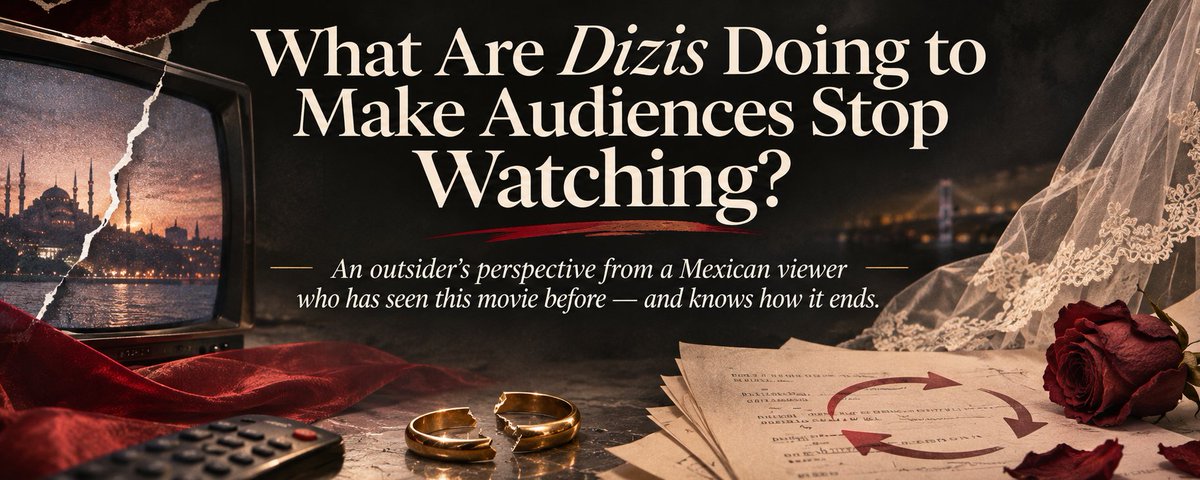
Turkish dizis have a crisis.
But is it really about money and ratings, or about storytelling? Shock replaces evolution, conflicts repeat, and audiences walk away. A Mexican perspective on a familiar problem.
#Dizis #UzakSehir #Storytelling #yargi
11
427
Turkish dizis have a crisis.
But is it really about money and ratings, or about storytelling? Shock replaces evolution, conflicts repeat, and audiences walk away. A Mexican perspective on a familiar problem.
#Dizis #UzakSehir #Storytelling #yargi
Apparently, the screenplay wants us to experience Alya’s desperation as she tears everything apart looking for the recording that could clear her name. #tantrum
Fine. Desperation is understandable.
But here’s my question: is the writing exploring Alya’s vulnerability, or stripping her of competence so Cihan can swoop in and save the day? Again.
After 71 episodes, watching an intelligent, capable woman reduced to yet another emotional meltdown while the male lead gets to be the strategist is starting to feel less like character development and more like a recurring production meeting.
There’s a difference between showing a woman at her breaking point and repeatedly making her helpless to move the plot forward.
At this point, I’m not questioning Alya’s intelligence.
I’m questioning why the writers seem so determined to keep it off-screen.
#UzakŞehir @ayyapim @Uzaksehirdizi @cataykerem78
#UzakŞehir I 72. Bölüm 2. Tanıtım
“Cihan ne olur benimle kal!” 😳
#UzakŞehir yeni bölümüyle pazartesi 20.00’de #KanalD’de!
@ayna_yapim @ayyapim @KanalD
For me, the breaking point was Boran's resurrection.
I think we're getting closer to identifying where our perspectives meet, even if we're approaching the problem from different angles. And personally, I appreciate the opportunity to understand and learn from your perspective.
Before that, I could follow Alya's internal conflict, her resistance, her reasoning, and her gradual confrontation with a world she had never chosen to inhabit. Even the way she handled the Mine debacle at the beginning of Season 2 gave us something to examine, although I wasn't particularly fond of her decisions back then, either. And that's fine, too. I could still empathize with her.
After Boran's return, something changed in the writing. Her emotional suffering remained visible, but the psychological process behind her decisions became increasingly difficult to follow.
Boran made countless demands of her. But after seven years together in Canada, the story needed flashbacks and a genuine confrontation between Alya and Boran about the fact that their marriage had been built on smoke.
The screenplay failed to deliver.
Vurgun was the only character to mention that Boran had married Alya for immigration papers. And then? That revelation was simply forgotten.
But it left a significant hole in the storytelling.
Alya left the mansion to live in the apartment without telling Cihan about Boran's threats. So much happened afterward, yet the psychological reasoning behind her decisions became increasingly difficult to trace.
And I think the Season 2 finale is where the consequences of that writing choice became impossible to ignore.
The writers wanted the shock of Alya leaving Cihan. They got it.
What they failed to anticipate—or failed to address—was the psychological debt that decision would create for their female lead.
They didn't just separate two characters. They dismantled a relationship built over two seasons, damaged its foundation of trust, and sent Alya into Season 3 carrying decisions whose internal logic the screenplay still hasn't adequately explored.
And that's precisely why I struggle with the idea that we're simply watching a woman being punished for pursuing her independence.
I just don't see it. The storyline isn't strong enough to sustain that interpretation on its own.
And now the series is shifting its narrative focus toward Sadakat's secret and the clan war, which, ironically, was set in motion by none other than Alya's father — something she doesn't know yet.
I don't question Alya's right to leave. I question how the screenplay arrived at that decision, what it told us about her reasoning, and what it has allowed her to understand about its consequences.
So what narrative purpose does Alya's constant desire to leave actually serve?
What is her role in the story at this point, beyond being Deniz's mother, being pregnant, reacting to everything Cihan does, and interpreting his actions as threats?
We're talking about the female lead.
There's also something else I think may influence our different interpretations: cultural perspective.
I'm Mexican, and as a Western viewer, I may approach this story with different expectations about individual agency, accountability, and psychological development.
I'm also familiar with melodrama. Mexican television practically raised generations on it. I genuinely love the genre, but I'm struggling to find coherent storytelling here.
So my issue isn't the suffering, the sacrifices, or even the repetition.
It's what those experiences are supposed to change.
And Mardin matters here.
Alya doesn't have to surrender her principles or accept oppressive tribal customs. But after everything she's experienced, shouldn't we see some evolution in how she understands the world she now inhabits?
How does she navigate its power structures? What has she learned? How does she weigh her options? How does she reconcile her moral convictions with her own contradictions?
And what about her decision to seek Ecmel's help?
Instead, we repeatedly see her condemn other people's decisions while her own are framed largely as reactions to what has been done to her. Some of those reactions have been understandable and consistent with her circumstances; others seem like pure impulsiveness and tantrums.
That may be a deliberate characterization. If so, I want the writing to explore it.
Because a character's moral certainty can be a fascinating flaw, but only if the screenplay recognizes it as one.
I agree with you that Cihan's protective intentions shouldn't grant him narrative immunity. His actions deserve scrutiny, particularly when protection becomes coercion. And perhaps that's precisely why we're now seeing the clan war unfold.
But I also think the same principle must apply to Alya. We cannot discuss the consequences of her decisions without asking whether the screenplay has done the work of establishing how she reached them.
Perhaps our cultural and narrative expectations lead us to notice different aspects of the same imbalance. That's worth considering, and I think it's wonderful that we can explore those differences.
But here's where I ultimately stand:
The writers sacrificed the psychological continuity of their female protagonist for the shock value of a resurrection and a season finale. And eight episodes into Season 3, they still haven't fully addressed the damage.
The question isn't whether Alya deserves sympathy. She does.
The question is whether the writers have given her the interiority, self-awareness, and development that a protagonist of her importance deserves.
Because separating Alya and Cihan was easy.
Writing Alya convincingly after that separation was the real challenge.
And that's where I believe the screenplay has failed both the character and the audience.
Thanks @cagden12345 🤍
#UzakŞehir @Uzaksehirdizi @ayyapim

بعتقد إنو نحنا عم نناقش جانبين مرتبطين ببعض من مشكلة كتابة عليا بس من زاويتين مختلفتين إنتِ عم تركّزي على غياب البناء النفسي الواضح لقراراتها وعلى إنو المشاهد ما عم يشوف بشكل كافٍ كيف وصلت لهالاختيارات وليش عم تتصرّف بهالطريقة وأنا عم ركّز على الطريقة اللي السيناريو عم يقدّم فيها هالقرارات ونتائجها وكيف عم تأثّر هالطريقة على نظرة الجمهور لشخصيتها. يعني أنا ما عم قول إنو كل قرارات عليا منطقية أو إنو دوافعها مكتوبة بشكل مثالي ولا إنو ماضيها وخوفها بيعفيوها من مسؤولية أخطائها بالعكس ممكن يكون عندك حق إنو في قرارات كان لازم نشوف تمهيد نفسي أوضح إلها بس هيدا ما بينفي النقطة اللي طرحتها بمنشوري لأنو غياب هالمساحة النفسية بحد ذاته جزء من المشكلة اللي عم ناقشها. لما شخصية مثل عليا بتاخد قرارات تحت ضغط وخوف وتهديد وما نشوف بشكل كافٍ الصراع اللي بيوصلها لهالقرارات ولا كيف عم تتعامل مع تناقضاتها من بعدها بيصير المشاهد قدّام أفعال ونتائج أكتر ما هو قدّام شخصية عم نشوف تطوّرها من الداخل وهون بتصير أخطاؤها أسهل للحكم والإدانة لأننا عم نشوف نتيجتها من دون ما نشوف الرحلة النفسية اللي سبقتها. وبالنسبة لأمثلتك عن الزواج المزيّف من إنور وإخفاء الحقيقة عن جيهان ودينيز وغيرن أنا ما عم اعتبر إنو مجرد وجود ظروف صعبة كافي حتى نبرّر هالقرارات أو نقول إنو الكاتب نجح ببنائها نفسياً أكيد من حقك تسألي وين التمهيد وكيف وصلت عليا لهالاختيارات وهل شفنا أثرها عليها أو مراجعتها لنفسها. بس بنفس الوقت بدي ننتبه إنو نقد هالقرارات ما لازم ينفصل عن الطريقة اللي السيناريو عم يتعامل فيها مع نتائجها لأنو هون تحديداً بيجي اعتراضي الأساسي. أنا مش عم ناقش إذا عليا غلطت أو إذا كان لازم تتحمّل نتيجة قراراتها أنا عم ناقش ليش أخطاؤها غالباً بتتحوّل لشي بيشكّك بقدرتها على إدارة حياتها وبحقها بالاختيار بينما أخطاء جيهان بتضل مرتبطة بدوافعه وظروفه ومسؤوليته تجاه العيلة وحمايته إلها. ومش قصدي بهالكلام إنك إنتِ عم تبرّري جيهان أو إنك عم تدافعي عن كل تصرفاته لأنك وضّحتي إنك ما قلتي هالشي أصلاً أنا عم ناقش طريقة السرد نفسها مش موقفك الشخصي من الشخصية. وبالنسبة إلي النقطتين ما بيتعارضوا أبداً ممكن يكون السيناريو قصّر بإظهار العالم الداخلي لعليا وبنفس الوقت يكون عم يقدّم أخطاءها بطريقة بتخلي تدخّل جيهان يبدو كأنو الحل الطبيعي والوحيد. بل ممكن يكون غياب هالعالم الداخلي هو أحد الأسباب اللي بتخلّي الجمهور يشوف أخطاءها من دون ما يشوف صراعها ومعاناتها بالقدر نفسه اللي بيشوف فيه دوافع جيهان. وهون بيلتقي نقدك مع نقدي حتى لو اختلفنا بتحديد جوهر المشكلة. أنا ما بدي عليا تكون دايماً على حق ولا بدي كل تصرفاتها يكون إله تبرير جاهز وما عم أطالب إنو الكاتب يشرح كل قرار بحوار مباشر بدي بس نشوف مسار نفسي ودرامي متماسك يخلّي أخطاء الشخصيات جزء من تطورها مش وسيلة لإدانة شخصية وتفهّم شخصية تانية. لأنو بالنهاية التطوّر مش بس إننا نفهم ليش الشخصية غلطت بل كمان نشوف كيف واجهت غلطها وشو تغيّر فيها بعده وهيدا لازم ينطبق على عليا وجيهان بنفس المعيار.
#UzakŞehir #CihAl #sinemünsal #ozanakbaba
@jumets 🤍