
PhD @UChicago. Undergrad @UniofOxford.
San Francisco, CA
Joined July 2026
- Tweets17
- Following105
- Followers218
- Likes14






Pinned Tweet
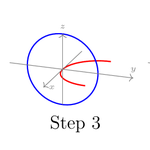
In 2014, Chris Olah's 'Neural Networks, Manifolds, and Topology' drew a disk inside a ring narrow nets can't separate: layers stretch and squash but never fold. We theorize and generalize this observation, noting skip connections learn the fold. #ICML2026 arxiv.org/abs/2606.31856

ALT Three panels of a trained ResNet untangling a disk-inside-a-ring dataset: (a) input, a small disk enclosed by a ring; (b) the residual branch folding the plane; (c) output, the two classes pulled apart.
Junyu Ren retweeted

Ready for demo day!
Drop by our booth #7 to try Kardashev-0.7 for yourself!


Introducing Kardashev-0.7, the world’s first trained swarm made of 32 distinct models
Trained with RL for Population Scaling (RLPS), 32 models organically develop specialization & complementary capabilities, delivering frontier performance at:
- 0.007x ~ 0.02x of the inference cost
- 0.03x of the required memory
Civilization advances through different minds specializing and working together. We’re bringing that principle into AI
@BanburyRoadAI, we’re scaling intelligence by model count, toward civilizations of models that learn to build on one another
Junyu Ren retweeted

We now release the technical report for TabFM: arxiv.org/abs/2609.37959. Together, we introduce TabFM-Auto: an LLM agent working on feature engineering on top of a frozen TabFM. You can find more details at arxiv.org/abs/2609.37989 and explore features LLMs found at deqingfu.github.io/tabfm-aut….


Introducing TabFM, a foundation model designed specifically for tabular data classification & regression. This approach allows generation of high-quality predictions on previously unseen tables in a single forward pass.
Learn more and try out the model →goo.gle/4eR7uku

How we solved the 70-year-old Pierce–Birkhoff conjecture in real algebraic geometry with $400.
One thing we kept noticing: models from different families (including the latest public models from GPT and Claude) seemed to complement each other, even when they were independently assigned the same role in our system.
With our limited token budget, we often had better luck giving the same task to one agent from each family than to a larger swarm using the same model. They bring different knowledge, habits, strategies and techniques, and notice different things in the same argument. One would catch an error the other had missed, or suggest a way forward when we were stuck.
@OpenAI @AnthropicAI

We solved the 70-year-old Pierce–Birkhoff conjecture, an open problem in algebraic geometry, by finding an explicit 30-dimensional counterexample.
The counterexample was found using publicly available GPT and Claude models in our multiagent, multi-model setup. The proof has been checked by human experts and verified in Lean.
Joint work with Zehua Lai and Lek-Heng Lim.

Lean formalizations and counterexamples down to dimension 5:
github.com/7pocheR/Pierce-Bi…
We used Codex and Claude Code with ChatGPT Pro and Claude Max subscriptions, paying ~$400 in subscription fees.
The paper will be available on arXiv later this week.

Junyu Ren retweeted
excited to announce that Banbury Road is building up with a16z @speedrun in SF this summer.
@t_ed_li, @junyu_r, and I met as Oxford undergraduates at a restaurant outside the math department on Banbury Rd. That road eventually became our company.
At Banbury Road, we ask a simple question: what if AI scales not only with bigger models, but also with more specialized minds working together like human civilizations do?
We believe that, after model size, the number of models trained together is the x-axis of the scaling law for the next training paradigm.
No single human is a god, and yet together we went from stone tools to spaceflight. Why would AGI be any different?
Thanks to the entire a16z speedrun team for the support.
It is time to build.


Model training today means squeezing as much capability as possible into one single model.
But human intelligence scales in numbers, not just the size of our brain. The smartest entity on earth has never been a single person. It's the civilization.
At Banbury Road, instead of a single model, we're training many models end-to-end, allowing them to self-organize, collaborate, and specialize into emergent roles. Together, even smaller, open-source models can achieve frontier performances after training at a fraction of the cost.
Superintelligence is not monotheistic.
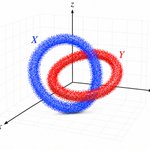
Then we ran it. On thickened Hopf links (30 seeds), ReLU nets cap near 93% while GELU nets and ResNets hit 100%, and a ResNet recovers the |x| fold. On 3D PCA of CIFAR-10, we detect links and use them to predict class-pair confusion (Spearman |r| = 0.48).

ALT CIFAR-10 bird and deer class cycles in 3D PCA feature space, interlocking as a link with linking number -1.
Takeaway: the linking and knotting of manifolds matter as much as their intrinsic shape does, and networks' ability to manipulate them is a lens to compare architectures. Paper & code: arxiv.org/abs/2606.31856. · w/ Lek-Heng Lim. At ICML, Hall A poster session 1 #4609.

ALT CIFAR-10 bird images (blue) and deer images (red) arranged as two interlocked rings, showing the linked class manifolds in image space.