

Core Investigator, Arc Institute | Assistant Professor of Neurology, UCSF. Stephen Curry, Belgian waffles, and neuroimmunology.
Joined June 2011
- Tweets137
- Following457
- Followers613
- Likes514






John Pluvinage retweeted

Reminder! If you are interested applying to our MS and Neuroimmunology fellowship, please attend our
virtual Open House on Friday, October 2 at 10-11 am PT.
We offer clinical and clinician-scientist training tracks
Registration here: ucsf.zoom.us/webinar/registe…


Pleased to be joining Joanne Guo as the new Assistant Fellowship Program Directory for our MS and Neuroimmunology Fellowship at UCSF
We are having a virtual Open House on October 2 at 10-11 am PT for those interesting in learning more! Registration here: ucsf.zoom.us/webinar/registe…

John Pluvinage retweeted

Congrats to the Hungarian team that finally studied what we've all been waiting for -
how dogs process speech in @ScienceMagazine 🐶
science.org/doi/10.1126/scie…

John Pluvinage retweeted

The annual CASP competition -- with data generated specifically for the challenge -- was critical to advance the field of protein structure prediction over the past 30+ years to where it is today.
We're in our second year of doing the same for predicting how cells respond to perturbations with our 2026 Annual Virtual Cell Challenge.
Arc teams have again generated unusually high quality single cell CRISPRi perturbation data -- this time across 6 cell types -- specifically for this year's competition.
The Challenge: Can you get to experimental accuracy zero shot in predicting how different cell types respond when you target a specific gene? Sign up here to participate and win: virtualcellchallenge.org/


The 2026 Virtual Cell Challenge has begun! Submissions and the leaderboard are now open.
This year's task: multi-context generalization and zero-shot prediction. Models will need to predict perturbation responses in cellular contexts with no Challenge-specific training data.
arcinstitute.org/news/virtua…

John Pluvinage retweeted

Let's go!!! Excited to go live with this year's Virtual Cell Challenge! A brand new test of perturbation prediction models, now zero-shot, and with an expanded set of metrics. Foundational to all of it all is a new dataset @arcinstitute scientists generated for this challenge.
The 2026 Virtual Cell Challenge has begun! Submissions and the leaderboard are now open.
This year's task: multi-context generalization and zero-shot prediction. Models will need to predict perturbation responses in cellular contexts with no Challenge-specific training data.
arcinstitute.org/news/virtua…
Excited to share this massive (60+ co-authors!) team effort describing the clinical correlates of anti-CD320 in idiopathic myelopathy
Four years ago, a mystery case led Core Investigator @jvpluv to discover a new diagnosis (ABCD). Today his team published one of the largest clinical surveys of unexplained spinal cord disease to date in @JAMANeuro, finding ABCD in roughly half of patients.

John Pluvinage retweeted

Following the publication of our phage gen paper, I wrote some personal thoughts on biosafety and biosecurity as generative biology improves.
Given the trajectory of progress, there should be concern and urgency -- but also optimism.
brianhie.com/present_and_fut…

Together with @BrianHie's lab, we are looking for a lab manager to join the team @arcinstitute. If you love to organize, optimize, and accelerate scientific discovery, please consider applying! job-boards.greenhouse.io/arc…


We are recruiting a lab manager @arcinstitute, alongside @jvpluv's lab, to support our work on ensuring that AI for biology benefits humanity.
This role will spearhead operations across diverse, very exciting projects in the works. Please consider joining us!
John Pluvinage retweeted
I have long written and spoken about the many ways US immigration policy harms international students and scholars. This has been true for as long as I can remember, including when I first came to the US on a single-entry student visa more than 20 years ago under a process formerly known as muslim registry program.
But the current administration has gone much further, through arbitrary policy changes, travel bans, and broad visa processing pauses that leave folks unable to work, travel, or train.
These policies affect a minority of scientists, and in the current state of the world they can be easy to overlook. But we should not let that happen.
I wrote about the quiet loss of Iranian scientific talent in US labs for @TheScientistLLC:
the-scientist.com/the-quiet-…

John Pluvinage retweeted

Excited to share our new paper in @CellCellPress with @MarcoRuella, led by @Shan_Liu_
and @PuneethGuru_. CAR T cell therapy loses effectiveness over time due to metabolic exhaustion, but we found a surprisingly simple approach to address it. 👇
cell.com/cell/abstract/S0092…

John Pluvinage retweeted

A century ago, “vitamin hunters” discovered micronutrients. Today, vitamins are taken adhoc. We revisited this with modern genetics: CRISPR screens -> new NAXD disease mouse -> over 40× lifespan increase w/ vitamin B3. Huge credit to Ankur & Skyler! tinyurl.com/32k74629
🧵👇
John Pluvinage retweeted

Congratulations to Core Investigator @ChristophThaiss on being named a 2026 @SloanFoundation Research Fellow. He is one of 126 early-career scientists recognized for extraordinary promise and the potential to reshape their fields: sloan.org/fellowships/2026-F…
At Arc, Christoph is investigating how interactions between the environment, body, and brain impact physiology and disease over the lifespan: arcinstitute.org/news/christ…

John Pluvinage retweeted
Overjoyed to share our new work exploring the antigen specificity of CSF-expanded CD8+ T cells in #multiplesclerosis #EBV in @natimmunol 🧵1/
nature.com/articles/s41590-0…

John Pluvinage retweeted
Exciting new work from Carson Moseley and @ZamvilScott demonstrating a possible mechanism linking aquaporinopathy in #NMOSD and #Sjogrens disease
neurology.org/doi/10.1212/NX…
John Pluvinage retweeted

Our meta-analysis comparing intracranial hemorrhage risks w/ ASA vs apix, now online @ Stroke. Contrary to common perceptions, we found no evidence in the ischemic stroke prevention setting that apix confers higher intracranial bleeding risk vs ASA.
ahajournals.org/doi/10.1161/…

Striking finding, elegantly investigated-congrats!

Excited to share our new study in @Nature! We uncover how the vascular glycocalyx—a carbohydrate-rich coating on blood vessels—plays a crucial role in brain health and aging. A @wysscoray & @CarolynBertozzi labs collaboration. 🍭🧠 #glycotime (1/12)
nature.com/articles/s41586-0…

In silico prediction -> function -> structure -> in vivo efficacy. Cool #glycotime. Potent efficacy of an IgG-specific endoglycosidase against IgG-mediated pathologies: Cell cell.com/cell/fulltext/S0092…


V cool molecular mimicry
Thrilled to be part of this exciting work on cooperative B cell and T cell cross-reactivity in #MISC. Congrats to @DrAaron14 @RMettelman, the labs of Joe DeRisi, @MAndersonUCSF, and @PGTimmune and all co-authors!
nature.com/articles/s41586-0…

John Pluvinage retweeted

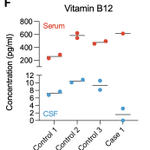
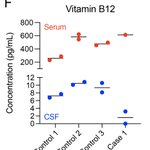
Studying a patient with neurological deficits, scientists discovered autoantibodies against the #transcobalamin receptor CD320 that lead to #VitaminB12 deficiency in the central nervous system, but not in the blood. @jvpluv @UCSF scim.ag/7wN
