





Jose retweeted

14 perros en Piura de diferentes razas se juntan para cruzar el Río Piura arriesgando sus vidas pero confiandose el uno al otro. Si los seres humanos dejarían sus ideologias y pensasen 1ero en el bienestar de todos, otra cosa seria la sociedad. Facil en Perú uno ahogaria al otro!


Jose retweeted

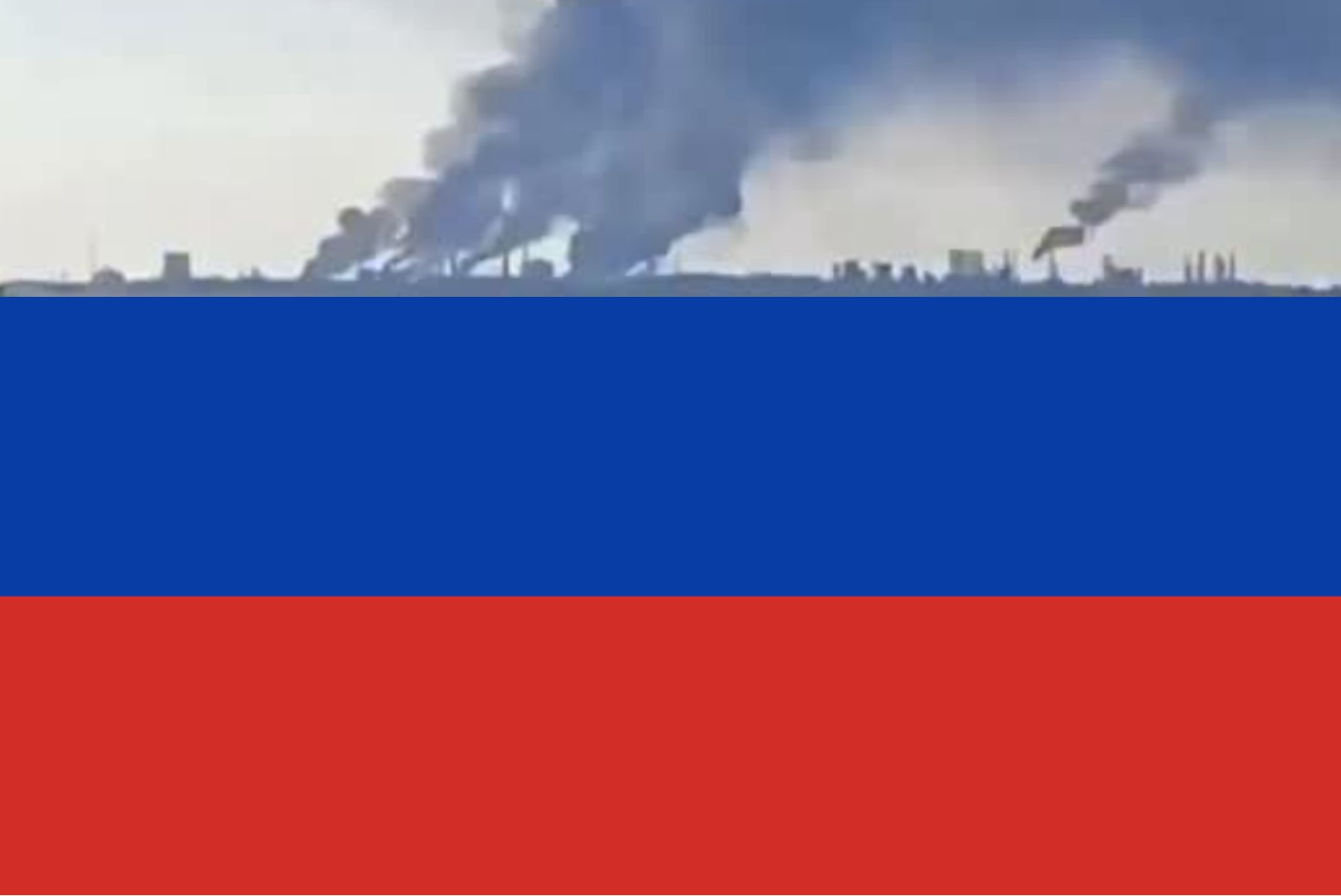
Ryazan. Kaluga. Now Vladimir.
Ukraine has hit three of Yandex’s largest data centers in just three days.
Your new russian BINGO CARD is here.

Jose retweeted

Yandex is uploading everything to the cloud.
Very advanced Russian technology. No cables, no servers.


Jose retweeted

Por si alguien está interesado, el próximo sábado 10 de Octubre, en el Salón de Actos de la Facultad de Matemáticas, voy a dar una conferencia de Física Cuántica bajo el título *"Las escisiones del Uranio trabajando con isótopos radiactivos transparentes en sus tres fases ciclónicas"*
Agradeceré vuestra asistencia, como sabéis, de Física Cuántica no tengo ni puta idea, pero oigo a Pedro Sánchez hablar de valores, compromiso, honradez, patria... y oye, me he venido arriba y me he envalentonado.
Espero vuestra asistencia!!!
Jose retweeted

Hoy termina la Semana de concientización sobre las enfermedades causadas por hongos y no podía dejar de recordarles que quitarle el pedazo con hongo a la fruta y luego consumir el resto es un riesgo para la salud.
Las micotoxinas del hongo ya invadieron toda la fruta. Déjala ir.

Jose retweeted

Italian journalist Oriana Fallaci removing her chador during her tense 1979 interview with Ayatollah Ruhollah Khomeini in Qom, Iran...
In October 1979, Italian journalist Oriana Fallaci traveled to Qom, Iran, to interview the Islamic Revolution's supreme leader. To get inside the room, Fallaci was forced to cover herself from head to toe in a heavy black chador, leaving only her face visible.
The conversation inside the room was tense from the very start. Fallaci did not hold back her questions.
She pushed the Ayatollah on political executions, the sudden shutdown of independent newspapers, and the sharp loss of rights for Iranian women under the new regime.
When she asked about the forced wearing of the veil, Khomeini dismissed her concerns and claimed the garment was meant to protect young and respectable women. He then added,
"If you do not like the Islamic dress, you are not obliged to wear it."
Fallaci took his words literally and replied, "Thank you, Mr. Imam. Since you tell me so, I am taking it off right now."
With a quick move, she pulled the chador off her head, leaving her hair completely exposed right in front of the Supreme Leader.
Khomeini was furious.
He stood up without saying another word and walked out of the room. The room fell silent, and the interview was abruptly stopped. However, Fallaci refused to leave Iran until he returned a day later to finish the conversation.
This confrontation became legendary in the history of journalism.
It showed a reporter refusing to bow down to authority, even in one of the most dangerous settings imaginable.
Fallaci proved that real journalism requires standing up to power, asking hard questions, and refusing to be silenced by fear or tradition.
When journalists trade raw courage for easy access and comfortable silence, we lose one of our strongest shields against tyranny.
In an era where true courage in reporting feels rare, her brave stand reminds us that honest journalism still has the power to light up the dark, giving a voice to the voiceless and inspiring future generations to speak truth without fear.
#archaeohistories

Jose retweeted

❗️“You have met with Putin many times. Doesn’t it seem to you that Putin has been deceiving you this whole time? Doesn’t it seem to you that Putin and the Russians understand only one language well — the language of force? Don’t you find it repulsive to sit at the same table with an international war criminal, the executioner of the Ukrainian people, who is personally responsible for Ukraine’s tragedy?” — journalist Gordon to Witkoff
Jose retweeted

WSJ: CIA Director Ratcliffe arrived in Moscow after the US gathered intelligence indicating mobilization preparations and plans to test NATO's resolve.
Former Deputy Director of US National Intelligence Beth Sanner told the publication that Ratcliffe may have met with Putin to deliver a warning along the lines of: "We know what you are going to do, and you'd better not do it."
wsj.com/world/cia-director-j…

Jose retweeted

The European and Indo-Pacific security theaters are converging. Russia, China, Iran, and North Korea are uniting in their desire to make force the source of law and impose their own rules through force. That is why the war in Ukraine, the war in the Middle East, tensions around Taiwan, and tensions on the Korean Peninsula can increasingly no longer be viewed as separate, unrelated conflicts.
Russia’s full-scale war against Ukraine has sharply accelerated this process. Before 2022, Russia primarily sold weapons to others. According to CSIS calculations based on SIPRI data, between 1980 and 2021 Russia accounted for about 78% of Chinese, 73% of North Korean, and 40% of Iranian arms imports. After 2022, some of these flows reversed. Russia itself became a buyer of weapons, a testing ground for them, and a source of new combat experience for its allies - authoritarian regimes.
▪️ North Korea
The deepest military integration today has emerged between Russia and North Korea. In June 2024, they signed a strategic partnership treaty that included a commitment to provide military assistance. Pyongyang cited this treaty to justify sending its troops to Russia. By comparison, the 2025 Russia-Iran treaty contains no such commitment. This illustrates how the entire network operates: each pair of autocracies builds exactly the level of cooperation it needs.
North Korea has already become one of the resources for Russia’s war. According to South Korean intelligence estimates, around 11,000 North Korean troops were in Russia’s Kursk region in early 2026, while more than 15,000 had passed through Russia when rotations were taken into account. North Korea is also supplying 122mm and 152mm artillery shells and ballistic missiles. What began in 2023 as emergency assistance to Russia has gradually developed into a permanent supply channel.
But Pyongyang is gaining something more valuable from this war than money - modern combat experience. The North Korean military had not fought a large-scale modern war for decades. Its troops are now gaining experience with drones, electronic warfare, artillery, reconnaissance, and Western weapons systems. South Korean intelligence has also reported Russian technical assistance to North Korean satellite programs, drones, electronic warfare, and air defense. Russia-North Korea military cooperation has therefore become a security issue not only for Ukraine but also for South Korea and Japan.
▪️ Iran
A different mechanism has emerged with Iran - a joint cycle of technological development. Iran initially supplied Russia with ready-made Shahed-136 drones. Production was then localized in Alabuga, and Russia began modifying their design: warheads, communications systems, protection against electronic warfare, and flight profiles.
According to CSIS, the average number of launches increased from about 75 per week in 2022-2024 to more than 900 in 2024-2026, while production in Alabuga reached roughly 2,700 drones per month. This is no longer simply the purchase of Iranian weapons, but their joint industrialization.
In 2026, this technological flow appears to have begun moving back toward Iran. ISW, citing U.S. intelligence, reported that Russia had provided Iran with upgraded Shaheds and intelligence to support operations against U.S. forces in the region. In effect, the Ukrainian battlefield became a testing ground where Iranian technology was tested, scaled up, and improved before returning to the Middle East.
This exchange is already working in the opposite direction as well - through Ukraine. In March 2026, Ukraine sent military experts to the Gulf region to share its experience in countering Iranian drones. In July, Ukraine also said it had struck an Iranian vessel in the Caspian Sea carrying military equipment for Russia. Ukraine is therefore no longer merely a recipient of Western assistance, but one of the world’s leading sources of practical experience in countering the technologies used by this network.
▪️ China
China plays a different role - it provides the industrial foundation of the system. Beijing largely does not supply Russia with finished weapons - it supplies the components without which it is difficult to manufacture them. According to U.S. estimates, around 90% of Russia’s microelectronics imports and 70% of its machine-tool imports came from China in 2023.
According to Carnegie estimates, China also accounted for around 90% of Russian imports of goods on the G7’s high-priority export-control list - from electronics and machine tools to optics and sensors.
China’s industrial support is not limited to Russia. Since 2025, large shipments of sodium perchlorate - a precursor needed to produce solid missile fuel - from China to Iran have been documented. According to expert estimates, the quantities involved were sufficient to produce fuel for hundreds of ballistic missiles. So, China can significantly support Iran’s military capabilities without entering the war itself.
This kind of remote involvement is a hallmark of the Chinese model. Beijing does not behave as a formal ally of Russia or Iran and avoids direct responsibility for their wars. At the same time, China buys their energy resources, provides them with foreign currency revenues, and supplies critical industrial components. This allows it to support its partners’ war economies while retaining the ability to deny direct involvement in the war.
The least visible but potentially most important commodity in this network is combat experience. It is harder to measure than shells or drones, but its effects may last longer. North Korea is already gaining such experience directly in the war against Ukraine. China, meanwhile, appears to be seeking Russian military expertise through other channels.
Russia is likely helping China develop capabilities for complex airborne operations. In 2025, RUSI analyzed around 800 pages of documents indicating that Russia had agreed to supply China with BMD-4M, Sprut-SDM1, BTR-MDM, command vehicles, and specialized parachute systems, as well as train Chinese troops. RUSI noted that this combination of systems is well suited to the rapid deployment of airborne forces and the seizure of critical infrastructure. If so, Russia is selling China more than armored vehicles. It is transferring its expertise in airborne operations and its own combat experience.
Thus, the war in Ukraine directly enters calculations surrounding Taiwan. Russia’s experience of modern warfare can be transferred to China. Chinese technology supports Russia’s military-industrial complex. This is already a two-way exchange of resources and expertise between the European and Indo-Pacific theaters.
▪️
For the West, the main problem is not even the coordination among these states, but the simultaneity of crises. The United States does not have one stockpile of Patriots for Europe, another for the Middle East, and a third for Asia. The same limited stocks of interceptors, long-range missiles, satellite capabilities, and industrial capacity are needed by Ukraine, U.S. forces in the Middle East, and allies in the Pacific.
The enemies therefore do not even need to coordinate their wars, points of conflicts, and areas of tension to produce a combined effect. Russia’s prolonged war against Ukraine is already tying up U.S. resources in Europe. Iranian escalation creates additional demand for air defense and a U.S. military presence in the Middle East. A potential crisis around Taiwan would create a third major demand for the same scarce capabilities. The network can produce a strategic effect even without a single strategic plan.
That is why the old geographical division of security no longer works. Taiwan cannot be fully analyzed without considering the war in Ukraine; European deterrence of Russia - without China and North Korea; and Middle Eastern security - without Russian-Iranian military and technological cooperation. This is not yet a single military alliance. But it is already one interconnected strategic system.
Ukraine is not only a frontline in this system but also a strategic asset. It has accumulated unique, large-scale experience in countering Shaheds, electronic warfare, missiles, massive combined attacks, and the enemy’s constant technological adaptation. Some of this experience is already being transferred to other theaters. Viewing the war in Ukraine in isolation means missing an important part of the emerging strategic balance.
Jose retweeted

CLARKE: In my own view, we're heading towards a militarized confrontation with Russia.
Can we come out on top? We're 10 or 12 times richer than Russians. With US, we're 20 times richer.
On hardware, we've got twice number of combat ships, 2 or 3 times number of combat aircraft.
We've got about 1.5 times Russian ground forces, collectively. But they're mobilized and we're not mobilized.
They have highly dictatorial single government, and we have 27 governments in EU, and 30 in European NATO.
You know, excluding Canada, United States, and 32 of NATO, all of which make their own decisions.
So, they're mobilized, we're not. They're prepared for conflict, we're not, and trying to pretend it won't happen.
Maybe I'm being alarmist. But I ask myself every week, am I taking this too seriously? Am I being too alarmist?
And every week, I come to the same conclusion: no. Things are really getting objectively worse or more tense.

Jose retweeted

Imagínense estar en lo más alto de un edificio en construcción y sentir el violento temblor de 7.4 grados!
Jose retweeted

The next level of trolling at russian embassy today. We have a tank!
#ArmUkraineToWin
Jose retweeted

El Servicio Geológico de los EE.UU no estaba muy convencido luego de ver los daños en la Guaira y realizó un nuevo análisis más preciso, usando datos de 64 estaciones sísmicas de la Red Global de Sismografia (GSN), diferentes satélites y estaciones de GPS, entre otros datos refinados que le permitieron desarrollar un modelo avanzado de falla finita, y ver con precisión cómo se rajó la tierra por dentro y hacia dónde se desplazó la energía destructiva unilateralmente.
Finalmente reubicaron el epicentro del segundo terremoto ocurrido en Venezuela el 24 de junio de 2026 con una magnitud de momento 7.5.
Se originó en el mar, 17.7 km al oeste de Catia La Mar con una profundidad o hipocentro de 10 km. 😱
Si no fuera por los EE.UU que no descansan hasta hacer las cosas bien, jamás hubiéramos sabido donde se originó realmente ese segundo terremoto. Porque al ocurrir dos sismos seguidos le puso todo más difícil a los expertos. Gracias @USGS.
Jose retweeted
Ukrainian defense tech company Firepoint has launched a game on its social media: guess the next Wildberries warehouse to be destroyed and win merch.
It looks like the campaign to destroy logistics centers is continuing.

Jose retweeted
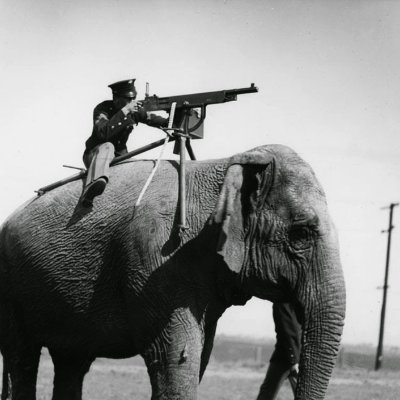
Remarkable onboard footage from a Ukrainian Yak-52 backseat gunner shooting down Russian Shahed attack drones from an open cockpit with his rifle.