

AI Researcher in dataset bias, vision & language models / Meta / Professor at Boston University / she/her/hers
Boston, MA
Joined July 2017
- Tweets482
- Following187
- Followers6.3K
- Likes644






Kate Saenko retweeted

Right-Click Anything: a little demo combining Muse Spark, SAM 3.1 and Muse Image -- now all on @Meta Model API! Muse Spark captions the scene and generates noun-phrases. These are used to prompt SAM 3.1 which predicts instance masks for each object. Then, right-click any object mask as you would with text on any web page! “Look Up” hits Muse Spark web search for real product listings, “Copy” gives you the alpha-matted PNG, “Remove” paints the SAM 3.1 mask into the image and asks Muse Image to inpaint it away. SAM 3.1 also supports video so many more possibilities there too! Have fun combining models across Meta's API platform!
Kate Saenko retweeted

SAM 3.1 is out! It's open source and available through the Meta API and Hugging Face for image and video segmentation.
SAM is a standard foundation model for computer vision at this point. The changes from SAM 3 are mostly architectural, which make inference ~7× faster in some cases for segmentation of lots of objects without sacrificing accuracy.
I tried it with the prompt "hot air balloon." 🎈
SAM3 is now an API! Useful if you don't want to use your own GPUs

Meta’s Segment Anything Model (SAM) 3.1 is now available on Meta Model API, giving developers a fast and lightweight model for detection, segmentation and tracking in a single call on inference tuned for SAM 3.1's architecture.
Use a short phrase to find objects in images and video. One API call returns detections, pixel-precise segmentation masks, and identity-preserving video tracks.
Learn more and start building: bit.ly/4rDArq9
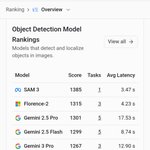
It's cool to see frontier models like Astra getting better at object segmentation! still very slow though

SAM3 vs Astra for text-prompt segmentation
SAM3 gives much more precise masks. it just often fails to understand complicated text prompts.
Astra is great at language. it rarely misses what you want to detect, usually only when the task needs internal domain knowledge. masks come back as JSON, point by point. slower, and less accurate than SAM3
we just rolled out Astra segmentation in playground
link: playground.roboflow.com/shar…
↓ more Astra examples below

Meta is back with an open source LLM!

Introducing Muse Glimmer, an open-weight 30B-parameter model optimized for local, always-on agent workflows.
Muse Glimmer delivers strong performance on key agentic use cases and benchmarks compared with leading models in its size category, and is designed to run entirely on consumer hardware like a Mac or PCs with performant GPUs.
In keeping with our long tradition of sharing fundamental AI research, we’re releasing model weights under a permissive Apache 2.0 license.
🧵👇


Kate Saenko retweeted

there's no catch; SAM3 is open source and really good
one of the things it does really well is object tracking, even in crazy complex scenes like basketball
probably my favorite computer vision model ever


Excited to share SA-FARI which will be presented as an oral at CVPR 26!
conservationxlabs.com/sa-far…
My team at Meta collaborated with ConservationX Labs to create the largest open video dataset for wildlife detection -- with @Surisdi @wrong_whp @YuanTingHu1

Automated video analysis is critical for wildlife conservation, and multi-animal tracking is a core capability needed for individual re-identification and behavior recognition. However, benchmarks available for evaluating multi-animal tracking are limited in scale.
Kate Saenko retweeted

1/ today we're releasing muse spark, the first model from MSL. nine months ago we rebuilt our ai stack from scratch. new infrastructure, new architecture, new data pipelines. muse spark is the result of that work, and now it powers meta ai. 🧵

A really fun application of SAM3 to digitize your wardrobe in a fashion app
instagram.com/reels/DWy8_w-A…

Our team at Meta just dropped SAM 3.1 - it makes tracking many objects in video much faster!
We’re releasing SAM 3.1: a drop-in update to SAM 3 that introduces object multiplexing to significantly improve video processing efficiency without sacrificing accuracy.
We’re sharing this update with the community to help make high-performance applications feasible on smaller, more accessible hardware.
🔗 Model Checkpoint: go.meta.me/8dd321
🔗 Codebase: go.meta.me/b0a9fb

Kate Saenko retweeted

Karpathy just mass-produced the most expensive part of ML research for free.
The bottleneck in neural network development has always been researcher iteration speed. A senior ML engineer costs $400K-$800K/year, runs maybe 3-5 meaningful experiments per day, and spends 80% of their time on the exact loop Karpathy just automated: tweak, train, evaluate, repeat.
This agent ran 276 experiments in a few days. Found bugs in QKnorm, missing regularization, wrong AdamW betas, and overly conservative attention patterns. These are the kinds of things a PhD student finds over months of staring at training curves. The agent found them while Karpathy slept.
The math gets worse. Tobi Lutke cloned the approach for Shopify’s query expansion model, went to bed, and woke up to a 0.8B parameter model that outperformed his previous 1.6B model. 37 experiments in 8 hours. A smaller model beating a larger one because the agent had more at-bats optimizing it than a human team would get in a week.
This tells you something about how frontier labs will allocate headcount over the next 18 months. The “run experiments and iterate” function of ML research is about to get compressed by 10-50x. What remains is the part agents can’t do yet: choosing what problems to work on, designing the evaluation metrics, and writing the program.md that tells the agent how to think.
Karpathy’s own framing is revealing. He said humans “optionally contribute on the edges.” That word, optionally, should make every ML researcher who defines their value as “I tune models” extremely uncomfortable.
The 630 lines of code in this repo fit inside a single LLM context window. That’s by design. The constraint that unlocks autonomous research isn’t intelligence or compute. It’s keeping the codebase small enough that the agent can hold the entire system in working memory. Every company with a training pipeline longer than 630 lines just got a reason to refactor.

Three days ago I left autoresearch tuning nanochat for ~2 days on depth=12 model. It found ~20 changes that improved the validation loss. I tested these changes yesterday and all of them were additive and transferred to larger (depth=24) models. Stacking up all of these changes, today I measured that the leaderboard's "Time to GPT-2" drops from 2.02 hours to 1.80 hours (~11% improvement), this will be the new leaderboard entry. So yes, these are real improvements and they make an actual difference. I am mildly surprised that my very first naive attempt already worked this well on top of what I thought was already a fairly manually well-tuned project.
This is a first for me because I am very used to doing the iterative optimization of neural network training manually. You come up with ideas, you implement them, you check if they work (better validation loss), you come up with new ideas based on that, you read some papers for inspiration, etc etc. This is the bread and butter of what I do daily for 2 decades. Seeing the agent do this entire workflow end-to-end and all by itself as it worked through approx. 700 changes autonomously is wild. It really looked at the sequence of results of experiments and used that to plan the next ones. It's not novel, ground-breaking "research" (yet), but all the adjustments are "real", I didn't find them manually previously, and they stack up and actually improved nanochat. Among the bigger things e.g.:
- It noticed an oversight that my parameterless QKnorm didn't have a scaler multiplier attached, so my attention was too diffuse. The agent found multipliers to sharpen it, pointing to future work.
- It found that the Value Embeddings really like regularization and I wasn't applying any (oops).
- It found that my banded attention was too conservative (i forgot to tune it).
- It found that AdamW betas were all messed up.
- It tuned the weight decay schedule.
- It tuned the network initialization.
This is on top of all the tuning I've already done over a good amount of time. The exact commit is here, from this "round 1" of autoresearch. I am going to kick off "round 2", and in parallel I am looking at how multiple agents can collaborate to unlock parallelism.
github.com/karpathy/nanochat…
All LLM frontier labs will do this. It's the final boss battle. It's a lot more complex at scale of course - you don't just have a single train. py file to tune. But doing it is "just engineering" and it's going to work. You spin up a swarm of agents, you have them collaborate to tune smaller models, you promote the most promising ideas to increasingly larger scales, and humans (optionally) contribute on the edges.
And more generally, *any* metric you care about that is reasonably efficient to evaluate (or that has more efficient proxy metrics such as training a smaller network) can be autoresearched by an agent swarm. It's worth thinking about whether your problem falls into this bucket too.

SAM 3 is being used in cancer research -- thanks for the shoutout @alexandr_wang !
ICYMI: @alexandr_wang spoke at the India AI Impact Summit where he shared Meta’s vision for personal superintelligence and how developers in India are already using AI to solve major societal challenges.
See highlights 👇 and then watch his full speech here: youtube.com/live/WgW7cC-kHgY…
🚨 A scammer is impersonating me with fake emails offering a research internship.
If you get one of these emails do not answer it.
THIS IS A SCAM!
Sorry to anyone who has been affected. 😢


Hi SAM3 authors @alcinos26 @RonghangHu @Surisdi @wrong_whp @KateYXu @nikhilaravi @kate_saenko_ @PengchuanZ @cfeichtenhofer (as many as I could find)
I have created a port of SAM3 to TensorRT, CUDA and C++. Hope you like it :)
GitHub: github.com/dataplayer12/SAM3…

Beautiful video on mechanistic interpretability and the "grokking" behavior of neural networks
youtu.be/D8GOeCFFby4?si=XJwV…
Kate Saenko retweeted

Our Segment Anything Models are helping advance flood monitoring and disaster response.
See how @USRAedu and @USGS have fine-tuned SAM to automate a key bottleneck in real-time river mapping, enabling faster, scalable, and more cost-effective disaster preparedness: go.meta.me/9ec621
Woah, SAM3 just reached 1 million downloads on HuggingFace!
huggingface.co/facebook/sam3
