kayvan retweeted

往年のDTMソフト「ReBirth RB-338」が、現行PC向けに勝手移植!!
こちらTB-303 x2 + TR-808(のちにTR-909が追加)をシュミレーションしたソフトで、なんとApple Silicon搭載MacやIntel Mac、Windows、linux版で起動可能に。
今から30年前に、マイPCにインストールし、日々ビヨビヨならしていた、90年代のテクノキッズは必見だぞッッ!
pixeldrain.com/l/Vq5L3h1N
※しかもMODにも対応しているのは最高だし、久しぶりに動かしたら毎日が何か楽しかった90年代をちょっと思い出しましたよ、僕は。
kayvan retweeted

Simon Andriesz @SAndriesz has died. He took his own life this week, while staying at a trauma treatment centre, the same place he had gone to try to survive what years of fighting had done to him.
I wrote the piece below about him at the start of August. We last spoke on 13 August. Reading my own words back now feels different. Heavier. I did not know then that this would be the last chapter.
Simon gave me his story directly. The embezzlement he uncovered, the fraud he reported, the heart attacks, the police complaints, the years @TheFCA spent doing almost nothing while his life fell apart around him.
He handed the CFTC and HMRC enough to secure real fines. He handed the BBC enough for a full documentary.
And still the one regulator that was supposed to protect him let him carry all of it alone for 7 years.
He was one of the most credible people I have ever spoken to. Everything he told me checked out. And he still ended up broken by the very system meant to catch people like him when they fell.
I am angry writing this. Angry that a man this capable, this thorough, this willing to hand over evidence and testimony for years, was left to fight completely alone until he could not fight anymore.
Simon Andriesz deserved better. Rest in peace.
If you are struggling right now, please do not go through it alone. Samaritans are free, 24 hours, on 116 123.
@TransparencyTF @stevemiddi1 @MLorrM @JohnCleese @premnsikka @johnmcdonnellMP @Victoria_Rixon @DennyTWright

THE MAN WHO EXPOSED LUTNICK
This time I was contacted directly by Simon Andriesz (@SAndriesz), the British whistleblower behind the BBC investigation into US Commerce Secretary Howard Lutnick (@howardlutnick) and his undisclosed ties to Jeffrey Epstein. He reached out to tell me his story himself.
Here is what he told me, and what the @BBC has already confirmed.
WHO HE IS
Simon Andriesz spent over 35 years in financial markets. He rose to managing director at BGC Partners, a Wall Street firm owned by Cantor Fitzgerald, the firm run for decades by Howard Lutnick.
He was responsible for 3 trading centres at once, London, New York and Chicago, and held a senior compliance signatory role, meaning he was one of the people whose job was to sign off that everything was above board.
HOW HE FOUND LUTNICK IN THE EPSTEIN FILES
When millions of pages from the Epstein files were released this year, most people searched for Lutnick by name. Andriesz knew the firm's executives usually wrote initials in emails instead, so he searched for HWL, Howard William Lutnick. That search turned up a 2018 email exchange between Epstein and Lutnick discussing a startup called Adfin, which both men had invested in.
He passed this to the US House Oversight Committee before Lutnick testified in May. Lutnick told Congress he only learned this year that Epstein had invested in the company. 21 Democrats on the committee say that is not true and have called for his resignation.
Worth being clear on the timeline here. Andriesz was already the source behind this back in February, when Mother Jones (@MotherJones), a US investigative news outlet, first reported the Adfin email chain, quoting him only as an unnamed British whistleblower.
BBC piece in July was the one that finally put his name to the story and told his full account, but he was the one who put this in front of journalists and Congress months earlier.
Andriesz also found records showing that in 2013 Cantor Fitzgerald discussed a plan to loan the then Prince Andrew £1M in exchange for exclusive access to his contacts with wealthy individuals and sovereign wealth funds.
He describes it plainly as an attempt to buy a prince. Epstein himself privately warned against the deal. It never went ahead. Cantor Fitzgerald does not deny the talks took place but says no business was ever done.
WHAT HE SAYS WAS HAPPENING BEFORE ANY OF THAT
Long before Epstein entered the picture, Andriesz says he was already blowing the whistle on the firm itself. Here is what he alleges, in his own words to regulators and to the Transparency Task Force meeting I watched him speak at.
He says money was quietly diverted out of the broker commission pool, the shared pot brokers earn from client trading, to cover costs like a sexual harassment settlement and other liabilities the brokers were never told about.
He says the firm ran what looked like a staff partnership scheme that was really a way to avoid paying employer National Insurance on compensation. He reported this in detail to HMRC.
He says HMRC has since confirmed it acted on his information, and a UK tax tribunal case now public shows HMRC issued a determination against a BGC subsidiary for roughly £96M, which the company is disputing.
He says HMRC is also now investigating advanced loans BGC gave former and existing partners that were later written off. By Andriesz's count, citing the BBC's own tally, fines, settlements and unpaid tax across BGC and Cantor Fitzgerald now top $300M.
He describes the workplace culture as a boiler room, extremely high pressure and, in his words, dangerous to people's health. He says he personally knows of colleagues who took their own lives, and that one whistleblower who worked closely with him and gave him key evidence developed cancer and died 9 months after testifying in his case.
He also alleges that the firm's long running charity, set up after it lost almost all its staff on 9/11, has at times been used to soften its public image while regulatory questions were left unanswered.
THE PERSONAL COST
Andriesz had a heart attack at his desk in 2015. He says colleagues nearby did nothing while he was having it. He later developed panic attacks that felt like more heart attacks and has needed inpatient trauma treatment more than once since.
In 2016 he had a second serious cardiac episode, and says that while he was receiving emergency treatment for it, he was asked to join a work video call and warned about the consequences of not complying. He was dismissed weeks after returning to work, newly married and trying to rebuild his life.
He says the firm's retaliation included sending him to two doctors of its own choosing, one of whom had an unrelated lawsuit against them for writing false reports.
His main witness, a former colleague who had given him detailed evidence, was later rehired by the company and gave testimony that contradicted what he had told regulators years earlier.
BGC reported him to the police for harassment. Police investigated and ruled there was no crime. The firm's lawyers then threatened him with criminal prosecution and prison. Earlier this year the strain put him in a trauma crisis centre for 2 months.
THE REGULATORS, SCORECARD
The CFTC fined BGC $3M and gave Andriesz a whistleblower award of $420K, naming him specifically as overseas Claimant 2 for providing unique firsthand information that significantly contributed to the case.
He says the award only covered part of his medical, legal and trauma treatment costs. A FINRA arbitration panel later awarded him $500K in compensation for retaliation. He tried to get that award increased through the courts and failed.
FCA took 7 years to conclude its own review and, at the end of it, issued nothing stronger than a supervision order. Along the way, he says the FCA wrongly told him he was not protected as a whistleblower because he had given up his anonymity, a claim so wrong the regulator had to publicly correct it at its own annual meeting.
After he was publicly identified in the Epstein files, he says he began seeing online comments speculating about people wanting him harmed. He reported this to the FCA as a safety concern. He says nothing came of it.
He is now formally requesting an independent review of how his disclosures were handled, and whether UK whistleblower protection law actually offers people in his position any real protection.
WHERE THIS FITS
I heard much of this firsthand at a recent Transparency Task Force meeting, where Andriesz spoke alongside other financial whistleblowers describing strikingly similar treatment by the FCA. I know people in that circle, including Andy Agathangelou (@TransparencyTF), Gary Smith (@G8GWS) and Steve Middleton (@stevemiddi1), and this case fits a pattern I have been documenting for a long time. I will add the video link from that event in the comments.
BGC and Cantor Fitzgerald deny his allegations and call them categorically false. Lutnick's office has dismissed the whole story as a partisan attack. I am laying out what has been reported and what Simon has told me directly so people can judge for themselves. You can find the original BBC article and the full File on 4 audio in the comments below.
Sources: @SAndriesz @howardlutnick @andyverity @BBCNews @MotherJones @CFTC @FINRA @TheFCA @HMRCgovuk @TransparencyTF @stevemiddi1
kayvan retweeted

Noticed something odd: the stronger the models get, the weaker my urge to create.
Maybe the joy was never in the output. It was in the struggle to make it.
Anyone else feeling this?
kayvan retweeted

New cat alert! A call from a wildlife sanctuary about a "weird cat" has led to the first new cat species discovered in over 100 years in Bolivia’s Yungas forest ecoregion. Learn more about this feline surprise: on.natgeo.com/JRuaGj


kayvan retweeted

I've scrolled past a lot of spinner libraries over the years. None quite fit. So I built one.
Flicker is a dot-grid spinner library inspired by flip-dot displays. Browse, build your own, and export to SVG, React, or Flutter.
Try it at: flicker.laurie.fyi

kayvan retweeted

By age 25, your circle should consist of:
-a Spellcaster
-a Healer
-a Tank
-and a Rogue
your network is your net worth



kayvan retweeted

Went down the rabbit hole on this. Your brain treats a physical book like a landscape. It builds a spatial map of the text, the same way it maps trails, rooms, and city blocks. When you scroll on a phone, that map breaks apart.
Seven large-scale research reviews and direct brain scans confirm what you already feel.
A 2023 study in PLOS ONE attached brain-activity sensors to children’s heads while they read the same text on paper and on screen. Paper reading produced fast brain waves, the pattern linked to focused attention. Screen reading shifted the brain into slow waves, the pattern linked to mind wandering and daydreaming. Same kids. Same words. Measurably different brain states.
A separate 2022 study from Showa University in Japan scanned the front of the brain, the area that manages focus and comprehension, during phone versus paper reading. Smartphones sent that region into overdrive, meaning the brain was straining just to keep up with basic processing. Paper reading produced a moderate load that triggered natural deep breathing, which helped regulate brain function and sustain focus. The phone suppressed that breathing pattern entirely.
Since 2017, researchers have published seven major reviews combining hundreds of individual studies. Six of seven reached the same conclusion: people understand less on screens. A 2018 review of 54 studies and 170,000+ participants, literally titled “Don’t throw away your printed books,” found paper outperformed screens across the board for non-fiction. A 2024 follow-up with 49 more studies confirmed it. The gap has grown steadily every year since 2001. Being a “digital native” doesn’t help.
The best explanation is how your brain tracks where you are. Your short-term memory can only juggle about 7 things at once. A physical book gives you constant location cues: the weight shifting from right hand to left, where a paragraph sits on the page, how thick the remaining pages feel. Your brain hands off the “where am I in this text?” job to those physical signals, leaving more room for actually understanding what you’re reading. On a phone, every screen looks identical. Your brain has to track position and process meaning at the same time, and something gives.
A Norwegian eye-tracking study analyzing 25,000+ individual eye movements found screen readers processed text more shallowly. The students had no idea they were reading differently.
In 2019, nearly 200 reading scientists from 30+ countries signed an open letter warning that screen reading was degrading deep comprehension. Since then, Scandinavian countries, among the most digitized school systems on Earth, have started putting physical books back in classrooms.

kayvan retweeted

Read Something Wonderful (about Biology)
We just released a curated list of 125+ essays about biology and science. These articles cover pharmaceuticals, the history of molecular biology, timeless arguments and theories, and more.
Check it out.🔻


kayvan retweeted
Anon, you've been oneshotted by the Ayahuasca of UI in last 15 years, big tech has gigafried your vision system.
Time to liberate from it, rewire the limbic system & build the next generation of advanced high performance interfaces like the IBM AS/400 & the Bloomberg Terminal.
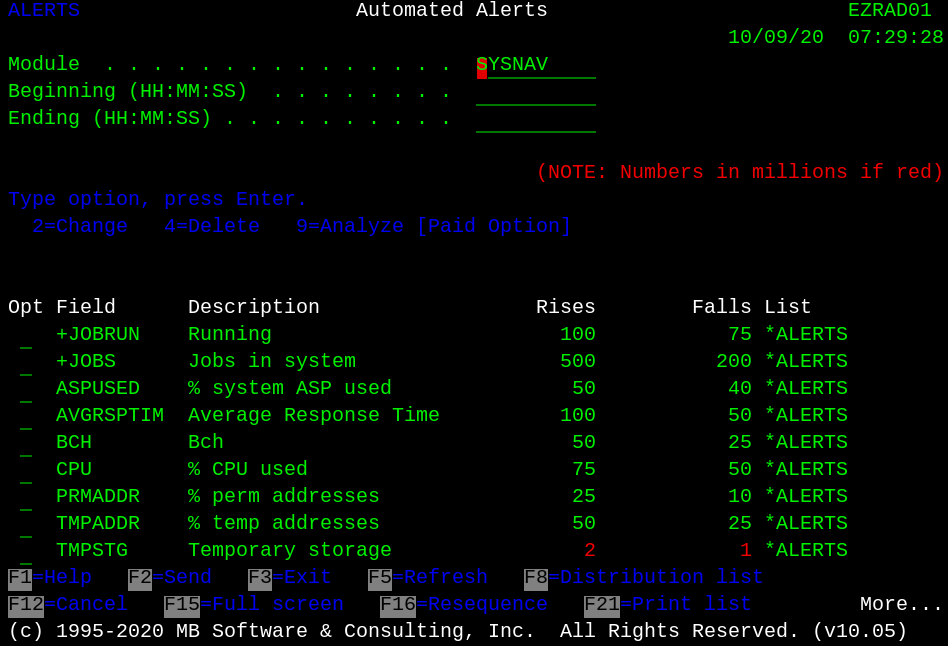


kayvan retweeted

Idle Worship 2025 away kits for SF City FC available now on sfcityfc.com
+-+-+-+-
all over trompe l’oeil print using our collection of antique fabrics and sashiko expertise 🪡🩵