

Product guy helping to build a variety of things @tensorblock_aoi. Collecting evergreen insights @productweets. Coffee, podcast or trail recs always welcome ✌️
Mill Valley, CA
Joined September 2006
- Tweets11.2K
- Following454
- Followers3.6K
- Likes80.1K



Adam Kazwell retweeted

You can read a million books and listen to a million podcasts, but are you actually learning anything?
Do you integrate the knowledge and turn it into something useful? Or does it just fade away?
@michael_nielsen
Adam Kazwell retweeted

Introducing Isometric SF A pixel-art map of the entire SF Bay Area, over 1,300 square miles, all painted by Klein, a 4B-parameter image-to-image model, on @modal.
Explore the map now!
isometricsf.com
Adam Kazwell retweeted

I've been trying to write a post on why everyone should study early American history but I kept getting stuck, maybe because the premise is too presumptuous. So instead here's a post on why *I* am obsessed with it myself:
1/ it's a portal into many other histories. People naively think early America sits to the side, unconnected to anything else. It's the opposite! The founders (Jefferson, Adams, and Franklin) spent ten years (!!) in Paris working to secure French support against the English, so you get to learn all about France of Louis XVI. Franklin spent a decade in London so you learn about England of George III. Adams was raising funds for the revolution in the Netherlands so you get to learn about the Dutch. John Quincy (Adam's son and later the 6th president) was an ambassador to Russia and an eyewitness to Napoleon's invasion!
2/ it's a portal into the past. The founders were extremely well-read and steeped in the history of classic European civilization. You just cannot get them to shut up about Greece and Rome, so you absorb tons of info about those and go on the trail of Cicero, Thucydides, Tacitus, Plutarch, Homer, Horace, Terence, and so on. Jefferson was also obsessed with English civil war so you learn about Charles I, Cromwell, the English republic, and how it's all connected to American declaration of independence 120 years later
3/ the Enlightenment! America's independence happens during peak Enlightenment era and the beginning of the Industrial Revolution. Everything is brimming with new ideas and boundless optimism. People believe in their bones that nature is knowable and there is no ceiling to progress. You meet all the characters and their ideas-- Adam Smith, David Hume, Thomas Paine, Edmund Burke (Franklin was friends with all of them). Electricity gets discovered, hot air balloons get invented, we start getting modern chemistry. Edward Gibbon writes his Decline and Fall and causes a furor by lampooning early Christian saints. Franklin even meets Voltaire!
4/ the Founders! JFK once joked at a dinner for Nobel Prize winners "this is the most extraordinary collection of talent that has ever been gathered at the White House, except when Thomas Jefferson dined alone." This is only a slight exaggeration. The founders were all *very* different, and all equally impressive in their own way. Between them they were educated, civic-minded, grounded in tradition but not bound by it, full of ideas but not ideological, entrepreneurial, tenacious, prudent, brave. You will not find a more remarkable cast in all of history! The more you get to know them the more you want to spend time with them, reach for their counsel, and appreciate how much of America's success (compared to e.g. French or Russian or Cuban or Iranian revolutions) is that America was founded by better men
5/ the correspondence! The founders were fantastic writers. Letters from John Adams, his wife Abigail, Thomas Jefferson, and Benjamin Rush are some of my favorite writing, not just as historical documents, but in *any* genre. "Some people must have time to look around them, before, behind, on the right hand, and on the left, and then to think, and after all this to resolve. Others see at one intuitive glance into the past and the future, and judge with precision at once," writes John Adams. Is this not a marvelous passage?!
6/ you learn what to discount and what to keep in sight. Had you been scrolling X in ~1778 you'd see ~20% of ppl opposing independence, an even bigger "uncommitted middle", opposition repressed by patriots, prospering weapons suppliers, smallpox epidemics, backstabbing officers and politicians, devastating losses, a destitute army, desertions, hyperinflation, meddling foreign powers, mutinies, atrocity episodes on both sides. If you had let these events consume your attention, you would have misjudged the moment completely!
7/ you see the bones of the republic. Adams was an English traditionalist and viewed freedom of religion as freedom among christian denominations. His Massachusetts constitution required a christian test and established tax-supported churches. Jefferson was a reformer who reasoned everything out from the ground up. He applied freedom of religion to all religions and thought much of christian theology was superstitious gobbledygook. Knowing that we often keep circling the same tensions makes it easier to get your bearings in the present. E.g. you can view the upcoming Michigan senatorial race as revenge of the federalists or revenge of the jeffersonians, depending on how it goes
8/ the history is tangled. At Mt. Vernon about 500 feet down the hill from George & Martha Washington's magnificent house there is a wooded area with a mass burial site for the slaves. The graves are unmarked and no one knows exactly how many people are buried there. There are modern burial symbols; the curators did a good job balancing honoring the deceased and maintaining the original bare condition of the site. If you go on a good day there are many middle school group trips visiting. You see large groups of ~11yo kids at the site, mostly laughing, messing with each other, taking selfies (as 11yo kids do)
9/ perspective of the losers. How could Britain win almost every battle and still lose? What did that do to the empire, politically and psychologically? What were Howe and Clinton thinking?! How did the British political situation play out during the war? What was the thinking and ultimate fate of British loyalists? Should Britain's defeat have been obvious at the time? All this is fascinating and helpful to orient yourself in today's world. From the diary of a British officer: "nothing remains but to fight it out against a set of the most determined hypocrites and demagogues, compiled of the refuse of the colonies, that ever were permitted by Providence to be the scourge of a country."
10/ inspiration. From Jefferson's triumphant political return after humiliation as governor of Virginia and the deaths of his wife and four children, to Washington's superhuman tenacity at Valley Forge, it is difficult to find more inspiring stories in all of history. The Declaration of Independence was written for all humanity. Anyone who wishes can become its spiritual successor. It can be read on town squares of Philadelphia and on slavers’ plantation fields, as it once was, and on the streets of Tehran and Moscow, as it one day will be:
"That to secure these rights, Governments are instituted among Men, deriving their just powers from the consent of the governed, --That whenever any Form of Government becomes destructive of these ends, it is the Right of the People to alter or to abolish it, and to institute new Government, laying its foundation on such principles and organizing its powers in such form, as to them shall seem most likely to effect their Safety and Happiness."
---
PS. the gateway drug is McCullough's John Adams, don't look at the reviews, don't research alternatives, just click buy and read the first page
PPS. buy a physical book and destroy the margins with your notes, don't dishonor this adventure with some pristine copy or a kindle
Adam Kazwell retweeted

i don’t know how people expect 3rd party apps to be perfectly optimized for new screens but also lock and key to avoid leaks.
side note. iphone shipped copy and paste two years after it launched. (ty iphone 3GS!)
i think things turned out alright.


Adam Kazwell retweeted

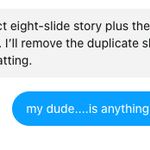
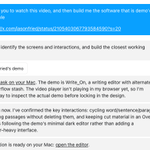
This is probably true. For example, I asked Claude to watch a YouTube launch video for a software product, and it recreated a custom version of it specific to my needs based only on frame sampling + my prompt.
That's...insane. I don't think this was possible 6 months ago. I'm able to make increasingly complex tools based on increasingly simple prompts.
Adjust your expectations accordingly...


Adam Kazwell retweeted

Now that the Lenny & Friends Summit is a few weeks behind us, I’ve had a chance to reflect on the day. Here are the themes and takeaways that have stuck with me most:
1. There’s a huge need for (curated) IRL events right now
I’ve rarely felt this much PMF for anything I’ve done. It’s wild. My sense is that the more time we spend working with agents, the lonelier the work becomes, and the more we need to find a place to connect with other humans. I heard this theme more than anything else from attendees:
- “Things are certainly different now, but underneath all this technology, we’re still just ancient humans looking for connection.” —Charlie Koch
- “I left filled with gratitude for the experience, the conversations, and the reminder that even in a role that can sometimes feel lonely, we don’t have to figure everything out alone.” —Hemanth Babu Shekar
- “I left feeling genuinely sparked by what’s possible, and also a little less alone in figuring out what comes next.” —Attendee
- “I left this conference having fallen in love with product all over again.” —Jenny Zhao
2. Nobody has it figured out
Should we be building software factories? Are roadmaps over? Should PMs be shipping to production? We had speakers take both sides of these debates throughout the day. But what everyone agreed on is that there’s no one way to do it. My takeaway is we’re all still figuring it out, and the best way to do that is together. We heard this theme from both speakers and attendees:
- “The answer that we have come to is: it depends. It depends what type of product it is. It depends on what phase in the product it is.” — @TYehoshua, Atlassian
- “We don’t know the answer. We don’t think anyone knows the answer. We’re all going to discover it. And we’re all fundamentally on the same team.” —Ami Vora, Anthropic
- “This is just one way. There’s so many ways to build products. You probably heard 10 other ones today that were just as valid as this one. You should decide on what makes sense for you.” — @rmstein, Google Search
- “The best practices have not been written yet. We get to do that.” — @lil_dill, Stripe
3. It’s never been easier to build something nobody wants
As building gets easier, choosing the right thing to build, knowing what good looks like, and caring enough to fix it are becoming increasingly important for successful product teams. Almost every speaker touched on this theme:
- “And now we can ship all our bad ideas, like congratulations to us.” — @clairevo, How I AI
-“If almost anything you can think of can get built, it’s more clear to me than ever that the actual true value of PM is around judging. It’s around taste. It’s around doing something extremely well.” — @rmstein, Google Search
- “They’re not impressed if we animated something with Three.js and Blender in 30 minutes. They are impressed by us solving their problems and clever touches in the details that show we anticipated their needs.” — @lil_dill, Stripe
- “The output is not the product. Customers are not buying the lines of code.” — @karrisaarinen, Linear
- “Is this useful or is it just new? It’s a big thing you need to differentiate.” — @danshipper, Every
4. The PM job is expanding, not disappearing
Instead of the PM, eng, and design circles of the Venn diagram collapsing into one “builder,” each role is instead evolving and expanding.
- “Roles are overlapping, but they are also expanding. . . . Everyone can do so much more than they could do before.” — @TYehoshua, Atlassian
- “PMs will absolutely evolve and expand their role to not just the product organization but the marketing organization, the sales organization, the growth organizations, the operational organizations. PMs will become GMs, and they will own the actual business outcome and lead the entire function.” — @geoffintech, Ramp
- “I build and change the pricing page. I build prototypes, I deploy to production myself. I do the user research, I do the analysis, I do all of the optimizations.” — @ElenaVerna, Lovable
5. It’s important to be reminded of what’s possible—and to raise our ambitions
One of the most inspiring parts of the experience for me, and for a lot of people at the Summit, was to be surrounded by people at the top of their craft, demonstrating what great looks like. This is especially important now that AI allows us (and forces us) to be a lot more ambitious.
- “If we only use AI to make the things that we already make just faster, then we are definitely missing out on the most interesting part. AI can help us raise the ceiling, not just the floor.” — @lil_dill, Stripe
- “The biggest constraint is honestly people’s understanding and ability to absorb what you’re giving them.” — @thenanyu, OpenAI
- “I think next year is the ambition game. . . . What experiments can I run in two weeks, three weeks, that would have taken us a year last time?” — @clairevo, How I AI
- “Other conferences collect a bunch of people seeking validation that what they were doing in product wasn’t too off the mark. Whereas this group set the bar for what’s possible.” —Attendee
To get a taste of what the day was like, I’ve pulled my favorite messages from attendees: afterglow.lennyssummit.com/
Also, a little slideshow. It’ll warm your heart. 👇
Adam Kazwell retweeted

Ever get an answer from your AI and wonder if it's actually right?
That's the whole reason we built Cuey. We're #3 on Product Hunt today. Come tell us about the time AI burned you.
producthunt.com/products/cue…
#producthunt

ALT Product Hunt leaderboard showing Cuey at #3 with 26 comments.
Adam Kazwell retweeted
Claude Opus 5.5 and GPT-6 Sol and Luna are live in Cuey on launch day.
Anthropic and OpenAI shipped their newest models 90 minutes apart. Both claim the benchmark lead.
Cross-check their answers in Cuey to see where they disagree.
No extra AI subscriptions required.


Adam Kazwell retweeted

"my life's philosiphy is that I will meet the person I could have been at the end of my life, and my goal is to reduce the difference between him and me to as little as possible"
My word. my mind has just shifted in real time.

My third conversation with Shopify co-founder and CEO @tobi.
0:00 How Shopify Uses AI
7:18 River: Shopify's Internal AI
8:55 How to Encourage Osmosis Learning
10:52 AI Dreaming and Self-Reflection
11:53 How to Use AI for Strategic Decision Making
14:11 The One Thing AI Cannot Do
16:04 What AI is Making Worse at Shopify
19:46 Predictions: Where AI is Headed Next
21:55 The Future of AI-Powered Software
24:40 Will CEOs Be Replaced with AI?
27:54 Can Superintelligence Be Controlled?
31:13 Critical Skills in AI Age
34:22 Why Complex Solutions are Usually Wrong
36:33 Conditions Needed for True Intuition
38:02 The Best Path Doesn't Have Instant Feedback
44:51 How Affirmations Can Shift Your Behavior
50:44 The Inobvious Thing Hurting Companies
52:37 Relationship Between Beauty and Creation
56:23 How SpaceX Moves Forward By Subtraction
1:00:24 Why Companies Need Refounding Events
1:01:50 Books as Cheat Codes
1:02:39 Three Books to Change Your Thinking
Enjoy!
(Includes paid promotions.)
Adam Kazwell retweeted

Hot take: if labs were forced to stop improving their models, AI adoption would spread FASTER throughout the economy because they'd be more focused on harness and app design and broader GTM.
Adam Kazwell retweeted
How to capture attention:
Fifteen years ago when we were building RethinkDB it was on top of Hacker News all the time. To this day ppl remember this and maybe once a month someone asks me for help with launching their project.
It worked like this. I would think of an HN headline first, then we'd build the next product version to do whatever the headline promised. We'd submit to HN and it would either rise to the top or it wouldn't. Then we'd do it again. This loop taught me a few things which I use to this day:
1. It RL'ed me to generate good headlines. It's a skill you can develop through trial and error. I can maybe distill it to some rules of thumb, but a lot of it is, does it sound right? Is the rhythm right? Does the headline “hit the spot”? Not easy to explain.
2. I became headline-pilled. The world runs on headlines. People will grant you maybe 15 tokens of attention. Unless they feel there is some irreducible essence captured in these 15 tokens, they’ll move onto something else. This is true of your boss, your investors, your colleagues, your employees, your customers, social media audiences, even old acquaintances you randomly bump into. “So… what’s been going on in your life?” You only have 15 tokens, i.e. a headline, to answer this question.
3. Unless you already think in headlines, you can't build something and come up with a good headline post-factum. It just doesn't work out well. If you do that, either the headline will be true but boring, or it will be enticing but not credible. You've got to come up with a headline first and build towards it.
4. Working this way prevents feature creep. You build the minimum feature set necessary to make the headline credible. If smtg doesn't serve the headline, it's out. Once you have enough to make the headline credible, you ship. And headlines are by definition short, so your development cycle becomes very nimble and efficient.
5. It makes time-boxing easy. "Headline goes out by Sep 15th (or whatever), we gotta build enough to credibly share it with the world. Ready, set, go." This preempts all the debate about sprints, estimates, methodologies, prioritization, and so on. You just loop: headline -> build -> ship, headline -> build -> ship. It makes the development process really smooth.
In the age of Codex when building is cheap, this becomes even _more_ relevant. People are DDoS'ed with information, and it will only get worse. So a headline is all you get. You can make much more ambitious headlines come true now, but you still only get 15 tokens before ppl scroll past you.
Btw, once you master this idea a whole world opens up. You can play with violating these rules in a hundred ways and still capture attention. But not easy to do that until you've mastered thinking in headlines first.
Adam Kazwell retweeted

Amazon and Google sold ~600M+ Alexa and Nest devices that could barely do anything except playing music and setting timers (and even that worked reliably maybe 30% of the time). Now we have effectively AGI-level intelligence, but nobody seems to be building smart speakers around it. Why?
Adam Kazwell retweeted
I believe the danger created by people at AI labs assigning a 10% chance to AI destroying humanity is greater than the actual risk of AI doing so (which I think is far, far lower). Believing the stakes are existential can justify terrible decisions.


