

Creator of Tenet (.NET Lean Kernel), Lean Studio, leanos and Lean to .NET. Author. Musician. Security & Compliance. Filmmaker. Cat owner.
San Francisco, CA
Joined April 2009
- Tweets709
- Following152
- Followers300
- Likes608





Pinned Tweet
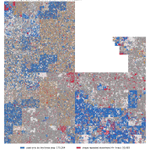
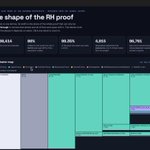
About 93% of the Lean proof of RH is known mathematics that Mathlib didn't have, proved from scratch in a private dialect.
The new argument is roughly a million lines.
If Mathlib had the theory, the proof would be a fraction of its size. But this code doesn't give Mathlib that theory.
I saw the same thing with Navier–Stokes: OpenAI casually formalized whole areas that Mathlib was missing.
My honest realization: AI is showing us how rudimentary our human libraries are.

Keith Adler retweeted

−11062769241414341239970603495681493737981374532130995
and
−11061733404916469626152098526056073213151599377977031
Caiolo–Ferroni–Hoster conjecture is false
Announcing Tenet SAT:
A 5.5 GB SAT proof, checked in 1.8 seconds.
The fastest existing checker takes 33 s. The formally verified one takes 185 s.
tenet-sat checks LRAT proofs in parallel: 4 to 19x faster on real SAT Competition proofs, and it agrees with every other checker on all 77.
Open source: github.com/keithadler/tenet-…

The algebraic version of P versus NP folks ...

An internal Claude model claims to have found a proof of Valiant’s conjecture that VP ≠ VNP over every field.
This is a massive result in theoretical computer science.
Both a written and Lean proof is given.
github.com/anthropics/formal…

2
21
1,865

Update on minifying the claimed Lean proof of the Riemann Hypothesis.
Where we are: 8.6% smaller, 17.37M lines down to 15.88M. Not final until it builds clean; the repair loop is on round 25, with errors down from 2,500 to 34.
What the 8.6% is:
• ~90,700 declarations nothing in the proof uses: 59,712 theorems, 29,806 definitions, plus structures and abbreviations
• 2,873 files that held nothing needed
• 522,000 redundant import lines
• 43,070 repeated theorems now pointing to one identical copy
All dead code. No math was simplified. The proof content itself is ~6.5% smaller.
Even minified, it's ~7x the size of Mathlib (15.9M lines vs 2.3M).
What that means for kernels: almost nothing changes. A kernel checks what the five theorems actually use, 1.47M declarations, and dead code was never in that set. After minifying, the kernel still checks 99.7% of the same work. Tenet does it in 1 hour; Lean's own kernel, single-threaded, takes many hours.
The proof isn't big because of waste. It's big because of what it uses. Shrinking it for real means finding a shorter route through the math, and the biggest target is one theta-correspondence step that owns 38% of the proof by itself.
github.com/keithadler/rh-tri…

My Lean kernel just checked the entire claimed proof of the Riemann Hypothesis in 1 hour flat.
Tenet, an independent Lean 4 kernel I wrote from scratch in C#, accepts all of it:
• 1,468,414 declarations
• 0 failures
• 1 hour 0 minutes on one AWS machine (multi-threaded)
Lean's own kernel, single-threaded, has been checking the same export for 5 hours and isn't done yet.
What else I've found on the way:
• The proof rests only on Lean's 3 standard axioms
• 99.35% of it hangs on one claim, allChi
• The five theorem statements depend on just 4,915 declarations, only 5 of them from the project
• I planted ~2,000 single faults in real slices of the proof. Every kernel (Lean, paranoid, nanoda, Tenet, tenet-hs, tenet-jvm) rejected every one.
Still running: my Haskell kernel, tenet-hs. Does it accept the proof, and how does it compare with Lean's?
A kernel accepting a proof says the code checks. It doesn't replace mathematicians reading the math.
Live: github.com/keithadler/rh-tri…
Proof by Levent Alpöge with Claude. nanoda and the latest con-leche have also accepted it (Andrew Sutherland, MIT).

Making big progress in minification of the RH proof follow real-time here at:
So far I've gotten it safely from 17.5 million lines to 13.9, 82% fewer files from 175k to 30k.
I think there's more to get.
github.com/keithadler/rh-tri…

The RH formalization shows scale was a bigger barrier than people thought.
The statements are standard Mathlib.
The proof is 17 million lines, more than any person or committee could survey, and one person working with a model produced it.
If the independent kernels confirm it, we'll know it's true before anyone understands why.
github.com/keithadler/rh-tri…
106
There's a lot of speculation, but I'm 100% sure this is disclosure.
youtu.be/rzWnvMDlB3c
86

I've been working on the claimed Lean proof of RH (Alpöge, with Claude).
Where it stands:
1. Built the original on one AWS machine: all 175,187 files, 0 errors, no sorry. About 21 hours, about $35.
2. Exported what the five main theorems actually use, measured by Lean itself: 1,468,414 declarations including Mathlib and core, resting only on the 3 standard axioms (propext, Quot.sound, Classical.choice).
3. Now racing kernels on that 61.6 GB export: Lean's kernel, paranoid mode, nanoda, and three I wrote from scratch, Tenet (C#), tenet-hs (Haskell) and tenet-jvm. con-leche and con-ron decline it, in both modes: they don't support reflexive inductive types, and the proof uses one.
The goal is minimum-step proofs: cut the source down to exactly what the theorems need, rebuild it, and recheck it with every kernel. That gives the smallest version of the proof that still checks, and a fair test of whether the Haskell kernel can keep up with Lean's.
Live status: github.com/keithadler/rh-tri…
Build it yourself: github.com/keithadler/rh-tri…

93


The claimed Lean proof of the Riemann Hypothesis just built cleanly on my machine.
All 175,187 files, exactly as published. 0 errors. No sorry.
What it took:
• One AWS Spot machine: 192 vCPUs, 768 GB RAM
• About 21 hours, through four Spot interruptions. It resumed by itself every time, nothing lost.
• About $35 total
What I'm doing on top:
1. Export exactly what the proof uses: the five main theorems and everything under them. Running now.
2. Race 8 independent kernels on that export, one at a time, timed. Three of them I wrote from scratch: tenet-hs (Haskell), Tenet (C#) and tenet-jvm. The big question: does the Haskell kernel accept it, and is it faster than Lean's own?
3. List every axiom it rests on.
4. Cut it down to the smallest version of the proof that still compiles, and check that too.
A clean build means Lean's kernel accepted it. It doesn't mean humans have checked the math, which is why more independent kernels matter.
Follow it live, step by step:
github.com/keithadler/rh-tri…
Build it yourself, one script:
github.com/keithadler/rh-tri…
Proof by Levent Alpöge, working with Claude. Mirror: Deicyde/riemann-hypothesis


If anyone wonders ... you can run the RH in AWS for $32 (I'm about 75% done and there's instructions).
github.com/keithadler/rh-tri…
I created 3 independent Lean kernels in for the JVM, .NET and Haskell. All of my Kernels are RC ready and I'll be verifying their performance characteristics and reporting it on the above GitHub.
Once I've got run times and details I will then use my other solution leanzempic to emit Haskell instead of C to see if RH is a problem well suited for the Haskell emission. It has shown better performance than the C kernel in certain areas.

2
68
