



keyanm retweeted

Please, consider filling the survey. It’s very well done and quick to do.

devsurvey.cardano.org
That’s the tweet

keyanm retweeted

I first built this as a visualisation for myself, but I think more people will enjoy it: our beautiful Cardano ecosystem: lovelace.land
Built from crawling public sources and on-chain data via Yaci Store MCP. Early version, so please report anything odd or missing 🧵

keyanm retweeted

Self hosted on-browser Cardano wallet.
Talks to node only; no external services required at all.
Runs the Haskell node source code directly.
keyanm retweeted

Cardano governance can now govern the dApps built on Cardano.
We just proved something believed to be impossible.
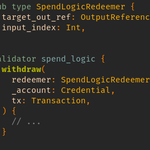
A dApp can tie a smart-contract upgrade or parameter change to a Cardano L1 governance proposal. If that proposal passes and is enacted, the smart contract can verify the result on-chain and unlock exactly what was approved.
The authority can come from Cardano itself not a project admin key, multisig, or trusted oracle.
This opens a new path to decentralized dApp governance:
→ smart-contract upgrades
→ changing dApp parameters
→ treasury actions
→ emergency controls
Cardano governance can now become the authority behind how dApps evolve.
I first presented this design at UPLCfest in “Pushing the Limits of UPLC: Everything is Possible” a keynote about achieving things in Cardano’s execution layer that were considered impossible. It's really satisfying to see this finally validated.
Finally someone said it. Any USB device should be treated with skepticism, let alone hardware wallets.

Hardware wallets are, for the most part, one of the biggest psyops of this entire industry, and widely recognized as bad opsec by security researchers.
The mailing and order lists for hardware wallets are some of the most repeatedly hacked and leaked datasets, appearing on blackhat forms year after year. Mailing addresses, names, emails, all of which are perfectly filtered for known value targets.
A $300 laptop with no internet hardware is significantly less likely to get you wrench attacked, or get your root keys rugged by an HW wallet backdoor.
Also, for the vast majority of users, a hardware wallet won’t save you if your web-wallet is compromised. You would have to review the entire transaction on the 1 by 1 inch hw wallet screen, where most people look at the wallet summary. You’d have to double check every script hash, every destination address of every transaction you sign. In-practice, the number of people who do this approaches zero.
This was very pleasant to see. More dApps should support cold wallets.


The @realfi_co Testnet is officially live – Phase 1 starts now.
If you've been following what we're building – a stablecoin ecosystem designed to connect on-chain capital to real-world credit markets, not circular incentives – this is your first chance to get hands-on with the protocol.
Phase 1 opens three actions in the test environment:
🔄 Swap: Between supported test digital assets and test USDr.
📥 Stake: Stake test USDr for test sUSDr, its efficiency layer.
📤 Unstake: Move back to test USDr.
This isn't just a demo. It's a deliberate part of how we build. Most stablecoins leave capital sitting still. RealFi is built to change that by bringing real-world economic exposure on-chain with the speed and security of modern blockchain infrastructure.
More details on the participation and rewards structure will follow through official RealFi channels.
Get started 👇
preprod.realfi.co/?utm_sourc…
We're excited to have you testing with us.
The RealFi Team
Big shoutout to @atlanter and @okhodakivskyi from @lantr_io as they had a pivotal role in helping us optimize the node.
Update on Midgard:
We have a functional node, with support for state settlement on the L1, and state commitment finalization. You can transact on the L2 at lightening speeds with low latency and the results are displayed in your wallet (a fork of Lace) in real-time.
Next up in the pipeline is the delivery of L1 deposits and withdrawals, and the forced transaction inclusion mechanism.
Things are coming together nicely and we’re extremely excited to bring this into the hands of the community.


10/
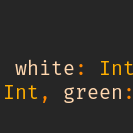
> Abyss will be 0
> BlackAndWhite will be 10 followed by an encoded integer
> And Colored will be 11 followed by 3 encoded integers
11/
For encoding of integers and bytearrays you can checkout the Pallas codebase. It is well documented, and helped me quite a lot in implementing the Aiken version:
github.com/txpipe/pallas/blo…
