




Pinned Tweet
Because I’m having to say this about 50 billion times…

BK retweeted

Look at the case of the young lads who were given suspended sentences for the gang rape of two children at knifepoint. Their sentences were subsequently increased on appeal, but even then, they are only expected to spend a matter of months in prison.
Seriously, does anyone genuinely believe that a suspended sentence is an appropriate punishment for gang raping children at knifepoint and should ever of even been considered? What message does that send to victims, offenders and society as a whole?
I have said this before, and I will continue to say it: our sentencing system for rape and serious sexual offences needs a complete overhaul.
I understand that sentences currently vary depending on aggravating and mitigating factors. I know this because I have sat in court as a victim and listened to the breakdown of sentencing decisions for the men who abused me.
But rape is rape. It is one of the most devastating crimes that can be committed against another human being, and the consequences can follow victims for the rest of their lives.
Here is what I believe needs to change.
1. Introduce a minimum 10-year prison sentence for rape.
Nobody convicted of rape should be walking away with a suspended sentence, a community order or a matter of months in prison.
I believe 10 years should be the absolute starting point for rape, with aggravating factors increasing the sentence on a clear scale, potentially all the way up to life imprisonment.
The severity of the sentence should reflect the seriousness of the crime, including the age and vulnerability of the victim, the use of weapons, multiple perpetrators, repeated offending, the level of violence, coercion, grooming and the lasting harm caused.
2. Stop treating ridiculous circumstances as mitigating factors.
I also strongly believe that the way mitigating factors are applied in sexual offence cases needs examining.
One of the men who raped me had two years knocked off his sentence because he had undertaken charity work in Pakistan while he was on the run from police for the rape.
Others have received reductions for being a good son or other circumstances that, in my opinion, should have absolutely no bearing on the punishment for these crimes.
How can somebody's charitable activities, family relationships or otherwise respectable behaviour be used to reduce the punishment for raping a child?
There needs to be a much clearer distinction between genuine factors relevant to culpability and circumstances that should never be allowed to diminish the seriousness of the crime.
3. End concurrent sentencing for multiple serious sexual offences.
Where somebody is convicted of multiple sexual offences, particularly where there are multiple victims, sentences should be served consecutively rather than concurrently.
Every offence represents a separate crime. Every victim represents a separate person whose life has been affected.
Why should somebody convicted of multiple rapes effectively receive a sentence that treats those crimes as though they were one?
There should be meaningful consequences for every offence committed, with appropriate safeguards against disproportionate sentencing.
4. End automatic early release and unsuitable prison categorisation for serious sexual offenders.
I do not believe serious sexual offenders should routinely receive automatic early release, nor should they be progressing into Category D open prisons simply because they have served a proportion of their sentence.
Offenders should be required to serve their full custodial term, subject to a properly risk assessed system of release rather than automatic entitlement.
I often hear the argument that offenders need to be released early so probation can monitor them on licence.
But public protection cannot simply be reduced to whether somebody is supervised in the community.
Sexual Harm Prevention Orders can be altered to include anything that would otherwise be missing by lack of licience. These measures should work together to protect the public, not be used to justify releasing offenders before victims believe justice has been served.
5. Introduce much tougher consequences for repeat sexual offending.
If somebody is released after serving a sentence for a serious sexual offence and subsequently commits another serious sexual offence, that should trigger an automatic review of whether they can ever safely be released again.
I believe repeat serious sexual offending should carry a presumption towards life imprisonment, with whole-life orders considered in the most extreme cases where the legal test is met.
The public are not guinea pigs. Our safety should not be repeatedly put at risk while the system experiments with rehabilitation at the expense of potential future victims.
Rehabilitation cannot come at the cost of public safety.
6. Bring back meaningful prison labour and personal responsibility.
I also believe prisoners should be expected to undertake mandatory meaningful work wherever they are physically capable of doing so and this should then contribute towards the cost it costs to keep them in prison.
I do not mean the work like what is currently offered in prisons like mopping or cooking, I mean proper manual work. Get them working down in the sewers or other work that most people do not want to do and wont expose the public to them too much.
Prison should involve discipline, responsibility and contributing towards society, not simply being accommodated and maintained at public expense.
Properly organised prison work could contribute towards the cost of imprisonment. Prison needs to be a place of punishment not somewhere that is perceived as an easy option.
7. Put victims' human rights and rehabilitation at the centre of the justice system.
Perhaps the biggest problem with our current approach is where the priorities appear to lie.
We hear endless discussions about offenders' human rights, rehabilitation, resettlement and how to make their transition back into society easier.
But where is the same commitment when it comes to victims?
Where is the investment in long-term trauma therapy? Where is the financial support? Where are the properly funded specialist services to help victims rebuild their lives, access education, maintain employment and feel safe in their own communities
Why are victims so often left to navigate the lifelong consequences of crimes committed against them, while the people responsible receive structured support to rebuild their lives?
The perpetrator made a choice. The victim did not.
The perpetrator did not consider their victim's human rights when committing the crime. Yet the victim is often expected to spend the rest of their life dealing with the consequences, while the justice system focuses on the offender's future.
That imbalance needs to change.
8. Give victims a meaningful voice in sentencing and release decisions.
Victims should be properly informed about sentencing decisions, release dates, parole hearings and changes to an offender's risk status.
Victim impact statements should be given meaningful consideration, and victims should not have to repeatedly fight to be heard or discover that the person who destroyed part of their life is being released through a letter arriving on their doorstep.
There also needs to be greater transparency around sentencing decisions, early release and the reasons why reductions are granted.
I am a grooming gang survivor. I have spent years fighting for justice, sat through a six-week trial, listened to the sentencing of the men who raped me and lived with the consequences of what they did.
I have watched men convicted of serious sexual offences receive sentences that bear little resemblance to the lifelong impact of their crimes. I have also experienced the reality of receiving notification after notification that another one of my rapists is being released years before the sentence I thought they had received is anywhere near complete.
Our justice system needs to stop asking how quickly we can rehabilitate perpetrators and start asking what we are doing to protect the public and rehabilitate the victims.
Justice should not be measured by how successfully an offender is returned to society. It should also be measured by whether the victim feels that the crime committed against them was taken seriously, whether the public is protected and whether the victim is given the support they need to rebuild their life.
At the moment, I believe our justice system is failing on all these counts.
And it is victims who are paying the price.
If anyone has any other thoughts on what they think is needed to help tackle the rise of sexual offending and our broken justice system, please comment below!

One thing the Government desperately needs to address is the inconsistency in sentencing for rape and the rape of a child.
How can sentences for some of the most serious crimes imaginable range from community service right through to life imprisonment? How can there be such a vast disparity in the punishment handed down for crimes that can devastate a person's life?
Personally, I struggle to see how anything less than a life sentence adequately reflects the severity of these offences, particularly when a life sentence in the UK doesn't necessarily mean spending the rest of your life behind bars.
We need to stop looking solely at the sentence handed to the offender and start recognising the lifelong sentence imposed on the victim.
For many survivors, the consequences don't end when the trial is over, when the offender is sentenced or when they walk out of prison. The trauma, the damage and the impact on their lives can last forever.
If victims are expected to live with the consequences for the rest of their lives, why are we so willing to allow those responsible to serve sentences that can be over in a matter of years? Or sometimes avoid prison all together?
There needs to be a serious conversation about sentencing, proportionality and whether our justice system truly reflects the gravity of these crimes and why there is no consistancy amoung judges when sentencing for these crimes.
BK retweeted

Final offer.... If you tell me your favourite cheese, I'll donate £1000 to a charity or your choice.
Bonus offer. If your album goes to number one, I'll legally change my name to James Blunt.

BK retweeted

Oh look. The UK government is giving itself powers to restrict lawful behaviour then imprison citizens for disobeying.
What could possibly go wrong?

You’re not a serious person if you are making a claim that the media did in Russell Brand for his (recent change in) views but haven’t bothered to check when the media started investigating him or when he started publicly promoting the views you think they did him in for…
1
40
BK retweeted

Post-war England did not need court orders for basic civility.
Lee Kuan Yew, studying in Britain in the late 1940s, described a scarred but orderly country - bomb sites cleared with bricks neatly stacked, little gardens planted among the ruins, and an honor system newspaper stand at Piccadilly Circus where people took a paper and left the money unattended.
In his memoirs, he noted the understated pride and discipline of a people who had just been through years of war and privation. The British students and professionals he met were reserved but impeccably mannered. There was no need for constant supervision because society functioned on high trust and shared expectations.
That is the England that inspired him, so he set out to model it through using a strong rule of law to achieve cleanliness, public order, and competence. All the while, he rejected the UK policies that he knew were liabilities - the expanding welfare state that discouraged enterprise and erode social norms.
Singapore kept the discipline and added stricter enforcement, low tolerance for disorder, and an insistence on assimilation and standards. The result is a city-state with far lower rates of street crime and anti-social behavior than contemporary Britain, despite denser living conditions.
Meanwhile, through a series of self-cucking decisions that ultimately culminated in mass migration from lower-trust or incompatible cultures, Britain lost its manners. LKY later visited Britain again and observed the results directly - loss of trust, coarseness, urban decay, drugs, muggings on the Tube, empty churches alongside packed mosques, and a multi-racial society that had lost its cohesion. The gulf between the 1940s Britain he admired and the 1990s–2000s Britain he criticized was painfully obvious.
The whole idea of "Respect Orders" is so laughable. It's the stuff that Monty Python would have had a field day with. The truth is, it's really a public confession that persistent anti-social behavior is now so entrenched that the state is reduced to issuing civil orders as a bandaid that carries the threat of two years’ jail time.
Also what use is treating just the symptom (persistent public nuisance) when nothing is being done to stop migration or integrate immigrants? When a population that was once famous for queuing without signs and leaving belongings unattended now requires judicial threats to stop people from making life miserable for everyone else, I think you can safely say that society is dead.
We all also know that these "Respect Orders" will not be applied evenly. They will function as a flexible tool for suppressing the "wrong" kind of public irritation while the right kind of disruption continues largely unchecked.
A group of residents quietly holding signs outside a proposed asylum site can be portrayed as intimidating vulnerable people. A young YouTuber filming the exterior of a migrant hotel, speaking to local residents about crime spikes or public costs, or simply documenting litter and disorder will be far more vulnerable to a "Respect Order" than a Just Stop Oil activist who has repeatedly blocked motorways.
A parent filming a school protest over curriculum materials can be framed as causing distress to staff. A local campaigner challenging the siting of a traveller encampment, or documenting street harassment statistics that cut against official narratives, can be restricted from entire town centres. Meanwhile, repeated low-level violence or intimidation linked to certain imported cultural conflicts is more often logged as “community tensions” requiring de-escalation rather than restriction orders and mandatory treatment.
Anti-social behaviour is defined as conduct “likely to cause harassment, alarm or distress.” You understand how vague that is. Like your fat ass could be distressing to me in the public domain, no? So what will happen is that the threshold will be raise or lowered according to the identity of the complainant and the politics of the target.
Respect is earned. It shouldn't be legislated.
If you have to legislate it then Britain needs to do the FULL LEE KUAN YEW and bring down the hammer on rule of law equally. It has to be strict and indifferent to identity or woke sensibilities. Laws against drugs, disorder, littering, or public nuisance were enforced hard and across the board.
BK retweeted

Paedophile Leeds police officer who paid children for sex pics avoids custody yorkshireeveningpost.co.uk/n…

BK retweeted
One thing the Government desperately needs to address is the inconsistency in sentencing for rape and the rape of a child.
How can sentences for some of the most serious crimes imaginable range from community service right through to life imprisonment? How can there be such a vast disparity in the punishment handed down for crimes that can devastate a person's life?
Personally, I struggle to see how anything less than a life sentence adequately reflects the severity of these offences, particularly when a life sentence in the UK doesn't necessarily mean spending the rest of your life behind bars.
We need to stop looking solely at the sentence handed to the offender and start recognising the lifelong sentence imposed on the victim.
For many survivors, the consequences don't end when the trial is over, when the offender is sentenced or when they walk out of prison. The trauma, the damage and the impact on their lives can last forever.
If victims are expected to live with the consequences for the rest of their lives, why are we so willing to allow those responsible to serve sentences that can be over in a matter of years? Or sometimes avoid prison all together?
There needs to be a serious conversation about sentencing, proportionality and whether our justice system truly reflects the gravity of these crimes and why there is no consistancy amoung judges when sentencing for these crimes.
BK retweeted
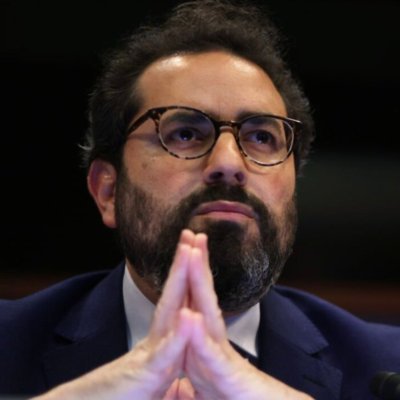
No joke: Tomorrow at 10 am, the U.N. plans to elect the Islamic regime of Iran to its main subsidiary organ shaping priorities on women's rights, counter-terrorism and peacekeeping. We urge all states who nominated Tehran — 🇨🇦🇬🇧🇫🇷🇩🇪🇪🇸🇳🇱🇳🇴🇫🇮🇨🇭🇦🇹🇦🇺🇨🇭— to reverse course and vote No.


This week on Xitter I have learned that consent is more than enough to morally sanitise any objections porn but ‘he said she said’ & ‘nothing but words’ when it comes to criminal justice…
59
There seem to be a lot of people with main character syndrome re Brand’s conviction… No dear, you are not ‘next’… Jesus this is school shooter level persecutory delusion…
36
All the blah blah about Brand & ‘just words’ is just ignorant of the legal position in these cases. Criminal hearings are about establishing facts. Re the rape charge;
Fact issue 1 - ‘did the sex act in the complaint take place?’ Was established by the agreement of both parties
1
1
77
courts convicting everyone who practices any kind of bdsm & even if you make a defence of agreement you are back to consent again & hearing *words* to corroborate facts… we need a satisfactory way for the law to deal with sexual crime for *the protection of the public* & we have
1
10