

Apiculture Specialist at Purdue University | honey bee research | honey bee breeding
West of the Wabash
Joined December 2010
- Tweets136
- Following406
- Followers259
- Likes641

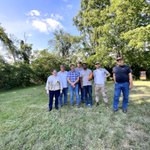





What an incredible week in FL!
Just wrapped up teaching 10 students @UFhoneybeelabl!
I was honored to be invited to UF bee lab to teach my advanced course in instrumental insemination!
Our 10 students were top notch!🔬✨
***
#purdueAg
#UFHoneyBeeLab
#BeeScience


Just finished a great interview with @PurdueExtension about my advanced honey bee courses! 🧪🐝 we talked queen quality, breeding & building healthier bees.

What’s buzzing in your backyard? 🐝 #PurdueExtension and @PurdueInsects have tips for helping pollinators thrive. Celebrate #NationalPollinatorMonth with ideas for your garden, beekeeping basics and more!
🔗 extension.purdue.edu/news/20…

Here is a great story @mtetrick_wx from @wrtv did with me!🐝
United States bee colonies in crisis: wrtv.com/news/local-news/uni…

Looking forward to sharing my story about honey bee breeding to the Western Apiculture Society. westernapiculturalsociety.or…
Thrilled to have one student all the way from Ethiopia attending my advanced course in Instrumental Insemination!🐝🐝@PurdueInsects @PurdueAg


Krispn Given retweeted

Internationally acclaimed honey bee geneticist Robert E. Page Jr., #ucdavis alumnus, former entomology department chair, UC Davis Distinguished Emeritus Professor and longtime #ASU administrator, featured in Legends, American Entomologist. shorturl.at/QDmnZ

ALT Honey bee geneticist Robert E. Page Jr. checks out a swarm in Arizona

ALT Robert E. Page Jr.
The field of honey bee breeding is so crucial to improving honey bee health! The impact of bees on our world is immeasurable. I enjoyed my conversation with @PurdueAg about how we are breeding bees that are fighting back!🐝
@EntsocAmerica
@PurdueInsects

It's #NationalPollinatorsMonth, and beekeepers are focusing on enhancing bee colonies’ resilience in preparation for harsh winter months ahead. @kgiven in @PurdueInsects leads research to boost honeybees’ behavioral resistance to parasitic mites. ag.purdue.edu/news/2024/06/b…

Beekeepers from five states disseminated to the Purdue Bee Lab for our advanced course in the Art and Science of Queen Rearing this week!
@PurdueAg
@PurdueInsects


What a wonderful experience teaching our student Keith Quintanilla from Guam an advanced course in instrumental insemination of honey bee queens this weekend! He plans to help beekeepers by launching a honey bee breeding program in Guam soon!
@PurdueAg
@PurdueInsects


Always great speaking to Canadian researchers and beekeepers about the field of honey bee breeding!
@PurdueAg
@PurdueInsects

Krispn Given retweeted

New bee-friendly restrictions on neonicotinoid insecticides in New York … and a barrier to further progress on this topic in the USA.
Some examples and thoughts on how disinformation is currently obscuring evidence-based pesticide policies.
blogs.cornell.edu/mcartlab/f…

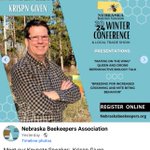
Looking forward to speaking at the Nebraska Beekeepers Association Conference this weekend!
@PurdueAg
@PurdueInsects

Krispn Given retweeted

Such a great honor to be appointed to serve on the #NAREEE Pollinator Subcommittee this year to ensure
@USDA pollinator policy and programs are informed by the best available science.
@AgSciResearch @PSU_Entomology
psu.edu/news/agricultural-sc…

Krispn Given retweeted

Today is Give to the Max Day! Join us in raising money for an endowed chair in honey bee research. Learn more and donate today by visiting this link - crowdfund.umn.edu/index.cfm?…
#UMNGive #UMNProud


Nice to see our latest paper!

Common #honey #bee stocks in the US show differences in intracolony variation of viruses such as DWV, IAPV, and LXV2. New paper in #JournalOfApiculturalResearch. Send me a PM if you'd like to have the pdf
@lopezuribelab @Harpur
tandfonline.com/doi/full/10.…

Krispn Given retweeted

Beekeepers lose 30-40% of colonies annually due to parasites and pathogens. Thanks to @USDA_NIFA, @PurdueInsects' Brock Harpur, @PurdueANSC's Luiz @brito_lf & @roslininstitute's Gregor Gorjanc are using genomics to breed resilience in bees. #NIFAImpacts ag.purdue.edu/news/2023/12/r…

Working with @PurdueFoodSci is always a great experience. We are bottling up 12 hundred pounds of Boiler Bee Honey this week, just in time for the holidays!
@PurdueInsects
@PurdueAg


Enjoyed the conversation and visit from Brazilian honey bee researcher Dr. Samir Maura Kadri! He has done extensive work on the infamous “killer bees” and manages about 500 colonies himself!
@UFhoneybeelab
