

Writer & researcher, interested in Vietnam and Asian affairs. PhD in Political Science from Victoria University of Wellington. Visiting fellow at ISEAS.
Joined July 2009
- Tweets881
- Following1.3K
- Followers4.5K
- Likes8.9K




Pinned Tweet
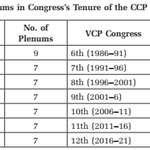
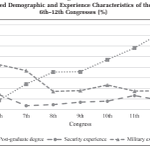
Does Vietnam copy the China model? My new research explores the complexities of authoritarian diffusion between these two communist regimes.

#New in the Trends in Southeast Asia Series from #ISEASPublishing - "Learn from Your Comrades: Understanding Authoritarian Diffusion between Vietnam and China" by Nguyen Khac Giang @khacgiang.
bookshop.iseas.edu.sg/public…
iseas.edu.sg/articles-commen…
#read #ISEASBookshop #Vietnam #China

Nguyen Khac Giang retweeted

<베트남 고속철도 1,541km, 첫 설계를 우리 기업이 함께합니다>
국가철도공단과 삼보·유신이 참여한 글로벌 컨소시엄이 베트남 북남 고속철도 타당성조사·기본설계 용역을 수주했습니다. 약 5,600억 원 규모로, 우리나라가 해외 철도 계획·설계 분야에서 거둔 역대 최대 성과입니다.
북남 고속철도는 하노이에서 호치민까지 1,541km를 시속 350km로 잇는 사업입니다. 사업비만 약 95조 원에 이르는 베트남의 국가 프로젝트입니다. 세계 40여 개 설계기업이 뛰어든 경쟁이었습니다. 우리 기업들은 프랑스 시스트라, 베트남 테디와 한 팀을 이뤄 앞으로 30개월 동안 노선 전체의 타당성을 검토하고 기본설계를 맡습니다.
이미 우즈베키스탄에서는 국산 고속열차가 달리고 있고, 필리핀에서는 코레일이 마닐라 도시철도 운영을 맡습니다. 차량과 운영에 이어 이제 설계까지, K-철도가 세계로 뻗어 갑니다.
많은 분이 힘을 모은 결과입니다. 대통령님께서 한-베트남 정상회담에서 이 사업을 직접 챙기셨고, 김윤덕 전 장관님께서도 두 차례나 베트남을 오가며 협력의 길을 닦아 주셨습니다. 후임 장관으로서 깊이 감사드립니다. 현지에서 발로 뛰어 온 공단과 기업 관계자 여러분도 정말 고생 많으셨습니다.
타당성조사와 기본설계는 고속철도의 밑그림을 그리는 일입니다. 그 밑그림을 처음부터 함께 그리면, 건설과 차량, 운영을 아우르는 본사업에도 우리 기술이 들어설 문이 열립니다. 베트남이 바라는 기술이전과 인력양성도 이 과정에서 함께 이어 가겠습니다.
본사업 수주는 또 다른 경쟁입니다. 국토교통부는 이번 용역이 차질 없이 수행되도록 돕고, 베트남의 남과 북을 잇는 1,541km 선로 위를 우리 기술이 달릴 수 있도록 끝까지 뒷받침하겠습니다.
Nguyen Khac Giang retweeted

Fulcrum Commentary by Nguyen Khac Giang (@khacgiang) - Vietnam has bold plans to restructure its electricity market. But the state should bear the costs if it imposes freezes on tariff increases. fulcrum.sg/article/commentar…

Nguyen Khac Giang retweeted
Fulcrum Commentary by @khacgiang and @DienLuong85 - The Communist Party of Vietnam has set out a strategy to build confidence in its leadership. Success will depend on several factors, including credible messengers. fulcrum.sg/article/commentar…

Nguyen Khac Giang retweeted
Oh the irony! China's MOFCOM is seeking comment from industries and firms concerned about market access barrier and regulatory frictions in VIETNAM's trade and industry policies, ahead of the WTO review of Vietnam in November... Gotta love that free trade
storage.googleapis.com/bilby…
Nguyen Khac Giang retweeted

Zhang Youxia, whose father was removed from the high command in the wake of Mao's death, and who saw many of his generation disillusioned by the Cultural Revolution, nevertheless risked his life to kill (Vietnamese) for the party in the 1980s. He was lionized in the media as hopeful proof that yet another generation would reject materialism for higher ideals. He now faces party expulsion for corruption by Xi, a man who similarly doubled down on the party despite his own travails and those of his family.
This quoted post is unavailable.
Nguyen Khac Giang retweeted

“In my 2023 book, I described the Chinese politics of the 1980s as a “frictional autocracy”. A frictional autocracy is one in which an autocrat faces frictions rather than an unimpeded path toward the objectives he wants to achieve. Making changes from the top down is more difficult, either in a forward direction or in reversal. While frictions themselves do not automatically lend themselves to reforms, a frictional autocracy is gravitationally liberal, as it is more permissive of divergent views and voices and crucially more permissive of initiatives coming from below. In an autocracy, a divergent view, by definition, is a liberal view, just as a divergent view in a liberal democracy is illiberal. A liberal autocracy and an illiberal democracy are alike in one aspect – there are different viewpoints in tension and in contention with each other.
In the 1980s, China was that frictional, liberal autocracy. Chinese politics were intramurally contentious – with different factions vying for power, influence, and policy decisions – and, crucially, there was a degree of power sharing. The top leadership of the 1980s was known as “two and a half,” with Deng Xiaoping and Chen Yun as two coprincipals with more or less equal stature and prestige. Li Xiannian was the half, a rung down in the power hierarchy. The power sharing was formalized, and the distributiveness of power reached its apex in 1988. Five different individuals held top positions in the state – the general secretary of the CPC (Zhao Ziyang), the premier (Li Peng), the presidency (Yang Shangkun), the chairman of the Military Affairs Commission (Deng Xiaoping), and the chairman of the Central Advisory Commission (Chen Yun). Deng also enacted term limits and created the norms of mandatory age requirements that institutionalized Chinese politics further. The importance of these divisions of power becomes evident when we compare with China today. We don’t have the Central Advisory Commission anymore. The Party Secretary and Chairman of the Military Affairs Commission is one person. But the fusion of these institutions didn’t happen under Xi Jinping. That big political centralization happened in the early 1990s.
What has that to do with the economy? The biggest impact is that this distributed political arrangement allowed for experimentation and trial by error. It is not because, you know, Zhao Ziyang had a Milton Friedman view of the economy, although he was more market-oriented in his philosophy. (He actually met with Milton Friedman). It is because he allowed experiments. The other reason is that, because of this distributed nature of the political system, the central government retained the veto power, rather than the decision power, which means that usually the decisions to do certain things came from localities. The central government can still veto, but they normally don’t, as more often than not those experiments turned out to be successful.
Whereas if decision power is centralized, that’s a very different dynamic because the top leader can shut down proposed experiments even before they take place. Here, I’m talking about seemingly minor distinctions but in fact they are incredibly consequential. If you cannot experiment, you cannot have any outcome to rely upon to make your judgement. Within a one-party system, having some flexibility vis-a-vis no flexibility at all makes a huge difference. Recently, I learned that during the 1980s, China ran experiments on population control. They allowed a more flexible population policy to see if it would lead to higher fertility. Turns out it didn’t lead to an explosion of birth rates, proving the one-child policy unwarranted. Hu Yaobang and Zhao Ziyang wanted that experiment to continue, but these leaders were purged and the experiment did not continue and China continued its disastrous—and utterly inhumane—population control for almost another three decades.”

Nguyen Khac Giang retweeted

Australia and New Zealand - The Partner of Choice in Pacific Security
Hosts @GordianKnotRay and James Carouso are joined by @davidcapie, Director of the Centre for Strategic Studies at Victoria University of Wellington, who explains why views of both great powers have shifted. In this clip, David highlights the recent security agreements being signed with the Pacific states - such as the Falepili Union with Tuvalu and new pacts with Vanuatu, Nauru, and Cook Islands with Australia and New Zealand.
These security agreements are signed in exchange for migration pathways and government funding in their budgets, while Australia and New Zealand have a say in these nations' future agreements with third-party countries. However, with China remaining a major player in the region, Pacific states are strategically navigating these dynamics to get the best of both worlds.

Ep. 165 is available wherever you get your podcasts, including:
- YouTube: youtu.be/3_uQNM9p3ZU
- Apple: podcasts.apple.com/us/podcas…
- Spotify: open.spotify.com/episode/2DZ…
- Amazon: music.amazon.com/podcasts/9e…
- RSS: rss.com/podcasts/indo-pacifi…
+ More!
Sponsored by @BowerGroupAsia
Nguyen Khac Giang retweeted
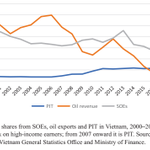
Vietnam's local government economy is showing some Chinese characteristics. Land-related revenue now makes up 80 per cent of provinces’ own-source revenue and 21.7 per cent of total state revenue. A bubble is growing, a burst is coming...
ISEAS Perspective by Nguyen Khac Giang - Vietnam is using land to pay for growth. As it pursues ambitious economic targets and a new wave of mega-infrastructure projects, land has become the state’s most readily mobilised asset. #vietnam #economy iseas.edu.sg/articles-commen…

My new @ISEAS perspective on the perils of Vietnam's land-led growth.
iseas.edu.sg/articles-commen…
Nguyen Khac Giang retweeted
ASEANFocus+ by Julia Goh, Syetarn Hansakul, Azril Bin Rosli, Siwage Dharma Negara, @khacgiang, and Julia Tijaja - Geopolitical conflict, energy disruptions and shifting global supply chains are testing Southeast Asia’s economic resilience... fulcrum.sg/aseanfocus/how-do…

Nguyen Khac Giang retweeted
Fulcrum Commentary by Nguyen Khac Giang (@khacgiang) - Vietnam’s Central Committee has embarked on the most sweeping administrative overhaul in decades. But success is likely to be uneven. fulcrum.sg/from-streamlining…

Nguyen Khac Giang retweeted
And if history teaches us anything, it is that war-ending agreements signed in the Palace of Versailles are famously durable

The moment President Trump signs the Iran deal at the Palace of Versailles.
The agreement was finalized during a dinner hosted by French President Emmanuel Macron inside the historic palace.
The signing marked a major diplomatic milestone after months of negotiations aimed at ending the conflict between the U.S. and Iran.
Nguyen Khac Giang retweeted

In this piece, @khacgiang and I argue that ultimately, no one but the Cuban leadership itself can save the regime. If it fails to undertake meaningful reforms before it is too late, no friend or partner, including VN, will be able to do so on its behalf.
fulcrum.sg/havana-in-the-cro…

As few capitals are trusted in both Havana and Washington, @lhhiep and I argue Hanoi should use its position to mediate the Cuba crisis. In the longer term, it should show Cuba that a one-party state can reform, open up and prosper without losing control.
fulcrum.sg/havana-in-the-cro…
Nguyen Khac Giang retweeted
Fulcrum Commentary by Nguyen Khac Giang (@khacgiang) and Le Hong Hiep (@lhhiep) - Vietnam has a chance to prevent a potential disaster in Cuba, given its unique position. fulcrum.sg/havana-in-the-cro…
Nguyen Khac Giang retweeted
New: Why Should We Care if Vietnam is Swinging Toward China?
Is Vietnam quietly drifting into China's orbit, and what does that mean for the United States and the future of Southeast Asia? Dr. Nguyễn Khắc Giang explains why Hanoi is hedging harder than ever because, as the Vietnamese saying goes, "when the buffaloes and oxen lock horns, the mosquitoes and flies suffer."
In Episode 153, @GordianKnotRay and Jim sit down with @khacgiang, Visiting Fellow at the ISEAS-Yusof Ishak Institute, to unpack his provocative Carnegie essay, "Why Vietnam Is Swinging in China's Direction." Giang argues that Vietnam isn't becoming pro-China, it's hedging in a world where US policy feels unpredictable and China is offering concrete benefits: market access, infrastructure, technology, and political reassurance.
The conversation moves from geopolitics to economics: US tariffs, transshipment concerns, Vietnam's export boom, and the risk of being crushed between Washington and Beijing. Giang explains Vietnam's delicate formula: stay close enough to China to manage the relationship, but distant enough to preserve its independence.
Ray and Jim also dig into Vietnam's defense strategy and its slow move beyond Russian weapons, then go inside Vietnamese politics under General Secretary Tô Lâm, whose consolidation of power is making foreign policy faster, more personal, and more ambitious.
Links to the full episode below.
My reflection on To Lam’s regional tour and his Shangri-La keynote speech - which look like a bid to move VN from a quiet hedger to a selective rule-shaper. Whether the deeds match the words is another matter.
fulcrum.sg/to-lams-regional-…

Nguyen Khac Giang retweeted
Fulcrum Commentary by Nguyen Khac Giang (@khacgiang) - To Lam’s regional tour of Southeast Asia shows that Hanoi is shifting to a posture of shaping the rules of the game, rather than merely seeking to mitigate the risks of a fluid strategic environment.
fulcrum.sg/to-lams-regional-…
Nguyen Khac Giang retweeted

The military, after careful examination, said that up to 900 North Vietnamese soldiers killed in the Tet offensive in 1968 may have been buried in 3 mass graves in now Le Thi Rieng Park in HCMC. ~200,000 VN soldiers are still missing.
(Photo of the site taken by AP in Feb 1968)

